Interviewing J. Rieger, A Kansas City Legacy
Send us Fan Mail We sit down with Ryan Maby of J Rieger Distillery to hear how a forgotten Kansas City whiskey brand came roaring back after Prohibition, sparked by a mural on the side of the historic Rieger Hotel. We also dig into how they blend for consistency, why they use sherry in Kansas City Whiskey, and what it takes to release high-proof bourbon without losing balance. • the moment a 1916 mural reveals the J Rieger legacy • how Ryan and Andy Rieger partner to revive a pre-...

 Apple Podcasts

 Spotify

 Castro

 RSS Feed
We sit down with Ryan Maby of J Rieger Distillery to hear how a forgotten Kansas City whiskey brand came roaring back after Prohibition, sparked by a mural on the side of the historic Rieger Hotel. We also dig into how they blend for consistency, why they use sherry in Kansas City Whiskey, and what it takes to release high-proof bourbon without losing balance.
• the moment a 1916 mural reveals the J Rieger legacy
• how Ryan and Andy Rieger partner to revive a pre-Prohibition whiskey house
• why Kansas City history and Prohibition lore shape the brand
• what “Kansas City Whiskey” means and how sherry is blended in
• sourcing early, distilling patiently, and staying transparent with drinkers
• blending as the tool for consistency, with a Champagne-style mindset
• sweet mash production choices and a distinctive mash bill philosophy
• barrel strategy, seasoning time, and why it matters to flavour
• Private Stock positioning, single barrels, and proofing decisions
• hazmat-level barrel proofs and the challenge of making them drinkable
• mail order whiskey realities, DTC limits, and navigating shipping laws
If you want more great content and other perks, be sure to support the show by clicking the link in the show notes
We can be reached on our website, whiskeychaserspod.com, with any ideas for the show
Check out J. Rieger: https://www.jriegerco.com/
Facebook: https://www.facebook.com/JRiegerCo/
Insta: https://www.instagram.com/jriegerco
Youtube: https://www.youtube.com/@jriegerco
Website:www.whiskeychaserspod.com
Facebook:https://www.facebook.com/whiskeychaserspodcast
Insta:https://www.instagram.com/whiskeychaserspodcast/
TikTok:https://www.tiktok.com/@whiskeychaserspodcast
Thanks For Listening! Tell a Friend!
00:00 - Welcome And What We’re Drinking
01:35 - Private Stock Explained And What’s Next
02:40 - The J Rieger Name Returns
05:20 - The Hotel Mural That Changed Everything
10:50 - Kansas City History As Brand DNA
13:10 - Defining Kansas City Whiskey With Sherry
17:00 - Sourcing, Transparency, And The Blend
20:20 - Consistency And The Master Blender Mindset
26:20 - Oloroso Sherry And Why It Works
28:35 - Sweet Mash Choices And Tradeoffs
30:35 - Mash Bills, Grain, And Aging Effects
34:55 - Barrel Quality And Long Seasoning
36:40 - Six Year Single Barrel Vs Ten Year
40:35 - Hazmat Proof Barrels And Proofing Down
45:20 - Mail Order Whiskey And Shipping Roadblocks
53:35 - New Releases, New Warehouse, Rail Vibrations
59:40 - Where To Find Them And Closing
Welcome And What We’re Drinking
SPEAKER_00Welcome to the Whiskey Chasers, where we talk about our passion for whiskey and its history, either amongst ourselves or while interviewing distilleries. Hello while enjoying a glass. I'm Steve. I'm Nick, and I'm Chris. Please enjoy responsibly while enjoying this week's episode of the Whiskey Chasers. Welcome everybody. We have with us uh Ryan Maby. From maybe. Maybe Ryan? Maybe Ryan. More likely. Ryan Maby from J. Regard, Zilling.
SPEAKER_03Yes. And we're a big fan of yours, by the way. Just wish you guys were closer.
SPEAKER_01That would be nicer. Thank you guys. I don't know where you are. Where are you? Columbus, Ohio. Okay.
SPEAKER_00I mean, we're but we're midwest, we're all midwesterners.
SPEAKER_03Exactly. Yeah.
unknownYeah.
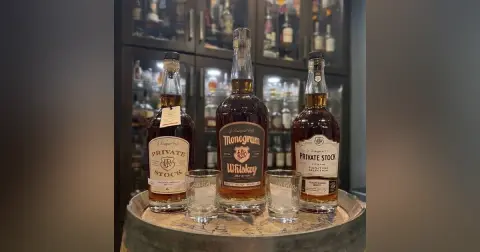
SPEAKER_00Just more than a day drive is all. Yeah, we've had a couple of your things on the podcast already. And so we're drinking one of them now, and it was the one you guys sent us. So the private stock. Ten year.
unknownTenure.
SPEAKER_01Yes. Oh, the uh the 10-year single barrel rye.
SPEAKER_03It is the private stock release as we understand it that starts this being a part of your portfolio permanently. Because originally you guys did a private stock for barrel picks or like the the two were there, right?
SPEAKER_00I just took a look. This is the bourbon, by the way, straight bourbon.
SPEAKER_01Yeah, we're doing it. Yeah, not the rye. 10-year bourbon. Oh, though, okay, got it. Got it. That's not the private stock society release. That's the private stock
Private Stock Explained And What’s Next
SPEAKER_01release. Okay, got it. So, yeah, to kind of add a little bit of you know clarity uh to that whole thing. That's sort of a new that's well, that is a new label, and that's the first release under that label that we've done. Um, so the private stock label um that we kicked off uh in September with that are the 10-year bourbons, first 10-year bourbon we've ever released, um, which was exciting and really the perfect vehicle to kind of introduce this new label. Um, that is now going to be a distillery exclusive label moving forward. We're probably gonna release somewhere in the neighborhood of you know four to six releases per year, uh, roughly, um, uh under that label. And it could you could run a variety of different styles of of whiskey and and different things, but it will be limited to uh the distillery only and then uh potentially mail order. So you'll uh they're there you'd either have to come into the distillery and like buy it from our gift shop or uh order it online if there's enough available.
SPEAKER_00Gotcha, sounds good. Well, hey, we're putting the cart before
The J Rieger Name Returns
SPEAKER_00the horse a little bit, jumping right into this barrel. Let's talk a little bit about you guys. Um so uh you and uh Andy Rieger started Jay Rieger Distillery, is that right? That's correct. You guys brought this back in 2014, but it's an old name. And so you guys have kind of re uh rebranding or rebringing back this old brand. So, how did that come to be?
SPEAKER_01Well, so yeah, first off, uh, you know, the the brand was an old brand founded in 1887 in Kansas City, Missouri, and it grew to become one of the largest uh whiskey producers in the country. We were known as the largest mail order whiskey house in the US, and we were shipping bottles from coast to coast. It was a very successful company uh based out of KC and it really grew to become you know something really, really special, but uh died with prohibition in 1919 and uh eventually just you know disappeared. The way that it came back um was I was in the restaurant business and and bar business. So I owned a couple of bars uh in downtown Kansas City. I opened my first one in 2006, and then I opened a second one in 2009. Um, and the second one that I opened was in the basement of this old kind of uh run-down old hotel building. It was no longer a functioning hotel, um, but it had originally been a hotel that was built in 1915. And I opened a kind of small secret craft cocktail speakeasy style bar um back in 2009. So before that was like a real big trend, before like everybody, you know, speakeasies are everywhere. Um, we were pretty early. There were there were only a very small handful around the country. Um, and uh so I opened that in 2009 and it just it took off and it was really successful. And and a year later, um, I had an opportunity to take over the first floor. So the bar was in the basement, and I had an opportunity to take over what was the old lobby space, the original like hotel lobby. And uh, so I was gonna do a restaurant. That was it, it had always been my dream to kind of have you know multiple uh restaurant concepts, bar concepts, that kind of thing, all within kind of this like neighborhood, walkable neighborhood area. And I loved the building. The building was just beautiful, had a lot of character, it was old, um, but I felt like it just had this story to tell. And so had the original tile floor, which had this really cool-looking R logo built into it. And so, you know, I was doing a little research on the history of the building and discovered that it had been a hotel built in 1915, uh, built by a gentleman uh named Alexander Rieger,
The Hotel Mural That Changed Everything
SPEAKER_01and his hotel was called the Rieger Hotel. Um, and and that's all I knew. I I hadn't ever heard of the whiskey company or anything. I didn't know that it ever existed, but I was fascinated by the history of the hotel building, and I decided to call my restaurant the Rieger and incorporate that old identity into uh the restaurant concept. And so I decided to call the restaurant the Rieger, and I was under construction, I was getting ready to open it, and I was doing a bunch of research on the building. I was looking for old photographs of uh the space and the building, like when it was a functioning hotel, um, and I was gonna like put them up in the bar area and all that stuff. And I came across a photo from 1916, uh taken of the outside of the building, looking at it from the south, which is where Union Station is here today. It was right right by the train station. And I I saw this image on the south wall of the hotel uh that was a hand-painted mural of a whiskey bottle, and it was it said Jay Rieger and Company monogram whiskey, and it was Rieger whiskey. And I was like, I had never heard of it. I'm like, this is amazing. I wonder if there was like actually a you know whiskey brand here associated with the hotel. And so I started to dig into that, and sure enough, just all this information started pouring out, and I started to find old bottles and old advertisements and you know, all this information about this whiskey distillery in Kansas City that dated back to 1887 and was associated, was owned by the same family that owned the hotel that I was uh restoring. And uh so I decided to incorporate that into the concept of the restaurant and tell the story. And I was uh, I mean, I think saying fascinated by it would be an understatement. I was rather obsessed with it. Um, and I I was hell-bent on bringing back the whiskey brand, and that's when I met Andy. Andy heard about what I was doing. Um, he was living in Dallas, Texas at the time and uh fresh out of college, and heard what I was doing, and he just walked in the front door. I I didn't know he existed. It never really occurred to me to reach out to a family member or or anything like that. Um, I didn't know if there, I mean, it the the brand had been dead for you know over 90 years. Um in fact, the trademark, you know, I acquired the trademark, it had expired in 1922 and nobody touched it. And so, like seeking out relatives or or or you know people from that family, just I just never did. But he came in the front door and introduced himself. And I was like, uh wow. Um, you know, he was the great, great, great grandson of the original founder, Jacob Rieger. And he was just fascinated, like, with what we were doing there and telling the story and kind of bringing back his family's, you know, history and identity. And so I just threw out the wild idea to him. I was like, what if we partnered together and brought back your whiskey?
SPEAKER_03That's really cool. Yeah, it's a good story. Did uh was it one of those things that Andy talked about? This was something that was mentioned in family gatherings, or we we talked about the how the family had a distillery way back in the day, you know, pre-prohibition. Was that something that was brought up by Andy? Of like, we've always talked about this, we just wonder what happened, kind of thing.
SPEAKER_01No, I mean, I, you know, one of the first things that I asked him was like, you know, because he introduced himself and said, it was my great-great-grandfather that built this building. Alexander, you know, built the hotel building. And I was like, Well, do you know about the whiskey? Do you know what Jacob Reader started? And he said, Yeah, we know about it. Like, I've got some like artifacts at home. Like, uh, he talked about like there's all these little shot glasses from that era that we've collected. Um, I actually I actually had some myself before I even met him. Um, and then he was like, Well, I remember like, you know, when I was in high school, like the little shot glasses, Jay said Jay Rieger and company on them from you know the 1800s, and you know, we would sneak shots in those glasses and that kind of thing. You know, so he he was he had this like kind of passing familiarity with it, um, and had some old photographs and things like that that he was, you know, able to uh add to the collection that I had already started to amass on the wall there in the bar. Um, but uh for whatever reason, I mean, his family, like after Prohibition, they got into banking and they were very successful. And so the the legacy sort of like took a different direction entirely. Um, and I think you know, that's ultimately, you know, what kind of uh informed what Andy was doing. But um, you know, he was he had a familiarity with it. He knew that his family had been in the whiskey business, you know, seven generations ago to be exact. But um uh yeah, that was uh I don't think he ever really intended. Well, I know he never intended to to do anything with it, but he was I it I had to convince him.
SPEAKER_00It is really cool to have a non-family member come up with this idea and do all this stuff and then have a random family member join in. It's a cool little like twist on how that story normally goes. Right. That's really cool how that panned out. Are you Kansas City natives?
SPEAKER_01Yeah, I've I've grown up, I've lived my whole life in Kansas City, and and Andy was from here. He grew up here, but moved to uh Texas when he went to SMU. Um, so he is originally from here and now he's moved back. He you know, he moved back for us to start this this business, and he's been here
Kansas City History As Brand DNA
SPEAKER_01ever since.
SPEAKER_00Very cool. Are you guys using a lot of Kansas City history? I know you guys are starting the Kansas City uh uh distilling and the the uh Kansas City whiskey type and kind of bringing that back also.
SPEAKER_01I the the history of Kansas City is an absolutely vital part of our uh ethos and our DNA in our brand. Like and and obvious, it's very obvious with the whiskey itself, you know, and the brand itself. We've got this incredible authenticity and legacy and story to tell. But even beyond that, you know, the building that we're in now with the uh the distillery was uh also from the 1800s and from a uh beer producing family that died with prohibition. And so we've resurrected their beer. The Heim beer is available at our distillery, and so that's a part of it. And uh the prohibition, you know, the fact that Prohibition put us out of business um in 1919. And and Prohibition had a very, very um Kansas City plays a very important role historically in Prohibition in general. Um, there's a there's a lot of interesting things that took place here during prohibition that's that's unique to Kansas City. So, like there's a the there's a ton of uh different angles um that we can take when it comes to the history of Kansas City and how it's an integral part of our brand.
SPEAKER_03That's really cool. That's I feel like that's uh something that a lot of distilleries wish they could have. Is that that history? Because it builds a community. I I've got to believe it builds a community around you guys. That people in the area now go, ooh, that they're reviving this. This was such a huge part of our history and our culture, and we we recognize that, we appreciate that, we want to celebrate that at the same time.
SPEAKER_01100%. And you know, if you know anything about Kansas City at all, like Kansas Citians are very proud of Kansas City, like it's a it's a big part of like our collective personality, is like people in Kansas City love to to brag on Kansas City. Um, and the fact that we have this history, this true authentic legacy dating back to the 1880s, um, it just it it just amplifies that whole thing. People are are just so
Defining Kansas City Whiskey With Sherry
SPEAKER_01so enamored with it. It's it's it's really cool.
SPEAKER_03That's cool. So as you were as you guys were kind of diving in, or I guess you were diving into the history of the Rieger and Co. and and learning about their whiskey, the distillery, and those things, and then had Andy come along on the journey. How much of that played a role in what you guys decided to put out as far as whiskey and the flavor? Did you guys go back to what was the mash bill? I I know you guys kind of dove into the Kansas City whiskey itself and bringing that back. Like how much of the history was involved in creating the mash bill and the profile and everything you put out now?
SPEAKER_01Um, well, it played an enormous role. Um, but it's hard to specify exactly what that is because we didn't have a mash bill. We don't, you know, Andy didn't have like a recipe handed out handed down because the brand had been dead for for almost a hundred years. And so there was no like handed down like recipe or anything like that. And because of prior to prohibition, there were no laws or regulations or anything that would document anything like that. So there's no documentation from you know, in the form of like permits or licenses or you know, anything like there's just nothing like that's written in stone as like, okay, here's what it was. But with that in mind, it was really, really important to me that in resurrecting this brand, the liquid in the bottle, the whiskey in the bottle really, you know, pays homage to that history. And we try to do something as close to the original as possible, even though we don't know what that was. Um, I spent two years, the better part of two years, along with Dave Pickerell. I don't know if you guys know who Dave Picker is. Dave Picker was a very, very important part of uh this resurrection. Um, he and I worked closely for two years formulating what is now today our Kansas City whiskey. And that blend is uh a tribute to what we think we were making back then. I can't say it's the exact mash bill, and and actually it's like five mash bills because it's a blend, right? So it's a blended whiskey first and foremost, but I can't even say with any absolute certainty that it's an exact replica of the blend we were making back then. But what I can say is that I feel like it's something uh very close to what we were probably making back then. And the most important part of that is the addition of sherry, the actual addition of sherry into the blend, not sherry cask finishing, but blending sherry into the whiskey itself, we discovered was a very common part of America of American whiskey production in that era. And we believe it's something that we were doing, and so we resurrected that part, and that's what allowed us to classify it as Kansas City whiskey. And that is what Kansas City whiskey means. When you see it on the label, Kansas City whiskey means it is a blended whiskey with the addition of sherry.
SPEAKER_02And you guys are like the only ones really doing that, right?
SPEAKER_01Kansas City. Well, we're the first. Um, we're not the only ones now. There are two other producers here in Kansas City that make a Kansas City whiskey, and we are very supportive of them. Um, in fact, we consulted with them, you know, when they came to us and said they wanted to do uh a Kansas City whiskey. I'm all for it. I want there to be more. Um, because ultimately, if we have other other distilleries and other producers in the area that are uh helping us to um you know establish this style um alongside alongside other styles of American whiskey, it just adds validity to what we're doing and shines a brighter spotlight on Kansas City as a whole. Builds up your identity. Absolutely. Yeah, and we are the first. So um we intentionally did not trademark the phrase Kansas City whiskey, but we want we because we want it to be common use, we want
Sourcing, Transparency, And The Blend
SPEAKER_01we want others to to be able to use it.
SPEAKER_03So when you guys started out, because you you said you came from bars and restaurants. Yeah. So when you guys first started up the distillery, did you guys decide to utilize more of sourcing to start putting out your product while you were distilling and aging other?
SPEAKER_01Yeah, we had to like like pretty much any startup brand in the whiskey space, you know, you're you're gonna have to start with sourcing. And so we um uh everything that we released for the first six years, six plus years was 100% sourced. Um uh and we didn't on our production stuff, like we started production on our own bourbon rye and light corn whiskey right from the beginning, because those are the three whiskeys that make up our Kansas City whiskey. And so we started to produce our own straight bourbon, our own straight rye, and our own light corn. Um, but we didn't take any shortcuts, we didn't use small barrels, we didn't try to, you know, um, we weren't gonna rush the process. We knew we were gonna wait a minimum of four to six years before we even tapped into those barrels. So we were laying down barrels for you know six years before we even touched them. So in the very beginning, everything that we we did was sourced, um, mostly from MGPI uh in Indiana. It was actually called LDI back when we started, and then we were getting uh rye whiskey from uh Canada from Alberta distilling, uh the same exact rye that was going into Whistlepig. And obviously that's the you know Dave Pickerel connection connection. So we were getting uh uh five-year and 11-year uh rye whiskey from Alberta and using that in our blend. Um, but uh we never released, we never once released a bottle of straight bourbon or straight rye whiskey that wasn't ours. We didn't introduce straight bourbon or straight rye to our lineup of products until our um barrels were ready to go. Um now, so like the products that we have now, the straight bourbon, straight rye, obviously that 10-year bottle that you've got in your hands right there, that's 100% our juice, um, not sourced. And uh we are pretty much, even with the Kansas City whiskey now, pretty much fully phased into um our own stuff. We are still sitting on some barrels of bourbon uh from MGP uh that get incorporated into the Kansas City whiskey blend. But uh the straight bourbon bottling and the straight rye bottling is all our stuff.
SPEAKER_03How did you guys? I'm very curious on how you guys have learned to navigate the sourcing from putting out your own stuff. Because we've seen we've seen some distilleries do it well well where they source their stuff in the beginning and then they they start putting out their own stuff and they switch the the label. They change the name of it to not confuse people on what's ours and what's what was something we got started with. We've seen others that try to age out the source stuff they have by blending it, and then they put out their own. The the common theme that we found when talking to people that source and then do their own stuff is how do we get that flavor profile to match between what we sourced and now what we're putting out? Because there may be a difference, and do we lose buy-in from people at that point, or are more people gonna go after it? What are some of the things? If you want to talk about it, what are some of the things that you guys tried to figure out how do we jump this hurdle? Or was there a hurdle,
Consistency And The Master Blender Mindset
SPEAKER_03or was it just smooth sailing between the two transitions?
SPEAKER_01Yeah, there's a lot of pitfalls there in that process, and uh it's something that you know you really have to think about. And and actually it could kind of go a little bit deeper than that, not just like the difference between sourcing and then transitioning to your own juice, but then even taking into the bigger picture, like what if you change your production method or what if you add a secondary warehouse uh, you know, and you start aging in a different location, and like will that affect the flavor? So is all these things like start to come into play when it comes to like managing consistency um on your brand. The the easier answer uh to that question is that it really wasn't much of a problem for us because again, we never released a straight bourbon or straight rye until it was all ours. And so we didn't you didn't have to compare Rieger Bourbon to Rieger bourbon that was MGP. You didn't have to compare Riga Rye to Riga Rye that was from Alberta. And when it comes to the blend, the Kansas City whiskey, even though we slowly started to incorporate our own whiskey into the blend, but it's a lot easier to achieve that like consistency when you're blending um and uh and accounting for for that because you you have a lot more like levers you can pull um when it comes to like the percentage didn't have to stay the same, you know. So like when we when we started incorporating our rye, which I think was the first product that we distilled in AIDS that we started to blend into the Kansas City whiskey, if if our rye had more punch than the the Or the Alberta rye that we were using, we could just adjust the ratios. We could just adjust the percentages of light corn and light bourbon to downplay the rye, or vice versa. So that was easy. But you know, it was an easier thing to an easier problem to figure out. And it was never, we never stated that it was like ours, right? It was never, we never like we were transparent from the very beginning and saying that this these are our source products or maybe it's a blend. And like I said, now, you know, the bottle of Kansas City whiskey, I think we've gotten really, really good at blending. And I think we've gotten really, really good at maintaining consistency in these large batches. Um, but there's, you know, um, we never had to disclose a percentage of anything behind the scenes. It's kind of like I used to be a Somme before this. I was a smalier on in the the wine world uh 25 years ago. And I kind of equate it to um champagne. So uh think about champagne for a second. And if you're one of the big houses of champagne, right? Like let's say you're Moet or your Vuve uh Clicot or your Dom Perignon or something like that. You don't own the vineyards for the most part. You might have like a couple little estate vineyards where you grow a little bit of your own grapes just for show, but that's not how most of it works. They're buying grapes from these different vineyards and producers from around the region every single year. They might have some long-standing contracts, but then they might buy from someone else every year. And so they're buying some Pinot Noir and they're buying some Chardonnay and they're buying some Pinot Mounier and everything, but then you've got each year's vintage being a little bit different based on the climate. Um and the grapes are like there's a different uh bricks level and sugar level in the grapes, and so they're gonna they're gonna turn out a little bit different and all that stuff. And so every single year that they release their bottle of Dom or their bottle of Moet or their bottle of Vouvre or whatever, if you're a loyal customer to those brands and that's that's your celebratory bottle of champagne, you expect it to taste the exact same way every single time. There are so many variables that go into every single one of those bottles every year. And it is the job and the responsibility of the master blender to make sure that all of those variables that he has to deal with, you never notice. And that's kind of how I describe our Kansas City whiskey is like if we have to make tweaks behind the scenes to the percentages because you know we've got we're starting to use our own bourbon now, or we're and instead in less MGP, but more of ours, like that's fine. There's nothing wrong with it. But we know what Kansas City whiskey tastes like, and we want it to taste the same way every single time. And so that's that's our responsibility to blend it to that point to get it right.
SPEAKER_00As we've looked at more sourcing and people that are going that direction, uh, the blending world is a pretty fascinating world when it comes to whiskey in terms of how they're able to do that. I think Scotland and some of the other ones really celebrate their master blenders, whereas America, we tend to celebrate our master distillers. But there's a lot of strength in that ability to blend. And, you know, based on the things we've tried, you guys are really good at it.
SPEAKER_01Thank you. I appreciate it. No, I take a lot of pride in it. I work very closely with our master distiller, and I think uh Nathan Perry is his name, and he learned how to make whiskey under uh Dave Pickerel, and uh he's spectacular um at what he does. But you know, he and I work really closely together with uh the release of all of our products, including like that 10-year bourbon and all the new and innovative things that we're coming out with now. And I think my skill set, having been a Psalm, you know, back in the day and like really learning how to like train my palate and those types of things, and then being really heavily involved in the cocktail world for so many years, owning cocktail bars and being very, very dialed into that process really helped me understand how to like identify flavors and balance flavors and like what to look for and what kind of next steps to take with those those types of things. And so I really enjoy it. I I never imagined you know being in the situation that I'm in now where I'm I'm blending, you know, large batches of whiskey and blending whiskies in order to you know come out with new products and stuff like that.
Oloroso Sherry And Why It Works
SPEAKER_01But man, I gotta tell you, it's really it's really exciting. It's it's been a cool uh transition. Where are you guys getting your sherry from? The sherry, uh, we have a partner in Jerez de la Frontera in Spain, which is where sherry is made. So all sherry has to come from Jerez de la Frontera. Um, it's a very, very tiny part of the southwesternmost uh point of Spain. Um it's been you know produced there for many centuries, and uh you can't you can't mimic it, you can't create it anywhere else in the world. And so um when we first decided to do this back in 2013 is when Pick and I discovered uh that historic use of sherry. Uh, we went to Spain and um, you know, we met with several producers, and uh most of them looked at us really funny, like, you're gonna do what with our sherry? Um but uh we ended up uh striking a really cool partnership with a uh brand out there called Williams and Humbert. Um they're a fantastic company, they make fantastic sherries, and uh we use a very specific sherry for our Kansas City whiskey. It's a 15-year Olaroso, and um that is you know, kind of going back to the blending thing, uh, that's another thing that makes the the blending on the Kansas City whiskey pretty easy, easy, relatively speaking, is that that is a constant that we cannot change. We cannot change that 15-year Olaroso sherry uh from Jerez. So no matter what we do with plugging in different whiskeys or adjustments that we might have to make in that regard, the sherry is the constant. And even at uh a hair under 2% by volume, it is mind-boggling how much impact it has on the aroma and the flavor of that whiskey.
SPEAKER_03I I find that fascinating in my mind that just even that small amount could throw it off. But you guys also do something unique, it's it's becoming less unique and more popular within bourbon that I view is the same way as it could throw it off of sour mash versus sweet mash. Yeah. What kind of what was the drive for you guys to lean towards that more sweet mash versus sour
Sweet Mash Choices And Tradeoffs
SPEAKER_03mash? Pick told us to. Okay.
unknownInteresting. Okay.
SPEAKER_01I mean, that's the that's the real answer. And it's it's interesting I that you bring it up because um, you know, when we first started building this thing, and we brought in Pick to help us build the distillery and like you know, teach us how to to make whiskey and all the things to do and all the things not to do, and you know, hold our hand through that process. I mean, you've got in Pick, you've got one of the most you know accomplished distillers in history, and certainly in the American whiskey category. Um, you trust him, and and you know, you you know, he's like, let's do it this way. And we're like, Yeah, cool, you know. Um and uh, you know, I thought it was interesting, but I didn't really put much all that much thought into it initially. But I will say that now, um, there have been so many times in the last few years, um, and especially since we released our straight bourbon that is uh sweet mash, and we and we we intentionally put sweet mash on the label. That was something that I was very adamant about doing, um, because it helps tell our story. But you know, I get that question about why do you do it that way versus not? And I wish I could ask Pick, you know, I I could ask, I wish I could, you know, go back to him and ask him, like, what was your real thinking behind this? Was it because you think it's superior? Was it just because you think it's a point of differentiation, you know, all those things? I mean, we can speculate to some extent. And Nathan um, you know, worked with him really closely on building everything. And so, you know, he has some insight into it, you know, that just that the process allows us to pivot if we want to like, you know, change batches. It's it's if you get locked into a system with a sour mash, it's a little harder to get out of it, I think. Um, so it gives us a little bit more versatility. But um, yeah, that that was just one of those production um things that pick said, this is what we're gonna do.
SPEAKER_00And
Mash Bills, Grain, And Aging Effects
SPEAKER_00we're like, let's go. This may be the same answer, but uh your your mash bill, uh it's kind of a unique mash bill. It's uh you know, 56% corn, 30% rye, 14% barley. That's a pretty high rye and uh very high barley. Um how did you guys land on that?
SPEAKER_01Um, I can give a little bit more detail onto that one. Um, you know, Pick asked us in the in the very beginning when we were talking about our bourbon mash bill and our rye mash bill for that matter, it's like, well, what style do you want to go for? Um, what brands do you like? That kind of thing. And I had enough familiarity with um bourbon production to to be, you know, just just a little bit dangerous on it. And so I did know that we wanted to be a high-rise style. We didn't want to do a weed, uh, we wanted to go a little bit more old school. Um, and as far as uh brands that, you know, we were kind of, you know, not necessarily mimicking, but inspired by, I think is a better way of putting it. Four roses was the first one that I threw out. I had um spent some time at the Four Roses distillery. And um, as a restaurant operator, I had purchased some of their single barrels and I just really loved what they they were doing with their uh proprietary mash bills and yeast strains and all that. And so um that was part of the inspiration, um especially when it comes to the high rye content. Um the high malt content, I don't really remember having a lot of in-depth discussion about that uh with Pick in the very beginning, but I do know that it is distinctive. Um, and I think it absolutely is distinctive when it comes to the the flavor uh of our bourbon. And I I can't really think of any other. There are no other brands off the top of my head that I can uh name right now that have you know north of 10% malt. Pretty it's like you said, it's very high.
SPEAKER_03I can think of one that has close to that, but I my my brain keeps trying to wrap around your flavor. I I can't figure out how the heck do you guys get this this flavor, this sweetness, but it's high rye, but it doesn't drink like a high rye. Uh we've had other companies that do like a higher malted barley that still doesn't have this kind of sweetness. Could it be the sherry? Yeah, well, what the heck you guys doing?
SPEAKER_01Well, there's no there's no sherry. Right. There's no sherry in the in the bourbon, obviously. Uh you know, that's only in the Kansas City whiskey. Um are they all local grains that you guys are pulling from? Or I mean they're they're regional, they're Midwestern. Okay, but we're not like you know, there is the Missouri Strait bourbon, which was a bill that was passed several years back, um, which dictates that you have to use Missouri grown corn. We don't do that, and so it's not uh, you know, ours is not uh exactly a Missouri Strait bourbon. I mean, we're we're buying corn, good quality corn. Um, you know, yellow number one is is what we we go with. And uh, you know, it's Midwestern, it's mostly Iowa. Um, you know, maybe a little bit in like uh Nebraska, Illinois, but it's it's very close to here. Um, you know, I I think there are other things that are in play there. I think that, you know, it's not just the mash bill that's attributing to that flavor profile, but also the uh the barrel aging. I think that has a lot to do with it in the environment um that the barrels are in, because you mentioned you know, you mentioned that it's a high rye bourbon, but it doesn't really drink like a high rye, um, like a high rye bourbon. Our rye is a Pennsylvania style. It's uh 96-4, 90% rye, 4% malted barley. And that was intentionally done in the beginning because we wanted to have a very clear and distinctive delineation between our straight bourbon and our in our straight rye. We didn't want it to be too close. So we didn't want any corn in the rye. And so, you know, I was expecting a rye that was like really grassy and spicy and herbal and minty and you know, all those things that come with that high rye content. And man, it continues to this day to blow my mind and how sweet our rye is, you know, and there's no corn in there. But I think it, I think some of that is coming from the the barrel aging, is and coming from our uh the rick house. So um, you know, some of it's speculative, but I you know, I think all those things, all those different variables are kind of working together to create something
Barrel Quality And Long Seasoning
SPEAKER_01that is just really, really unique.
SPEAKER_03Yeah. What uh what did you guys decide on barrel-wise for like char level? Um, is it anything unique or is it kind of across the board standard?
SPEAKER_01Um, I well, I mean, I wouldn't say necessarily unique, but it is of the the highest quality, I put it that way. So we're all of our barrels are coming from ISC, the independent stave in uh, you know, Lebanon, Missouri, you know, largest uh Cooperage in the world. Um, so but standard 53 gallons, um char level three, so not like crazy high, like right down the middle. Um, I'd say the most important thing in the in in barrel um influence that doesn't really get talked about as much as it should is seasoning time. And it is really, really important and they cost more, but this goes to the whole conversation of quality. And the staves that are used are all 24 months or older, 100%. And that costs extra uh to get barrels with seasoned staves that have been seasoned for more than 24 months, but it's very important to the quality of the oak itself, uh, that is that they've been seasoned for that long. And and some of the barrels are I forget the shortest amount of time that you can purchase, but um, and I and I honestly don't really know anything about like the amount of usage in the industry, like the industry norm, how many places are just going with your standard, like six-month seasoning, 12-month seasoning, whatever, versus the extended seasoning. I I don't have that data, but uh it is I I think that has a bigger impact than most people realize.
SPEAKER_00I will say, um, we have uh
Six Year Single Barrel Vs Ten Year
SPEAKER_00a second bottle here that is it's from your distillery, and it's from some friends of ours that went to your distillery. Um, and they got the they but there's a little tag on here saying they got a chance to bottle it and everything. And it has the private stock label, but it's a different label. It's I think uh a bottling service that you guys do with tours or something like that. When was that that CJ went there? Uh 23, I think. 23, yeah. So this is a six-year straight bourbon, straight bourbon, and so but it's only a six-year on it. Um, whereas this other one is 10, and this the flavor difference between the six-year and the 10-year is crazy on there. Um, and they're both high proof, but they don't taste. Yeah, can I ask another question?
SPEAKER_01Yeah, what is the ABV? I'm guessing it's higher on that one. That's a single, that's a single barrel.
SPEAKER_00Yes, it's a single barrel, correct. Yeah, it's 128, 128 on there versus the 110 of your private stock that you're you're doing now, right? So that's uh it's a higher proof, but it actually tastes it, it drinks on the lower proof, honestly.
SPEAKER_01Yeah, yeah, no, I uh I hear that constantly. Um, so here's what's going on with those um same exact mash bill, 100%. We've never produced a we don't have a bourbon that's a different uh I take it back. We will eventually, but we've never released a bourbon that's a different mash bill. So that is there, that's the same whiskey and produced on the same system. So that's all both of those bottles are single pot distilled grain in in a 750-gallon copper Vendome pot still, um, aged in the exact same barrels. Um you know, everything is identical except for the fact that the the 10-year uh that you're drinking is a marriage of three barrels. That was all we had a few months ago when we did that. We had three barrels that were 10 years old, and so we married those three to produce that, and then we proved it down to 110. But the the other one that you've got is a single barrel uh six years old of bourbon uh at cast strength. So it was like up around 128 or 130 or whatever that was. Um, and so the labeling difference here, even though that single barrel says private stock, that's how we used to identify our single barrels. Um, we just put like like even single barrels that we would sell to like liquor stores and and and retail partners, that kind of thing, it would go under the the private stock label. Um, we recently, and I mean very recently within the last 12 months, uh pivoted to uh bottling all the single barrel picks in our regular bottle, uh like the with the blue label bourbon in the different shape bottle, and then just having like a sticker on there that denotes that it's a single barrel pick. And now the private stock we shifted to what you've got in front of you in the 10-year. The private stock is now we've kind of taken that brand or that label back as our our own elevated, like next tier LTO uh releases, and so that's why the label looks different. So we've we've used that name in the past, but it used to be used in conjunction with single barrel selections, and now it's it's uh meant for our higher end releases.
SPEAKER_03I I feel like having these two side by side just speaks to you guys' blending ability. Like holy cow. Like they they they're both delicious, but they're both drastically different from each other.
SPEAKER_01Well, that's also kind of the cool thing about single barrels, is that you know you can pick you you might just pick a random barrel and be like, wow, what's going on with that one? You know, it's kind of the beauty of it.
SPEAKER_03I'm assuming for the private stock tenure, you guys just didn't take the three and just went, oof, throw them all together, we're called good.
SPEAKER_01I gotta believe it was a pretty thoughtful process. I'll tell you this, I'll
Hazmat Proof Barrels And Proofing Down
SPEAKER_01tell you this much. So it was a fascinating process for a couple of reasons. You know, I talked about our uh Rick House a little bit and how I, you know, there's some things happening in our in our storage uh facility in our rick house that's just kind of I mean it's almost impossible to understand. It's it's kind of weird, but we're getting extraordinarily high ABVs. And I'm when I say extraordinarily, when you think let me ask you a question, when you think hazmat, what is hazmat to you? 140, 140, 140s, yeah.
SPEAKER_03140.
SPEAKER_01Yeah, usually at the 150s, usually in the 140s. Well, we're getting on average, like when we pull five-year-old barrels or maybe close to six, we're we're well into the 150s at that age.
SPEAKER_02What the hell?
SPEAKER_01Wow. So those three barrels that that make up that 10 year, when we when we pulled those three barrels down and we tested them, one of them was at 172. Holy cow, that's insane. One of them was at 174.6, I think. And then the third one was 182.7. Holy cow. What what is happening? Right. It was 182.7, the third barrel. And so, you know, when we were talking about like, okay, we could do our first ever 10-year bourbon release. How do we want to approach this? Should we make it a single barrel? I'm like, well, we can't basically, because I mean, you're gonna get like five gallons out of it. Yeah, right. So that that 182 proof barrel was uh right around five gallons of liquid. It was tiny from a 53-gallon barrel. Correct. Wow, it was it was it was reduced down to five gallons, and so we're like, well, we're not gonna get the yield out of it, but so we're gonna have to tinker with you know, blending them and then uh and then we're we're really going to have to focus on the ABV here because you know, I'm all for the fun and excitement around a hazmat pick now and then, but at the end of the day, when when we have a a 10-year label release that we expect to be an annual release, I don't want to melt your face off with 170-proof bourbon or whatever, you know, and so we we kind of knew we wanted to get in that range of like 100, 110-ish. Um, but we did a uh several rounds of uh tastings where we we we looked at every single uh, you know, we we did basically 1% increments between like as far down as like 95 and up to 120, um, and and doing side-by-side tastings and just gradually kind of narrowing it down and and zeroed in on 110. And so the 110 um I think is is just incredibly drinkable. And just like you said with the the cast strength single barrel, it drinks lower than what you think it is, right? Because it's got so much concentrated flavor. The reason, and everybody says this to me on every single single barrel pick that I do, um, and we're and everybody wants hazmat, hazmat, hazmat, hazmat, right? And trust me, I got your hazmat. But like everyone is shocked when I tell them the proof because I I like to conduct those blind and You know, we'll go through the tasting of let's say four to six picks or so, and then you know, we'll kind of narrow it down to the one or one or two that they like the best. Like, okay, well, what do you think the ABV is on that one, or what do you think thege is on that one? And inevitably, every single time, people were 20 points lower than what it actually is. But the reason I think that is, is because the flavor is so concentrated, right? That that kind of masks the alcohol to an extent. You're getting that's really where the the harmony comes in, because I have pulled barrels that I just didn't think were ready yet, because the the the alcohol content and the flavor is just a little off-kelter, right? You've got to have it's okay to have that really powerful alcohol content, but you've got to have the flavor to back it up.
SPEAKER_03That's so impressive. Like the fact that it gets, I mean, not that you guys lose that much out of a 53-gallon barrel, but it's amazing that you guys can get up that high, but then still find a way to bring it down to a proof point that anyone can drink and go, wow, it's it's beyond proof of this. It's it's more flavor, there's sweetness coming through. There, there's so much going on that it's it's crazy. I find that fascinating. I absolutely love that. Kind of a peek behind the curtain. We we recently
Mail Order Whiskey And Shipping Roadblocks
SPEAKER_03got an email from you guys that you guys are releasing the monogram uh monogram whiskey or monogram label, if I remember right, for the Kansas City Solera whiskey bottle. Um, and you guys are also attempting to revive the mail order whiskey at the same time with this.
SPEAKER_01Well, yeah, so like the private stock label is kind of our first uh venture into like trying to to get some level of DTC um you know action going here. Um you know, we don't have to get too far into it, but I think everybody knows that the whole distribution network right now is an absolute mess. I mean, it's it's just it's really, really challenging for everybody right now. I think it's challenging for every brand. But you know, when you're a small independent producer like we are, like, man, it is hard to get share of mind, you know, when you're going up when you're in the same warehouse as the big guys, you know, and so it's really, I think for the future, it's really important for us right now to have a DTC channel and be able to ship to direct to our consumers. And so the private stock is really like our first, you know, effort to say, okay, these are distillery exclusives, or you can order them online. And now the monogram being a limited edition release, even though we've done that label for many years now, um, it is it's always been kind of our like top-tier release that we do. One of the things that we're most proud of that is like super unique and super special. Um, but now we're gonna try to push that through uh mail order through, you know, order online as well. Um, because I think that's the best way for us to get directly in front of our customers. It's just, you know, the traditional uh, you know, three-tier distribution uh model is really hard. And so we've gotta we've gotta have at least some of our business um, you know, going uh through uh direct to consumer.
SPEAKER_03We uh uh for us being in Ohio, I feel like we can understand and share in your pain that being a smaller craft distillery back in the day it might have been really easy to get into other states. Now it's it just makes it really hard, especially Ohio, and people that want to be state controlled are looking at Ohio to see how do we do it just like you do. And my heart breaks because I'm like, just get this out, please. Like, how how do I get this at home? Because I mean, you talk about a company that you you talk about a moment in time where you found just the letter R on the wall or or somewhere that you're like, huh, that seems odd. What that seems like it was put here intentionally, and from that you help revive a distillery that that existed pre-prohibition. But as we also explained, tried to explain to our listeners, the pre-prohibition distillery that had a hundred plus whiskeys that it mail ordered. That's insane to think about back then. I mean, just it it's it it's mind-blowing to think about back then that that was their catalog, that it had that much and people wanted that. To now let's bring this back, let's try to revive it as best as we can. Let's bring back Kansas City whiskey, let's make this a thing again. That alone, I'm like, that that's great. I love that because you bring a part of history, but now to say, how do we how do we take this into the mail order world and realm again? That I love that. I respect that a lot because that's it's gotta be difficult.
SPEAKER_01I definitely uh appreciate that. And uh yeah, it's kind of ironic that it's a a return to that you know way of doing things a hundred and uh 130 years ago, uh 140 years ago almost.
SPEAKER_00You guys did break into Ohio. We did have uh some bottles of yours for a little while there. I don't know if they're still available or not. I just took a quick look and it looks like nothing's available at the moment. But uh, I know that that kind of comes in and out with with good old Ohio. Um uh so there may be opportunity for some of our listeners to get some of your stuff if you're in Ohio. If you're not though, hop on your web on uh Jay Rieger's website. Apparently, that's gonna be the best way to do it.
SPEAKER_03Are you guys selling through your website or how how do people get a you can?
SPEAKER_01Yeah, yeah. There you can order it, but ultimately what it comes down to is that we can't actually ship directly to consumers. So when I say DTC, we can't say we're not gonna get that order from you and and fulfill it at our distillery and ship it to you, unfortunately. Yeah, yeah, you have DC. We have to sell it to a third party in a state or uh a territory that's not a state, like Washington, DC. Which makes a little sense where the laws are. Uh yeah, I I know, right? Makes total sense, yeah. Right. And so then you'll be purchasing it from uh you know a fulfillment uh liquor store, essentially online liquor store, um uh based out of Washington, DC, and then they'll ship it to you. But it's still you know, it's a way for us to build our brand and reach our customers that's still, even though we have to do it that way, even though we have to sell it in bulk, you know, to a place in DC and ship it there. You know what's really funny about this? The whole thing that's that's so ironic, the uh what um what data we do have on uh stuff that's been shipped, like bottles that have been shipped. Um, would you like to take a guess as the at the number one state that those bottles have been shipped to?
SPEAKER_00I'm gonna say Missouri. Uh right back down to you guys.
SPEAKER_01Missouri.
SPEAKER_03Yeah, he's like, I'm neighbors to some of these.
SPEAKER_01The number one state that's been ordering our stuff online is Missouri. And they're actually getting it from DC instead of us, you know, right in their backyard, which is it's ironic, but I mean it's just the way the laws are set up, and there's nothing we can do about it. So we're just trying to find ways to navigate that. There's a lot of stuff happening in DC with regard to this. There's some heavy hitters that are involved in trying to change these things, and the ACSA is has been working for years on trying to get uh those types of laws changed, shipping laws changed for distilleries like us, and hopefully something will happen. I know there's been a big movement uh to utilize the Postal Service, the United States Postal Service, which is you know deeply in debt and doesn't make any money to try and utilize them for shipping spirits. And I'm hopeful that that passes because that could be huge uh if it if it does. So there's a lot of things that are happening, and I I think it's it's it's certainly important for us right now. And I would say it's probably important for most small brands, uh, if they're not doing it already, to start trying to lay the groundwork and lay the foundation for having your the ability to ship DTC. Um, because I think at some point some of those laws will will ease up and it'll be such a such a huge opportunity to to you know recoup you know some of your margin. I mean, the current way that it's set up, it's like you may be paying 30 bucks on the shelf for it or 40 bucks on the shelf for whatever right now, but man, I I'm not gonna tell you how much of that we get. Not much. There's so many layers of you know, of people that need to take their cut out of it on the way. Ohio's kind of fun. I uh um we were I know we were working on getting it set up there. Uh our our VP of sales uh was working on that for a while, and it's it's a tough control state, you know. But uh the first time that I I realized we had product there was somebody sent me a photo from the Cincinnati airport, and it was a bottle of our whiskey on the back bar. I'm like, wow, that's really cool. Generally, getting into airports is really, really hard, you know, but it's like it showed up in the Ohio system, and uh, and then they brought it in, and there was a you know on the back one of the Cincinnati airport. I'm like, that's cool.
SPEAKER_03That's really cool. So, speaking of getting out there and trying these two things side by side, they're drastically
New Releases, New Warehouse, Rail Vibrations
SPEAKER_03different, but delicious. Do you guys have stuff in the works to put out other other things in the lineup that you guys are willing to share or or kind of hint yet?
SPEAKER_01Yeah, yeah, yeah, 100%. And that's why I said that private stock label, that tenure, that was the first drop under that label, but you'll we'll probably do four to six bottlings a year under that label. Uh, that will be distillery only and uh order online. Um, and it could be anything, it could be cask-finished Kansas City whiskey. Um, it could be a new blend of Kansas City whiskey, it could be single barrels of straight rye or straight bourbon, it could be different iterations of our rye or bourbon. It could be we've we've been doing one of the fun things about being a relatively small, you know, independent uh manufacturer is that we we've had the ability to be innovative and nimble when it comes to uh our creativity all this time. And so Nathan and I have been doing some really, really cool things over the years. And um it's just now starting to get to the point where we can like you know sell that stuff. And so that's part of why we did that label as well, because it's kind of an outlet for those creative ideas and new whiskey offerings that we're doing that will hopefully just reinforce our brand as a quality whiskey producer, and that will have a residual benefit to like our core bourbon and our core rye and our core Kansas City whiskey that's available on the liquor store shelves and you know, our everyday stuff. Hopefully, the the allure of of this bottling um in that product line will help build up the uh um you know the awareness of of our core stuff that we do.
SPEAKER_03That's really cool. I know we got the the people that gave us this original one, uh, they're from Indiana. So I got a chance to take a sample of the tenure to to them uh a couple weeks ago. The excitement on their face when they tried the two side by side and went, what the heck? This is so how how do we get our hands on this stuff? It's exciting. I hope that they're listening to this. It's exciting for them to hear of hey, I could potentially start getting some of these things in Indiana through the mail order. That would be really cool. You know, that's exciting to see guys go that route.
SPEAKER_00Any other big plans coming out of Jay Rieger in the near future? We have this private stock label. Um, any other things going on at the distillery or anything you want to shout out going on soon?
SPEAKER_01Well, the monogram is about to be released. The 2026 iteration of our monogram whiskey is about to come out, and we just did a packaging update. It's beautiful, it comes in like a really nice box, you know, very uh well done. It's really beautiful package. So that's kind of the the big focus right now. It comes out in a couple weeks. Um, and then, you know, I right now I'm having to plan six, eight, nine months ahead for all these private stock bottlings. And so I know what the next few are going to be, um, which is is is kind of exciting. It's also a little bit nerve-wracking. Um, but but really just kind of building the you know, the messaging and the brand awareness around that, you know, specifically around what we're doing. And, you know, seeing where it goes. And then the next big challenge for us is going to be I I mentioned like having a secondary warehouse. A few years ago, we had to buy a second warehouse that's a few blocks away. And it's a totally different environment than the one that we've uh that we've had for the last 12 years. It's a different, um, it's different, built out of different materials, it's better insulated, the atmosphere in there is different. We collect a lot of data when it comes to like temperature and humidity and airflow and stuff like that. And so that's a a fun um and also kind of uh anxiety-inducing challenge ahead of us because I think that uh the barrels that we source, or not source, but like harvest from that warehouse is gonna they're gonna be different than the ones that we've been uh harvesting all this time. And so um another one of those variables to work into like you know, making sure that we have consistency across the board when we start to use those barrels. So that'll be really fun.
SPEAKER_00One of the rick houses, either the old one or the new one, is right next to a bunch of railroads, and so kind of in a rail yard. Is that the old one or the new one?
SPEAKER_01That's the our old one, original one. Yeah, the old original one, yeah. The distillery is like the still re is sitting right on top of the railroad tracks, yeah.
SPEAKER_00We are right there. Because of Dave Pickerel and and his his brand of blackened that came out later on, all being based on on sound waves and and all of that. We were trying to think think of maybe uh uh he got that idea from your guys' rail yard being right there and the the vibrations coming from those.
SPEAKER_01Well, okay. I I mean I can speak to that a little bit. I mean, when we uh got that location, we didn't find that location or seek out that location because of its proximity to the railroads. In fact, it that was just happenstance. But we did realize, like, oh shit, this building's like vibrating. Like, I'll be sitting in my office and like have a glass of water on my desk, and it's like you know, vibrating like like Jurassic Park. And uh, and I'm thinking to myself, I wonder what's going on in the barrels. I mean, that's really, really cool, right? It's got to be having an impact. And so there were those conversations with Pick. Um, whether or not that's exactly what um inspired his uh direction of Blacken, I don't know. We'll say yes, um, but I it's possible, and I do remember very well when he was working with Metallica um and getting ready uh to do the Blacken project, and he was on a really strict uh NDA, like he couldn't talk about it, and uh he told us all about it because even though he could not keep a secret. He would be like, he'd be like, I got this new project I'm working on. It's so cool. I can't tell you. I wish I could tell you. I'm like, that's cool, Dave. Like, I I get it. You'll tell you'll tell us when you're ready. He goes, It's Metallica. That's awesome. It's really cool.
Where To Find Them And Closing
SPEAKER_00In our show notes, we're gonna make sure to look link all your stuff. So we'll the the everyone will be able to find you on all the socials and your website and everything else. We want to make sure to send people uh, especially to your website to for the for the mail order thing. I think you're you're on point when it comes to that and and kind of the future of whiskey, especially with distribution going the way it is right now. Um, the whiskey world is is is not a friendly place at the moment. It's it's a kind of a rough, rough business to be in at this at the moment, but it ebbs and flows. It'll come back around, I'm sure. But mail order seems like a good logical place to go with that, especially if we can get some shipping taken care of. Yeah. Well, hey, I really, really appreciate you coming in on with us, Ryan. It's it's been a pleasure talking to you.
SPEAKER_03And sharing everything you can do.
SPEAKER_01Appreciate you guys. Thanks for uh for supporting us and you know helping us spread the word. Well, thank you, and we'll uh talk to you guys next time. Cheers.
SPEAKER_00Thank you for listening to the podcast. If you want more great content and other perks, be sure to support the show by clicking the link in the show notes. We can be reached on our website, whiskeytasterspumba.com, with any ideas for the show. Thanks again.
