
An Interview with Wigle Whiskey!
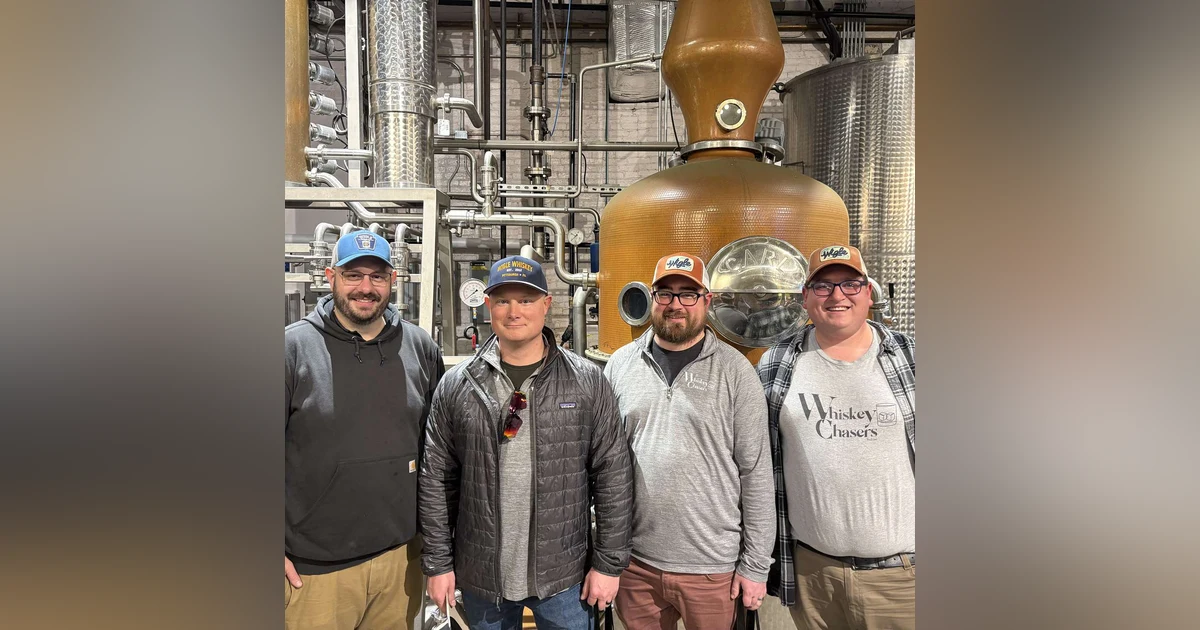
Send us a text We had the opportunity to sit down with Alex Trask, the Production manager and head blender of Wigle Whiskey. We had an amazing time interviewing Alex and hearing about his process and the state of craft whiskey in Pittsburgh. We discussed Monongahela Rye, American Single Malt, and the process of Finishing and how that imparts flavor. Alex is a real leader in the finishing world and is looking to triple or quadruple finish in the future, and really enjoys playing wi...

 Apple Podcasts
 Spotify
 Castro
 RSS Feed
 We had the opportunity to sit down with Alex Trask, the Production manager and head blender of Wigle Whiskey. We had an amazing time interviewing Alex and hearing about his process and the state of craft whiskey in Pittsburgh. We discussed Monongahela Rye, American Single Malt, and the process of Finishing and how that imparts flavor. Alex is a real leader in the finishing world and is looking to triple or quadruple finish in the future, and really enjoys playing with those flavors! Listen in to hear our full interview, and please show some love to Wigle by following them on social media. Be sure to keep an eye out for their bottles.
https://www.facebook.com/wiglewhiskey
https://www.instagram.com/wiglewhiskey/
Wigle whiskey
Wigle Whiskey is an award-winning spirits company producing small-batch, craft whiskey with unique and distinctive flavor profiles. As a true grain-to-glass producer, Wigle cherishes the art of craft distilling, sourcing grains from local farmers and crafting each bottle by hand with an expert distilling team. This commitment to quality and tradition, rooted in the rich history of whiskey production in Western Pennsylvania, has earned Wigle national recognition, including being named the Most Awarded Craft Distillery by the American Craft Spirits Association and ranking among the top 10 best craft distilleries in America by USA Today.
Website:www.whiskeychaserspod.com
Facebook:https://www.facebook.com/whiskeychaserspodcast
Insta:https://www.instagram.com/whiskeychaserspodcast/
TikTok:https://www.tiktok.com/@whiskeychaserspodcast
Thanks For Listening! Tell a Friend!
Welcome to the Whiskey Chasers, where we talk about our passion for whiskey and its history, either amongst ourselves or while interviewing distilleries. While enjoying a glass. I'm Steve. I'm Nick, and I'm Chris. Please enjoy responsibly while enjoying this week's episode of The Whiskey Chasers. All right. Welcome to Whiskey Chasers. We are at Weigel Whiskey? Is it Wiggle? It is Wiggle.
SPEAKER_03I was right. I win. They were like, it's Wiggle. I was like, I don't think it's Wiggle. It's a fair question because we've gotten flack in the past. So I think historically it would have been pronounced Weigel because of a German name. You were right. Herm was the most right. However, the original owners would joke that Pittsburghers are going to just mispronounce it. And so let's just make it easy on them. Just call it Wiggle. And Wiggle Whiskey just flows off the tongue a little bit better. So that's it's Wiggle Whiskey.
SPEAKER_05We're in like on the distillation floor recording, which is awesome. Actually we are looking at the still. There's there's only been one other interview that we've done this for, and it's still 630 out of St. Louis. There are no small Arby's an old Arby's. So you can't not walk in their distillation floor because it's their no normal like main floor. So yeah.
SPEAKER_04And we are with the master distiller. Is that accurate?
SPEAKER_03Is that their is that the title head distiller production manager? But yeah, I do all of the blending and and uh run our barrel program and uh and manage the operations of our our distillery. Excellent.
SPEAKER_04And Alex Trask. Alex, great to have you on. And you gave us a great tour of the place and you asked us if we had any other questions, and then we said, not yet. Wait, yeah. We do, but the mics first. Yeah. And first thing I want to do is just kind of go through what Weigel is and how you guys got started, and then we'll talk more about some of your process and your products and and what all we have going on. So I see a bunch of colonial artwork talking about uh the the whiskey rebellion and and all of that, and Alexander Hamilton being a tax collecting bad guy.
SPEAKER_00Mean guy.
SPEAKER_03So I our our namesake, Philip Wiggle or Philip Veigel, was an integral part of the whiskey rebellion that happened in this part of the state. So, you know, there were tons of stills. So uh reeling after the Revolutionary War, America was in a ton of debt, and so they decided to start taxing based on the size of your still, I believe, and as opposed to what you were actually producing. And distillation was so prominent that the western part of the state felt that they were particularly affected by that, you know, because of how ingrained it was in the culture. So they were not too pleased to pay those taxes and hence a rebellion of sorts. And Philip was, you know, there was a number of conflicts that occurred, but essentially he was sentenced to be hanged in Philadelphia. So he was going to be marched across the state, and then he was eventually pardoned. So he he didn't die then at least. But that's just a very like TLDR version uh of the story. But it is cool because this area has so much rich history regarding distillation, and you'll see that emulated uh through us. And then, you know, we we talked a little bit earlier about Liberty Pole and those guys and their namesake as well, and and how important that stuff is to our history and our identity here.
SPEAKER_04Fantastic. And you guys have a wide array of products, and so you guys have a lot of whiskeys, a lot of flavored whiskeys, regular whiskeys, gins, all kinds of stuff. So where uh you have a particular affinity for whiskey, but everyone has to have their gins and their vodkas and all that such. So why all the experimentation with the flavors and everything?
SPEAKER_03So we started with rye and we sold the new make, like when we first started, so we were just selling white dog, and then we you know progressed on there with with with gin. And our gin, uh, as I mentioned, you guys on the tour uses the same base as our rye whiskey, so same identity. And so we started with really humble offerings, and then, you know, I think we were looking for other ways to distinguish ourselves, and so innovation became a huge, huge part of that. So we sort of have a reputation for not being afraid to experiment. We've had a number of products that, you know, are no longer available. Some of them have maintained it, you know, it's been super interesting if you look. Like, I still get inquiries about bottles that people had six years ago, and I'm like, I've only been with the company three years, I've never heard of that. And I'll ask, you know, someone else who works there, they're like, oh yeah, that was a weird one. And we're never gonna make that again because it was too difficult, or just something like that. All of those like anecdotal things, but it's still a core part of of our identity and who we are. And so that's something that I'm really happy to to sort of continue to push within our process. But yeah, so not afraid to experiment, trying to balance that with also maintaining like an identity for a serious whiskey company. Like I want, you know, when you when you experience our whiskies for them to be comparable to other great whiskeys that you've had. So it's not just for fun, you know, um, there is an intent behind it.
SPEAKER_04Yeah, when we uh we've done a um a flavored whiskey series before, uh just to kind of talk a little bit about what that is and and and you know, it's uh flavored whiskey kind of has a bad rap in that way. But when we when we did that series, we did a few of them that were like craft distilleries that did them, and then we also did like old smoky and and and all you know that kind of standard stuff. And there was a definite difference in like quality, but also just like depth, foolproof, things like that that made it so that yeah, they're doing a lot of flavor, but that doesn't mean that they're also don't have good whiskey behind it, you know.
SPEAKER_05So you guys started with rye and we're in Pennsylvania.
unknownYes.
SPEAKER_05Do you guys use monicahaler rye?
SPEAKER_03So that's it's interesting that that that question in recent PA Distillers Guild talks, we've actually been really working hard to come together as a group and define what that is. I think that you know, people have a general idea, but there isn't any consistent, there's not a consensus, right? It's it's like, is it specific to the type of rye that you're using, the type of still that you're using, you know, where that rye was grown, et cetera, et cetera. And so right now it's it's we just had a meeting last week, next one's in December. But we're we're trying to just codify, hey, this is what that is, so that when you say that, you will know what that means as far as like how that that whiskey was produced. So when we started, it it's not that we we didn't regard the Monongahela region and and uh the the significance in regards to rye production, but the whiskey and our mash bill wasn't meant to emulate any sort of recipe or anything like that that we had found. And so I don't like it's it's something that you know historians would have a much different take, and and there they say, hey, this is the only accurate way you can do it. But it's hard because we're trying to get a group of dozens of people to agree because we don't want it to be, we don't want it to just exclude people unnecessarily either. Uh because we're all really trying to do the same thing, and that's that's make great whiskey. And so, how can we all do that while also providing transparency to the consumer? So when you come visit our state, you know, hey, this is what it is. And so, you know, we we you might hear that word thrown about, and and and I'm not saying that, you know, people that say it are doing anything malicious, but it just hasn't been defined. There is no definition for it yet.
SPEAKER_02Yeah, that's what's interesting with talking about craft distilleries, especially, is that you know, something that's been around for so long and still reaches back very much to its history and its roots, but it's still evolving. Yeah, and you see that so much more with the craft distilleries. Like you said, we're you know, you're trying to define something that's been slowly becoming something, right? And you're still not there yet.
unknownRight.
SPEAKER_03Yeah, and and it's it's been interesting because you know, history the same way, like more information comes to light, and that might change sort of like what your your perspective or definition of something is, and and so like you know, the types of still, like the design of that still going as far as that, that is something that could be debated regarding like is that pot still even indicative of of what they would be using, you know, at that time. So yeah, lots of variables and and more information is always coming. Interesting.
SPEAKER_05I I asked because I like the rye, rye is like one of my go-to things, and we've started branching into distilleries that use that that use that that type of rye and trying to figure out okay, is there a flavor difference? Like, and what is that impart and what does that change?
SPEAKER_03And I think if you would look to like probably what based on my conversations I've had with other distillers, it's it's a full-bodied, aggressive, lots of oils, like this viscous mouthfeel, just bitey rye. That that would be indicative of that. Exactly what we've not something that's like ashamed of itself or anything like that. Yeah, exactly.
SPEAKER_02Oh, we always say offensive, like air quotes offensive, but in the good way, in a good way, yeah.
SPEAKER_03You know, and and so it's like I think our rye, you know, is is more approachable than maybe what I've just described, which is good. You know, you you do need people because uh rye still obviously has a long ways to go in regard to popularity relative to bourbon. And so that's that's an ongoing sort of uh balance that we're trying to achieve where you can't deny bourbon's success and its presence, but we really want to highlight rye whiskey. That's that's my favorite style of whiskey, and and uh that's what we're champions of for sure.
SPEAKER_02We're talking to the right guy. I know, right? We are definitely biased towards rye, right? We love bourbon, uh, but we love rye, high rye bourbons too. And your rye might even be a little bit more, like you said, maybe not as air quotes aggressive, but you could you guys age it a little bit more than some of these craft distilleries are doing.
SPEAKER_03Yeah, we're we're really fortunate to have the inventory available to uh age it at least four years. And and like I said, we're we're approaching a time. I just uh released a six-year blend. Um, this next single barrel that I've picked is six years old. Next year, I think we'll have we'll have a nine-year single barrel released it uh in the quarter four of 2026. So we're very fortunate to have that inventory uh of higher aged rye. Uh, not that age statement's the end all be all, uh, but it is nice to have more colors to paint with when I'm making my blends and those types of decisions for sure.
SPEAKER_04When we were going through the the tour, you mentioned that your fermenting pots here, you have four of them, right? Four or five? Four, yeah. Four of them. But it kind of is a bottom. Like you're you're making a lot of stuff to ferment, but you you can't get it to the still right away just because of your size. Why do you have so many fermenting tanks? Like, why'd they build up that section so much?
SPEAKER_03I think when I when I came on, it was sort of this this balance where there was a schedule that we could maintain, you know, with with having all of them filled and the and the still schedule. And so it was sustainable. And I don't want to say it was wasn't intentional, but it it lacked in that area a little bit. And so now we're taking a much more intentional approach about projections and and how much whiskey do I need to make this year so that in four years or six years I I have enough. And like I said, not that that wasn't regarded, but I maybe it just wasn't focused as much before. But it's because those are part of it, you know, is is just those are a lot cheaper, right? Like like one of those could cost us 40 to 60,000, which isn't not a lot of money, but relative to us still, you know, it is. And so if you can just adjust your schedule accordingly and as in regards to when you start those ferments, you you can achieve that balance. But is that the way I would have approached it if I were designing this? No, but there are also trade-offs you have when you're scaling a business as opposed to just starting saying, hey, this is what we want to do from the start. So you just you have to just add on, right? Slowly but surely. And and there are some things that you can address and some things that just, you know, maybe there's a barrier to due to the cost or other things like that.
SPEAKER_05Now you've got something in front of us. Yeah.
SPEAKER_03Now what are we doing? So this is part of our brewer series. So we're trying to collaborate with a local brewery every year and take one of their beers that was aged in a barrel and then age one of our whiskeys in it. So this year we partnered with East End Brewery here in Pittsburgh, and we they had barley wine barrels that they aged their Gratitude Barley Wine, which is like a really sought-after annual release of theirs. We took our rye whiskey, aged it in there for about six months, and then we're gonna release it here in a couple weeks. So it's our rye whiskey, barley wine barrels, and I'm really excited about it. It's it's a project that as I've been tasting it, as we've been coming along, like I'm like, man, I can't I can't wait to get it into bottles.
SPEAKER_02So yeah, especially for this time of year, because I I'm getting a whole lot of like honey off of this. But it's it's it's sweet without being overly sweet, but that rye adds all the depth and everything you need. It's a great like winter time kind of drink.
SPEAKER_05Finishings is uh we briefly talked about finishings earlier. My first experience here was I'm a big scotch guy, I'm a big rye guy. You guys do the kilted yeah, kilted cast rye whiskey, yeah. Which when I tried it in the bottle that I got, it was uh LeFroig barrels that you guys were finishing it in. Which is like our favorite. Which, yeah, like our favorite scotch. So it was like, what the heck? No one else is doing this. I've never heard of this before. But then that led into a conversation with the the gal that was kind of helping with the tasting, and she said, Yeah, our our barrel finish program is very unique, and we never know what's gonna come up. Like they've got ideas back there, you know, point back here in the distill distillation room. Like they've got ideas back there that we never know what's happening, but it's always something unique, interesting, and fantastic. What why? Like, where is this coming from? That's not normal, I feel like.
SPEAKER_03Um, so I think that's just as far as like areas that you can express yourself in and find new things. There are so many variables when you make whiskey, where you get the grain, the proportion of grain, how you distill it, how long you age it, you know, all of that. And and those are great. And we continue to try to push that. But then I think to me, you get flavors that maybe you weren't anticipating with these barrel finishes, or flavors that you couldn't achieve otherwise. And and I think I want to continue to challenge myself as a blender and and challenge us as a company to push that envelope. And so sometimes you have to kind of reach to get to that because there isn't something on the market that you can compare it to. Like it's not a safe bet necessarily, for sure. And I have gotten, you know, in a little bit of trouble for some of the stuff I've put into barrels, but that's because I I I really have a clear vision in my head of like I I understand our rye whiskey. I've interacted with it a ton and our bourbon as well. So I can I can kind of visualize if I pair it with this and I'm familiar with this, even if I'm not familiar and I understand the flavors, what that might turn out to be. And that's it is a gamble. I'm not gonna sit here and pretend I have a crystal wall, but we've been very successful with that lately. Fortunately, uh, like with uh we had a um rye whiskey that went into sherry barrels that then we put in mezcal barrels. That was uh really, really popular. Um, you know, that sounds awesome. Yeah, and and um, but that was just hey, I I wanna I think these flavors are gonna play really nicely. The mezcal is gonna apply the the smoke and and that earthiness, and I love mezcal so much. And I think mezcal and rye have a lot of similarities in in those profiles. The sherry is gonna add that sweetness, you know, the the fruitiness to kind of cut that and balance that out. And if we can accomplish it, you know, through the right aging time and and things like that, I think it'll be successful. And and it was so like I'm not gonna pretend that it it wasn't lucky, but it it was also very intentional.
SPEAKER_02And you just never know when you're trying to make those pairs. Some things that like, because we even try to, we we do a lot of pipe smoking. So we try to pair uh pipe smoke with uh you know what we're drinking, or uh it's not always as easy as it sounds because we've definitely not gotten it right a few times, but sometimes you get it just right and you're like, okay, I this does work, you know. But like you said, it's a gamble sometimes for you. It's a bigger gamble, obviously. Uh but I just love the idea of you know, not just having something on its own, but let's let's do something else to this. Let's let's try to push the boundary a little bit. And that sounds sounds like you guys are doing a great job of that.
SPEAKER_04Yeah, and this particular bottle, there this particular glass, you said this is coming out later on this year. The barley in it or what the the from the original barrel, I think comes through at the front end like a lot, and it's really good and then countered with the rye spice. It it works out really nicely into a nice finish. Yeah, yeah.
SPEAKER_03Yeah, and I think you know, to to what to your point about just gambling and and and being okay with it not turning out the way you want it to be. So a great example just happened where we had this um heavy uh malt whiskey that that I inherited. We I haven't made that mash, but it had like crystal malt, chocolate malt, black malt, and it's just like this very heavy whiskey, which is kind of a beast to work with because it's just so strong in those flavors. And so we do have an outlet for that called our northern exposure, and that's we finished that in maple syrup barrels, and that maple sweetness cuts that. But I have a ton of those barrels, and so I was like, man, I I kind of want to do something else. So I took uh orange liqueur barrels from France, finished it in that, wanted to contribute some orange flavor. I got the orange flavor, but it still was just like a really formidable whiskey. And so then, you know, you're not gonna say that's a failure. So then I bought cherry liqueur barrels and then I put it into there, and that's where it's sitting now. And so we're we're just gonna see how that develops. And that's the cool thing about it is that like there are certain cases where it goes too far in a direction and you can't come back. Uh, you still have to find an outlet. We're not in the business of dumping whiskey down the drain. But I think just being okay with, hey, this didn't go exactly as I planned. So what can we do to get it back on track? Uh and so not being discouraged by that and just saying, wait, this is an opportunity to try something else now, you know.
SPEAKER_02That's how you learn and innovate.
SPEAKER_03Yeah.
SPEAKER_02Figure it out for something else later down the road. I have a peek behind the curtain kind of question for you.
SPEAKER_04Where, how do you come across getting those barrels? Like, do you have to know a know a person in France and be like, hey, I heard you have an orange liqueur, can I have one of your barrels? Or is there like a Facebook or like a marketplace kind of deal? Yeah. Or like a broker.
SPEAKER_03Yeah. So uh fortunately, I have good relationships with several brokers. And so usually how it works, especially from Europe, they're gonna place an order for a container, right? And so they're coordinating the logistics of like different regions in France that they're getting those from. And then they'll send that out. I'm on their mailing list and like, hey, these are what we're importing. You can you can speak for those barrels if you want. Uh, and so you put your name on that list. And so um it's tough because like, what if I'm not in a position that like I really want that barrel, but like I already have too much stuff sitting in it. I'm like, man, I hope you can get access to that next year. Um, or you know, sometimes it'll be a super local thing like this with this barley wine where I just reached out to a ton of different breweries and said, hey guys, can I give you these barrels for free because I've aged them, you know, and for bourbon and rye, you can only use them the one time. So they're yours, but I just want them back. And then we'll get them back and we'll age our stuff in them. So they get free barrels, which is great, and then I get free flavor out. Kind of a win-win. Yeah, exactly. So uh yeah, it it depends. It's it's uh sometimes it's it's by by chance, by luck. And um, you know, you go to these trade shows, like we're members of the American Craft Spirits Association as well as the American Distilling Institute. So we go to these conferences, so we'll network with other distilleries, uh, other businesses, and and just continue to see what's out there. And and uh that's how you come across some of the cooler opportunities.
SPEAKER_05It's really fun to hear all this because so we mentioned before we started recording that we also have a club, like the podcast came out of the club, and each year uh for the club, we have a different theme for the year. So we have an idea of what to get bottle-wise. We have a different bottle each month. Well, last year's theme was all finished bottles, and it's so uh fascinating to hear how you decide like what do I go after? Like, what am I filling in missing gaps? Am I adding what does that look like? How do I find the unique stuff that fits? Right. The bottles that we had last year were really good. I can't say that they were this good. Like it's the idea. Yeah, I appreciate the idea of uh jumping out there and just experimenting with something different where it may fail, it may succeed. I think that adds to why I'm like this is some of the best finished, one of the better finished bottles that I've had in a long time because it's not normal. There was a huge possible failure, but it's actually really good.
SPEAKER_03Yeah. And speaking of of the guys at Liberty Pole, I mean, I don't want to give away too much, but like they've also experimented with this type of finish and and they've expressed to me, because I was curious, you know, like that's the advantage of having peers is sometimes people have done the experimenting for you. And so I was like, hey guys, what how and they're like, Man, we we loved it, then we hated it, then we loved it again, then we hate it. And it's it's you know, sort of this relationship that they have with those barrels. And so I'm like, man, hopefully I can capture it at a time where we love it and you know, get that get that into bottles, but you know, that that like we we already expressed it, it is a chance that it won't go that way for sure.
SPEAKER_04And you're the production manager, which means it sounds like you're making a lot of these decisions. Uh, is that does does does Wiggle give you a lot of grace in terms of saying go out and do what you are wanting to do?
SPEAKER_03Yeah, I I'm very fortunate. I I don't get to act, you know, autonomously or um, and we do have you know certain things to contend with, like we do want it to sell. So like even if I might think it's the coolest thing in the world, if if there's no chance that it sells, that's a harder argument. Um but they I think also there's a there's a trust there. And so like the more successful iterations of this that I can produce, the more trust I get and grace that I would receive to to continue to try to experiment. And I, you know, sometimes you have to use data, like I think it's very important. And so you're looking like, hey, is is this trendy? Is this popular? And and I'm not in interested in chasing that. I want to be aware of it. You know, I want to say, like, hey, this this type of barrel finish like was tried and and I it was really poorly received. So like let's not do it. And and a great example would be like Amberana, like that was really, really trendy, and then it kind of just carried sort of this like ominous present within craft whiskey drinkers, and they're like, Yeah, that's just not done super tastefully, or there's too much of it, and and because it is a formidable way to work with it. Overpowering something, yeah, absolutely. And so that didn't mean that I was gonna just not try it, and but I was gonna have a reverence for that and and just know, and then I had to get the right project. So sometimes, like that the the way that I was able to use that was a collaboration with like a local clothing shop, and we do an annual release with them, they're called shop 412, awesome guys. But we knew the collaboration was happening, but they gave me full creative freedom, so then I was like, cool, I'm gonna do what I want. And this year, so it's it's been uh we've done it for three years. The two years that I've been uh in charge of the product, it's been a honey cask finished rye. So uh we'll use local honey, get that honey cask, and then I thought it was really cool because you can do different variables. I can use a different type of honey every year if I wanted to do that, but there's also like I could add different wood chips to that if I wanted to add staves and finish that. So this year to build on last year's success, uh we I I used Amberana wood because I I thought that that would play nicely and and uh I it was not in there for a long time because I because I had that reverence. Like it wasn't like I was just like, this is cool, let's see what happens. Like I was meticulously tasting it and saying, like, is this gonna overpower? Because I knew that it could, and I knew that the whiskey consumer was very sensitive to that. When they saw that word, they were already like bracing themselves because they're like, ugh, you know.
SPEAKER_05Yeah, you get to that point, yeah. It you overwork things. Um, yeah, for sure.
SPEAKER_04Honey seems to be having a moment right now. There's lots of people doing honey barrels, but not a lot of rye in honey barrels. With the honey.
SPEAKER_03So, yeah. Yeah. The first time I heard about it was um Belmade doing their version of it and how popular that was. And then I know that Nulu does a honey barrel, and then there's a distillery in Virginia in Newport News called Ironclad. They didn't a honey cast. So, like, I saw that and I was like, man, that's that's really cool because honey is this really uncontrollable thing where every year that honey's gonna taste if you're tending the same hives, like what are those bees pollinating? What are they interacting with? And so, like, I thought that was a really cool variable where it's the same thing within whiskey production, depending on the crop you might get. Was that a winter rye? Like, you know, when was that planted or what did the how much rain was there? All of those things that we just have to contend with. I kind of was like, let's let's throw another variable in there.
SPEAKER_04I'm a beekeeper, so like all my high, like I have the same hives that give me honey every year, it's always different every year.
SPEAKER_03So, like you said, it's different based on the season. And I I love something that can evolve, right? And it's like this was what was available to me at this time. So I want it to be recognizable, but I expect it to evolve.
SPEAKER_02Doesn't get a whole lot more like small batch, like than that, you know.
SPEAKER_05Right. So wiggle's very local. You guys do a lot of you've tried to do a lot of local like grains locally sourcing those things. One thing that caught our attention uh was a grain that you sourced uh that was corn, that we've had our fair share of different red corn, but we've never had Wopsey red corn.
SPEAKER_03Why? So it's Wapsy. Why? So the Wapsee Valley is in Iowa, so it's it's an heirloom corn grain that it was originally grown there. And how I understand it through conversations with with the original owners and uh former members is that that was the first bourbon we actually ever produced. So the farmer just said, Hey, I've got this, I think it would make uh cool whiskey. You guys seem to like to make interesting things, and we were willing to take a chance on it. And so we took that grain and and um you know it has a higher protein content, so it's lower yielding. Um, it's not nearly as sweet as a yellow corn bourbon. Um, but what I found within our portfolio is it's actually a very good transition from rye to bourbon or the other way around, where it has bourbon on the label. This was made with corn, but it has this earthiness and this depth to it that uh, you know, people are a little bit afraid of, but it's not in an overpowering way. And and sort of just bridging that gap to try to convert the bourbon drinkers uh to fans of ours.
SPEAKER_02So interesting because we brought that up when we tried it. And we said this is such a transitional type of uh drink, you know, as far as flavor goes.
SPEAKER_04All right. Well, uh my glass is empty. Yeah, what is that other one? Yeah, yeah, or something else.
SPEAKER_05So, my next question before we jump into this, right? So you guys are local, you do local stuff. There's something in your portfolio that is not local to America, Aqua Vit.
SPEAKER_03So that's an interesting one. We actually, I I think as far as I can recall, we didn't initially label it as an Aqua Vit because, as you mentioned, there was sort of just this like unknown about it, where the American consumer is definitely not super familiar with that, generally speaking. Um, you know, depending on where you are, like the West Coast. I went to, I was in Portland at the largest like Aqua Vit bar, you know, that I've seen. And so an Aquavit bar, like all the Yeah, it was like a Scandinavian bar that just had the largest selection on the West Coast. That's cool. It's super cool, yeah. Yeah. Um, my brother just went to Norway and and had his fair share. So, but but anyway, we um we have Picklesburg here in Pittsburgh. Um, and it's a three-day uh sometimes festival where you know it's all about pickles. Uh that sounds awesome. I know, right? Yeah, and uh and so this product was I don't I don't want to like misrepresent it. I don't know that it was that was the impetus for it, but it certainly doesn't hurt the success of that. But it was the the spice loading on that aqua vite with the caraway, the dill seed, the dill weed, the garlic, all of that, those are like pickling spices, and so it definitely represents a pickle flavor, but has a little bit of sugar added to it so that it's a bit more palatable. And we could by all means call it an aqua vite, but it is not a traditional aqua vite, like the caraway and stuff, you get that, and and I've had uh in aqua beats, but you know, it's it's unmistakably very pickle y by design, you know.
SPEAKER_05Which is very interesting. Very good. We found there's at least one bottle in just about every craft distillery that we've gone to that's in their portfolio that doesn't match the area, but somehow works really well with that within that area. That's fun to see the AquaVeat yeah, it works.
SPEAKER_03Speaking of like innovation and pushing that product forward, so there was a local hot sauce uh and and pickling company that they would buy barrels from us and they would age their fermented hot sauce in. And so I was like, man, that's really cool. That sounds awesome. Yeah. So then I said, I think we should age this aqua vite in those hot sauce barrels. So we will. And next year we're gonna release that. So it's a hot sauce barrel-aged pickle aqua vite.
SPEAKER_02Dang, just sounds like really just better and better for me.
SPEAKER_03Like you like big spice, big big spice guy, and I love pickles, so and it's it's not overpowering because it has that sugar in it, and the hot sauce they use uses jalapenos and serranos, so like it's not like a ghost pepper or habanero where that can be overpowering. So it's definitely more broachable, can make like a nice spicy bloody merry, that kind of thing. Um, but really excited to release that next year. So, what are we drinking now? So, this this is what we we talked about before, where this is that rye aged in a honey barrel and then finished with Amberana. So the cinnamon is there, but it I felt like I definitely didn't want to age it longer, but I I pulled it out at sort of what I deem to be the optimal time, and it contributed the flavors that I wanted it to, and I think it's just more nuanced. You guys don't have the reference for last year's release, but it's just like an evolution of of that honey barrel. So still get sweetness, maybe not as prominent, like the honey doesn't shine through as much, but honey, cinnamon, like rye, it just like plays together really nicely to me. So this is a product that cool. I got that out of my system, so to speak, and and not that I I did it with haste, but I'm really excited now to move on to next year and see like what other types of wood finishes I'm gonna do with this product and and see how it continues to evolve.
SPEAKER_04Yeah, the honey on this makes it just more sweet. Like you said, it doesn't really have a honey flavor, at least I didn't pick up on that, but it does add a sweetness to it.
SPEAKER_02Yeah, it's uh it's like everything you would expect or want out of those flavors all the way up to the very edge without going over.
SPEAKER_03Yeah.
SPEAKER_02And just the right amount.
SPEAKER_03I appreciate that because it's it, like I said, I had a lot of reverence for Ambrana and what it can do. A lot of horror stories that I've heard within the craft distilling scene, and just like, oh, I came back after the weekend and my product is ruined. And you're like, well, don't want to do that, you know.
SPEAKER_05So I hear a lot of, at least so far, a lot of rise for the finishings.
SPEAKER_03Do you stick with rise or do you also try to do bourbons? We do have last year with the brewer series, we did bourbon in a stout barrel. And so we do have uh Madeira finishing that's one of our staple products. And right now, that is one of my large focuses is trying to take that bourbon, put it in those finishing barrels, and and produce something as successful as I feel that our rye's have been. It's just like I'm in part, like, you know, I love rye. And so, like when I when I think about flavors and how they come, I'm like, man, but would it be better with rye? And this barley wine one that we did, the one, the first one you guys tried, I actually tried it with both spirits. I tried it with bourbon and I and I took that barley wine and mixed it up and and tried it with rye. And then as a team, we decided the rye was just the superior product, so that's the direction we went. But that one did not start as like rye. I didn't that wasn't my my view with that. I wasn't like, oh, it has to be rye. And so we do have bourbon right now in a mezcal barrel that was really, really good. And I'm thinking about just throwing it in another barrel just you know to see what happens. And so, like that that's something that could be released next year. But yeah, bourbon, it's not at all like I'm neglecting it. It's it's just like I get so excited with the different things you can do with rye, especially like I really, really like our rye, and not to say I don't like our bourbon, but like it just has these awesome, awesome flavors. And I just think with sort of you when you're cooking, right? You have a palette that you're just used to, that you're you're accustomed to and you kind of work within that. And so I just I love rye, you know, and it shows through, but it's not like I I don't care about bourbon. Uh I have to respect it and and and I think we make a great bourbon, like the Wopsie, but like, wouldn't that be cool to take that Wapsie bourbon and then finish that in something, you know? Like so uh definitely the wheels are turning and and uh you know it's it's on the horizon uh for sure.
SPEAKER_02Well, I think for the amount of stuff that you guys are doing, the the different things with the flavors and stuff, that that bourbon really kind of might be overpowered sometimes. And I think that rye kind of allows the flavors to play out without ever becoming the like center stage.
SPEAKER_03It's it's interesting you say that. So, you know, we have a sherry caspari uh and a port caspare, and then we have a Madeira Casp bourbon. So all fortified wines uh from similar region in Europe. And so the Madeira bourbon, I don't let that finish nearly as long as I would those ryes, and to your point, because I feel like it can get over overpowered very quickly. And so when I taste that, I want it to be unmistakably our bourbon. And then I want you to like realize that it's it's an evolved flavor, there's more depth to it than just our standard bourbon, but I want that identity to shine through. So, like to your point, that's something I have to be very sensitive to. Where the rye, I have some of these barrels and and not by choice, that like set in finishing barrels for over four years. And then I'm like, man, but it's still rye, like it's still unmistakably rye whiskey. And so I don't know that I could do that with bourbon. So just have to be very sensitive to that.
SPEAKER_04Your last job before you were here was at Copper Fox over in Virginia, which I'm a huge fan of. I am the resident American single malt lover. Oh, awesome. Uh, whereas these Nick is questionable. Chris has decided. He's not a fan. I'm not a big American single malt. Yeah. But I can appreciate it. But yes, and I have not had your American single malt here. I don't know if you have any or not, but if you do, I'll be buying a bottle. But I think it's a little bit more limited for you guys.
SPEAKER_03Well, for us, we we just started that. So that was something that, you know, with with the background that I had, I wanted to bring up here. We had made a a whiskey that could be passed as an American single malt by definition, but that was not the intention necessarily. And that's that heavy malt whiskey that I spoke about that we finished in maple barrels. That would be defined as a single malt because it's it's 100% malted barley, but I wanted to create something that, hey, this is going to be aged and released as this within this category. And so, you know, designing a malt profile and an aging sort of system for that. So we just started doing that at the beginning of last year. So it's it's still in its relative like infancy stage. We're a little bit behind, uh, you know, relative to where the market may be, but I'm really excited, you know, in in two to four years to see how that flavor develops and and how that comes along because uh through our trials, people were just so stoked about it, but now it has to sit and wait. You know, that's that's part of it.
SPEAKER_04I noticed that came out and really took over a couple of years ago. Do you think that American single mold as a category kind of has staying power? Do you think it's gonna be around for a while? Like, should these craft distilleries be making one?
SPEAKER_03I think it's it's interesting. I've I've talked to a number of different people about it. I think that more were, I don't want to speak poorly of any any distillery, and and those who stake their identity on that, I think they're doing great things like Westward. I think they have an amazing product. Westland, Westland makes like there's some great American single molds. Virginia Distilling Company and Virginia, I'm good friends with those guys. They they make an amazing product. So, but they fully committed to that. And I think that it has a place, but at least for here, I don't ever see it outs outselling our bourbon, outselling our rye. I just don't, but I do see it being more regionally indicative, like kind of how we see rye, but rye doesn't really like Maryland rye isn't truly defined and empire what rye. Like we know what those are Indiana style rye, a 95-5, you know. Like we kind of know what those are, but they don't truly have like codified identities. But with single malt, I see it, I would hope that it follows a similar path or like a northeast single malt versus like a southeast single malt versus the west coast. And like, you know, we have a we have peat bogs here. Like I can go get peat. So like would it would a peated uh single malt here, but it was American peat, like would that be cool? And just trying to make it very distinct from from Scotch, you know, uh you have to have reverence for that industry and and uh but uh not trying to like emulate that to a T, but I think it could be really cool to have just more regional differences. Not that we don't have those already, but maybe that pioneering that movement where like, hey, if I go here, I know the style of single malt that I'm getting. Just kind of like Scotland has where Lowland, Highland, Isla, all that stuff.
SPEAKER_04That makes a lot of sense. And there's definitely is a difference in flavor from your West Coast, uh Westward kind of single malts and your Virginia distilling company single malts or copper fox single malts. Absolutely. So there's definitely is a difference in the palette on them. And yeah, I think that's a good point that regionally you could separate those out and make kind of like like a Scotland sort of deal where you have different regions.
SPEAKER_02That is a very interesting idea. I'm not the single malt guy, but the idea of uh, because we we were talking about this a while back. Yeah, they're trying to pin down what is American single malt, right? And what that what does that look like and all that, but to allow it to vary from region to region or area to area, that's an interesting concept that I never thought about. I just figured it'd be like kind of we're gonna agree it's this one thing and that's what it is, and that's what it is, right?
SPEAKER_04Which it has been defined now. So there is a definition for it, but that definition is pretty loose.
SPEAKER_03We absolutely could make it more that way. And with malt and the different profiles you can accomplish the different malting practices, like floor malt versus drum malt versus you know, crystal malt, and all those different like that's where I think you're gonna see a lot of the innovation is like what percentage of those malts are you gonna put in there? Similarly to now the explosion of all these different types of corn and other grains where you see that. I I see malting taking uh you know a similar path.
SPEAKER_05Yeah, so uh quick question for Chris is gonna love this question because we when we talked about your bottle, the Whopsie bottle on the podcast, we also talked about how you guys are um really big within the community, right? So uh for the uh Philadelphia Marathon, uh you guys released a bottle for the Pittsburgh Pirates. Pittsburgh, yeah, Pittsburgh. So you guys released one for that. Um you guys partner with the Pittsburgh Pirates.
SPEAKER_03The Pirates we we have a sponsorship of. So we we have three bars that have our name on them at the club level. So uh yeah, we that's a really cool sponsorship that we have. Um so that that's uh a cool outlet that that uh I think is nice for the area. Um so yeah, there are a lot of these sort of like singular opportunities that we look to to take advantage of or collab with.
SPEAKER_05Do you guys think uh with that sponsorship from the Pirates, do you think you'll do like a grog?
SPEAKER_03We've we've definitely thought about um you know how we might optimize that that relationship, but it it is kind of hard because their their food and bev is a little bit separate from like the actual organization. And so like that's who our partnership is with. And and sort of when you think about sports and how that's uh people that's a very different drinking style than you know uh what we're accustomed to. And so we just haven't found like the perfect fit for like the format of what we're making that fits in with with baseball and and that in particular, but uh definitely continue to explore that.
SPEAKER_04Well, Alex, we really appreciate you taking the time to talk with us and inviting us out and just hanging out here on the floor like this. Absolutely, really cool. It's been a blast. And so um we don't want to take up any more of your time. But is there anything coming out here at at Wiggle that we should know about?
SPEAKER_03I think uh in a couple weeks we have our sort of our our holiday drop. So we're gonna have an eight-year single barrel wheat whiskey that uh uh only 175 bottles, so super limited. Um, this this barley wine finished rye whiskey is coming out. Uh, that's that's really exciting. Um, but um I think I'm really looking forward to you know next year where we continue to to push the envelope and and just see what we can come up with. And uh, you know, definitely excited to see have you guys see what we're able to come up with. And and uh because we this year I think was was a huge big step for us with the sherry and the mess count, the double cast finish. I want to go into triple and quadruple cast finishes. People look at me like I'm crazy, but like I just really want to push the envelope with with flavors there. And so uh I'm excited to see where that takes us.
SPEAKER_04Excellent. And we will have all of the links in the show notes and everything for all your socials and your website and all that kind of good stuff. But uh, but again, thank you very much for hosting you guys.
SPEAKER_03It's been it's been a lot of fun. Big fans. This has been this has been very, very good. Thank you guys. Cheers, cheers.
SPEAKER_04Thank you for listening to the podcast. If you want more great content and other perks, be sure to support the show by clicking the link in the show notes. We can be reached on our website, whiskeychaserspod.com with any ideas for the show. Thanks again.
