
Old Overholt 80 proof and Cornell and Diehl Gentleman Caller!
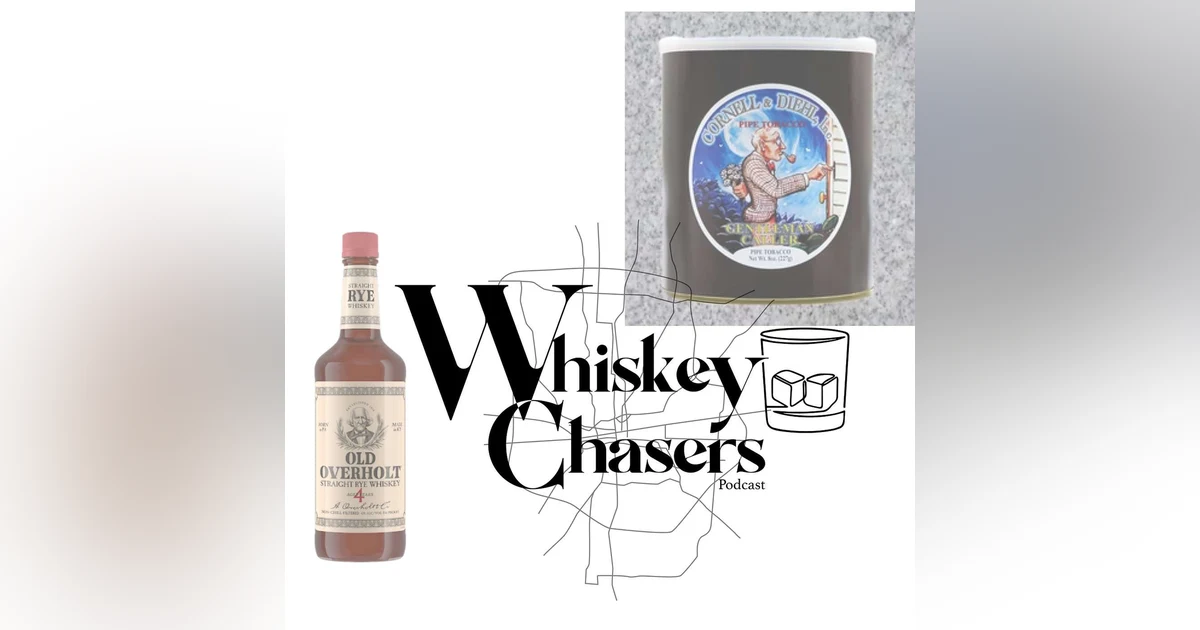
Send us a text Interesting things about the distillery:Said to be America's oldest continually maintained brand of whiskey, it was founded in West Overton, Pennsylvania, in 1810.Old Overholt is a rye whiskey distilled by A. Overholt & Co., currently a subsidiary of Beam Suntory, which is a subsidiary of Suntory Holdings of Osaka, Japan. It is currently distilled at the Jim Beam distillery in Clermont, KYHenry Oberholzer (Anglicized to “Overholt”), a German Mennonite farmer, moved to ...

 Apple Podcasts
 Spotify
 Castro
 RSS Feed
 - Interesting things about the distillery:
- Said to be America's oldest continually maintained brand of whiskey, it was founded in West Overton, Pennsylvania, in 1810.
- Old Overholt is a rye whiskey distilled by A. Overholt & Co., currently a subsidiary of Beam Suntory, which is a subsidiary of Suntory Holdings of Osaka, Japan.
- It is currently distilled at the Jim Beam distillery in Clermont, KY
- Henry Oberholzer (Anglicized to “Overholt”), a German Mennonite farmer, moved to West Overton, Pennsylvania, on the banks of Jacobs Creek in Western Pennsylvania in 1800. His family came from the area of Germany which specialized in distilling “korn”, or rye whiskey, and Henry took up the tradition.
- In 1810, Henry’s son took over the management of the distillery and made it into a business.
- By the 1820s, the distillery was putting out 12 to 15 gallons of rye whiskey per day.
- By 1859, Overholt incorporated his business as “A. Overholt & Co.” He operated out of a new distillery building that was six stories high, 100 feet long, and which could produce 860 gallons per day.
- Old Overholt was one of six distilleries allowed to continue issuing bottled-in-bond, government stamped, pints with a dosage cup atop the cap and doctor’s prescription attached to the back.
- Maybe because Andrew Mellon was a partner in the business and he was the secretary of the treasury under Harding
- Mellon Sold his shares in 1925 due to concerns from prohabisionists
- Beam bought out the old overholt in 1986, when they made the purchase of Dekuyper Peachtree Schnapps. This was during a time when brown liquor was frowned upon and clear liquors were in.
- Our Bottle:
- Pipe Pairings: 80 proof- Cornell and Diehl gentleman caller.
- BIB- eight state burley Cornell and Diel
- 10 year- Irish Flake by peterson
- Monogahala rye- Cornell and Diehl riverboat gambler
- Cocktails:
- Research Sources
https://whiskyadvocate.com/old-monongahela-rye
Website:www.whiskeychaserspod.com
Facebook:https://www.facebook.com/whiskeychaserspodcast
Insta:https://www.instagram.com/whiskeychaserspodcast/
TikTok:https://www.tiktok.com/@whiskeychaserspodcast
Thanks For Listening! Tell a Friend!
Welcome to the Whiskey Chasers, where we talk about our passion for whiskey and its history, either amongst ourselves or while interviewing distilleries. All while enjoying a glass. I'm Steve. I'm Nick, and I'm Chris. Please enjoy responsibly while enjoying this week's episode of The Whiskey Chasers. And we're drinking. Some old overholds. We're gonna start drinking again. Old overholds. Just the good old, regular, 80-proof old overholds. This is their most basic offering. The most basic offering.
SPEAKER_03Is this what they started out with when they they first got started? Yeah, right.
SPEAKER_02Well, yeah. Yeah. I mean, when they when they started, it's it's it's in the 1810s. So, like, you know, I mean, I'm sure it's nothing exactly like this, but it was just a regular old whiskey. It was a rye, rye forward whiskey. Pennsylvania. Pennsylvania rye, yep. Medicinal. Overton, it was, yeah. Which we'll get into that and how they how they were able to kind of keep that throughout. I'm curious now. Throughout uh, throughout Prohibition and stuff and why they're they're a specialty, they're one of the special ones that got to got to survive through got to be made through prohibition.
SPEAKER_01But this is one of those things that have been has been on people's cabinets in like people's cabinets, like not just drinkers. Yeah, it's just been like it's it's one of those things that was just it's been around and a bottom shelter for time out of memoriam. Yeah, like I can't think of a time where I've never like I've I've always seen this on a bottom shelf.
SPEAKER_03I mean, just uh and nothing against the look. It it looks like a bottom shelfer, it just looks like a no-name in a good way.
SPEAKER_01But it's a just some old guy on a label, it's just a brown glass, yeah, like very cough medicine kind of very 50s model kind of thing.
SPEAKER_03Old Overholt is Heaven Hell. Old granddad is beam, right?
SPEAKER_01Old Overhold is Beam. Old Old Overhold is Beam, yeah. And old granddad is beam as well.
SPEAKER_03Old granddad is beam, too? Yeah, I think. Why did I think that one of them was interesting? They're both for some reason. I thought one was uh Old Pro is too, I think. Yeah, maybe all the old ones.
SPEAKER_01Yeah, interesting. Okay. Okay, all right. Uh but no, yeah, that's it's beam. Beam, I think it would even does it say it on the bottle, Steve. For some reason I thought uh yes, it does say beam on it. I thought one of the old was Heaven Hill, but maybe not. Reg in US pat off. The pat off. That's what it says right there. See it. Reg in US pat off. Patent office? It's patent office, yeah.
SPEAKER_03Yeah, so regulation in the patent office or regular in the patent office. Bottled by a overhaul.
SPEAKER_01It's irregular, it's on the shelf in the patent office. Distilled in Kentucky. Is it drinksmart.com.
SPEAKER_02The oldwiskies.com. Yeah, it's made in Claremont, Kentucky. Even though it's it's it's birthed in Pennsylvania, and so you'll see on some of the labels like born in PA distilled in Kentucky as like a thing at the front. Yeah.
SPEAKER_01Distilled in Kentucky.
SPEAKER_02Yeah, Claremont, Kentucky.
SPEAKER_03Kind of surprising they don't keep it in Pennsylvania. Because do they brag it's a Pennsylvania rise?
SPEAKER_02So that's kind of we're gonna get more into that later on when we get into the The Monagahela one. Yeah, the Monagahela one. Okay. Because they are starting to to switch over to more of a Pennsylvania deal. And so disappointed. No, no. So they're going back to the roots a little bit uh as as as we go on. So this was not always being, I take it. No, no, uh, no, old old Overholt was their own their own company all the way back in, like I said, 1810 is when they got their start. A gentleman by the name of Henry uh Oberholzer. It's been changed to Overholzer? Oberholzer. Holzer. Interesting. But yeah, he was a German Mennonite farmer, moved to West Overton, Pennsylvania, and that's where he kind of got going. Yeah. Well, Pennsylvania, Mennonite makes sense. That's that's the time. Hold on, hold on. Mennonite. They're cool with it. I mean, I don't know if they still are, but back then they were. They're still cool with it.
SPEAKER_03The conservative Mennonites are not cool with it. They're cool with it. They're they're not so cool with it. I can tell you from experience. Yes. At least the northern Indiana conservative Mennonites are not okay with it. Okay, they may have a different idea. Yes.
SPEAKER_02Okay. Yeah.
SPEAKER_01What uh what are we picking to smoke with this guy? I didn't realize this tin is ready to pop. This thing's pregnant. Yeah.
SPEAKER_03Which what is this one?
SPEAKER_01So we're doing an old standby. Like, this is like we'll get into it, but old overhaul like doesn't get a whole lot more classic, doesn't get a whole lot more basic, but in a good way. So I figured let's do an old codger blend. One of my favorites, uh sorry, conger. An old codger blend. What's it? Codger.
SPEAKER_02An old old guy. An old guy.
SPEAKER_01Is that what you call it?
SPEAKER_03So can I call Bob an old codger for sure? That's a codger. Okay.
SPEAKER_01So this one is by Cornell and Deal. It's called Gentleman Caller. Gentleman Coller. And it's got a codger on it. Old guy that he's trying to ring the black.
SPEAKER_02Is Codger like it's a pretty well-known thing. I'm a little surprised you have to call it.
SPEAKER_01I don't have my phone. You're gonna have to look up a definition at this point. You're gonna have to look it up and read it. I'm just curious. Is this like derogatory towards the colour? No, no. Is this like a yeah, you're just you're an old coder guy? Yeah, like old battery. I think it's in like an old bachelor, like he might even be a bachelor. I'm not sure if you have to be single or not. But I just wouldn't know if it was derogatory. No, no, no, no, no. No, an old codger. They're codger blends. It's you know, uh Carter Hole is an old codger blend.
SPEAKER_02Then okay, old codger. It's an informal, sometimes affectionate, sometimes slightly derogatory term for an older man, often one who is eccentric or quirky. Yeah, I mean, so it could go either way. It's yeah, so basically it's just it's something you call old people.
SPEAKER_01Either if you call it somebody or whatever, if you call it somebody gramps, yeah, it could go the same way, right? Exactly. Yeah, okay, gramps. You know what I mean? So it's yeah, an old codger.
SPEAKER_03Or like okay, old man.
SPEAKER_01Old man, yeah. Yeah, old time, old timer. Yeah, yeah. Um, but going back to this, gentleman caller, what makes this one unique is it's got a thing called deer tongue in it. You ever heard of deer tongue?
SPEAKER_03Is that a plant?
SPEAKER_01Yeah, it is. It is a plant. Um, it's got burlies in Virginia's as well. But deer tongue is a a leaf that's found in the forest or whatever. What it does impart, uh, besides like a certain type of uh aromatic smell, natural aromatic smell, it's kind of a vanilla flavor, is what it imparts on the palate. But what this is so this is its own blend, and I like this one more than the other one. But it starts from crooner. So crooner is a pipe tobacco also made by Cornell and Deal, but that is supposed to mimic Bing Crosby's blend, which is Burley's and Virginia's as well as deer tongue. So Bing Crosby supposedly went into a pipe store years ago and uh said, I want this blend and I want deer tongue in it, and blah, blah, blah, blah, blah. It's an old world kind of leaf, condimental leaf. Nobody really uses it anymore. I think it was more like used in different poultices and things. Like it was like it's like sassafrast. It's like an old school kind of a thing that people used to use. So he would smoke it. They made a blend called a crooner, but then they came out with this one, and it has more deer tongue than crooner. So I tried Krooner and I love it I loved it. It was cube cut burly and stuff. But when I tried this years ago, I was like, oh, for me, this is better out of the two. Yeah, so for me, this is even more codgery than crooner. And this tin is from 2016. 2016? Yeah.
SPEAKER_02All right.
SPEAKER_01So we're at nine years. This thing is like pregnant. You can see it. Like it is ready to pop. Yeah. And it's not even like, it's not making a sound like shaking its head. So there's nowhere in there. Yeah. If you look up a picture of deer tongue, I did it one time. It's kind of an interesting thing. Is that what you're doing looking up a picture of?
SPEAKER_03No, I I mean, I feel like I've heard of deer tongue, and it's it's one of those that I feel like I've I've seen or talked about, and it's I I get confused. Isn't there like a deer something that's like poisonous? Maybe. Maybe it's deer tongue.
SPEAKER_01Maybe you can't eat it. I don't know. You can smoke it.
SPEAKER_03I feel like I've I've I don't know.
SPEAKER_01I don't remember. There was something in this though. It's like a green, there's like green speckles in that. Oh, yeah, it's very, it's very interesting. Uh I like it though. And some people some people hate it. But I mean, you can already smell it. I mean, it's just got such a unique. So I always this is one of the blends I always smoke when I golf.
unknownYeah.
SPEAKER_01My golf bag reeks of this in in a good way. I loved it. I love that the smell that my golf bag smells like. You know what I mean?
SPEAKER_03It's very sticky.
SPEAKER_01Yeah, really stuck to the cat. Just stuck to the yeah. But I mean, as soon as you take a whiff of this nick, you're gonna be like, oh, that is all loose. Yeah, it's all loose. Yeah. I guess I was saying it was it's ribbon. That's why I was like, it's not making a sound. So it's in here, you'll see. Here's here's a piece. And this is older, so a newer tin, it's even brighter. The deer tongue. But that piece there is is the deer tongue, that green piece.
SPEAKER_00Oh, yeah.
SPEAKER_01But give that a sniff. Tell me what you think. It's unlike anything else. I mean, it's one of those blends. It's almost blueberry. Yeah, it's one of those blends that uh, if you're looking for something, if you feel like everything runs together, well, try this because it's and it's not an aromatic. That's what's interesting. That's cool. Yeah, it's not an aromatic.
SPEAKER_03It reminds me of blueberry tea, but it's like a fresh blueberry tea. Yeah, that's all.
SPEAKER_02You've never smoked crooner or I have had crooner before because we've done it on the podcast, I believe, at some point. But that was the first and only time I've had it. But I don't think I've had this.
SPEAKER_01I think like the the big difference, besides the amount of deer tongue, is crooner has cube cut burly. This has got burly in it, probably not as much as crooner, because it's got more Virginias, and it's also ribbon cut.
SPEAKER_03So this one did not hiss and pop as much. It hissed, but it was I would call it a softer hiss.
SPEAKER_01Is that because of the cut? Is that because of the age? Is that it's the components of the leaf that you know, over time some things uh emit more what gas or yeah, gas carbonation than what than others. I'd I mean, it was it the thing was it was full, like it felt like it was about if I squeeze it, it was gonna pop. So I mean it was full, but it's like you ever notice like some sodas, if you shake them up and hit and they don't they don't go as nuts as like other ones. Like they're gonna fizz out, but it's not gonna be some are worse than others, right? I think Sprite's one of those that doesn't really as much as like Coca-Cola.
unknownYeah.
SPEAKER_01So I have a feeling maybe that it's something to do with the ingredients. So is it fair to say that uh the hiss or the pop is not a good judgment to use on like whether it's been aged long enough or I don't I don't think there's a super big uh uh like it's not super indicative of like the age per se, because other than like new tens don't really hiss at all, other than there is some pressure.
SPEAKER_03We've had a few on the podcast lately that where it's like super hissy.
SPEAKER_01The big the big things that you look for in whether it has age or not is this. See the brownness on that paper? See how old it is. Yep. If this was a new tin, that would be bright white, and there wouldn't be any of this like aging, uh what do you call it, tobacco kind of residue.
SPEAKER_03And it's it's like soft, it's almost like damp.
SPEAKER_01Yeah, and you're talking about something that's been sealed up, so light hasn't touched that. Why is it brown? Because the tobaccos have matured and released all their stuff and it's affecting that paper. So when you open up a tin and you see that color versus like bright white, like, oh, that has some age to it. And I've done that with Nightcap, especially. I've had some old tins of nightcap, and it's almost black, like the white. And if you open up a brand new one, it is like whiter than this white, it's like stark white. So you see, I mean, you see how faded that is and how brown that here you go, Steve. You're ready. Nice catch.
SPEAKER_03Selected hand blended tobaccos for the discriminating smoker on there.
SPEAKER_01And it's I mean, they are all I mean, Cornell and Deal, you want to talk about hand-touched products. I mean, it doesn't get more boot boutique. That's what I love about them. Like, they are so the the care and quality that they put into everything that they do. It's just even they're like obviously their small batch of stuff, but that's like one of their main lines, and it's still like you can tell like it's quality.
SPEAKER_03Now, is Cornell and Deal still around?
SPEAKER_01South Carolina um South Carolina.
SPEAKER_02Yep. So this is one of those, unfortunately, a lot of those legacy brands, a lot of them have either combined or gone away, but these guys are still alive and well.
SPEAKER_01They won't. They have they they're they won't. They're at this point, they're the biggest and best. Is McClellan the one that the maybe not the biggest, but they're gonna they're gone. They're gone. McClellan is gone. Okay. For some reason I get McClellan and Cornell and Deal. Well, because they're both like quality boutique, kind of in a in a especially Cornell and Deal and McClellan. In a time where there wasn't a whole lot of people doing that stuff. There was the big players, and then you have these guys. Smells good, right? Like I said, it's like an aromatic, but it's not aromatic, like it's naturally aromatic.
SPEAKER_03It reminds me of like a campfire, like the the smoke coming off of a stove, like a wood stove.
SPEAKER_01Yeah, I love that. I love the uh smell when it's smoked, and I like the I like the smell when it's not smoked. If you threw this into like a drawer for like a year, that drawer would forever smell like that. And I just think it's a great smell. And it's kind of an old person smell. It's like this isn't like potpourri, but it's like how potpourries and old person smell.
SPEAKER_03Uh I wouldn't say that. It reminds me, so my my parents have, so my grandparents have a wood-burning stove. And every time you open up the stove to put more wood in, that's the smell. It's like the the smoke coming off of that wood. My parents have a fireplace in their living room and they have it going like all year round because they're they're getting that age. But that's that smell, it's that like fresh fire, like no, no chemicals involved, like other than just wood and like flame. It is that like it it feels to me, it feels very like homey, very welcoming.
SPEAKER_01Yes, but I guess that's what I mean about old person smell. Like you get that smell too with that. Yeah, I think potpourri is is not this, but it is an old person, so it's not a young person's smell. Popori is not like a our age.
SPEAKER_03You don't have a college person doing potpourri.
SPEAKER_01I mean, nobody's even buying that unless you're like 65 plus. But this is like an old person smell, but in a good in a good way. Like it's almost an urn smell, like you said. It's you gotta almost have have to have everything set up to smell like this.
unknownYep.
SPEAKER_01I love it. And I think if my whole house smelled like this, I'd love it. Can we have candles smell like that? I I've thought about like, should this be like there was a time I played around with like, should this be my blend because of how well it smells? This one and HGL, Lane HGL. This is perfect.
SPEAKER_03So we're going into or going into October, we're going into fall with this old overhaul. This is like perfect for that time of year. That's this tobacco. It reminds me of that like fall. We might have a campfire outside. It's a little chilly, but it's not like incredibly cold. You got that smell of the campfire going. That fits this.
SPEAKER_02Yeah, it's a very good blend.
SPEAKER_03And yeah, I love the smell of it. I'm with you there. And old overhaul fits that uh that October fall kind of feel for sure.
SPEAKER_02It does. It does. Yeah, so since we're gonna do old overhauls here for a few episodes, I'm gonna break up the history a little bit. And so this is our oldest one. So we'll start with the oldest history. So way back when they first got going. So, like I said, 1810, that's when they got their start.
SPEAKER_03They weren't owned by Beam at that point.
SPEAKER_02No, they were they were their own thing, it was just some farmer in Pennsylvania that wanted to make some booze. Yep. German Mennonite, German Mennonite.
SPEAKER_03I picture Opa, by the way. Right. I picture the guy in the phone of the bottle.
SPEAKER_02So he started it, and we don't know really when he started it, but his son took over in 1810, and he's the one that kind of turned into a business.
SPEAKER_03So there so was it originally just to preserve the crop and then something?
SPEAKER_02It could have been just under the table kind of stuff, you know, just in the 1800s, pretty much everyone distilled, and we talked about it in Pennsylvania, especially. There was a lot of that, a lot of just people using alcohol as currency, as as a and which is great, trading grain that way.
SPEAKER_03So I was thinking about that the other day, right? Because we've so many bottles, so many historic bottles that we talk about, like it was to preserve the grain. And I look at that, I'm like, how do you how do you preserve a grain and turn it into alcohol? Right? This idea of like I can't sell it as a grain at this point, it's something else. The craziness to me is like, as a farmer, you're like, I may get $200 for this this bushel, these, these bushels. The rest I'm gonna distill down and sell it as alcohol, and that's okay. Like that's that's weird for me to think about during that time. Like, it's that was the idea.
SPEAKER_02Right. It's weird because we're thinking about it as a uh as like a fun thing to do, and like to drink alcohol, and it's a it's a luxury, it's a fun thing. Whereas then this is calories, like this is a way of getting some calories in, or getting rid of a cold, it's getting rid of a cold. It's it's usually healthier than the water in a lot of places in terms of getting good water. And so we're looking at it as a as a means of enjoyment, when at that time it wasn't a means of enjoyment, it was a purpose. This is you just drink right at uh like starting at age five. This is cold medicine. This is what you're having.
SPEAKER_01I mean, like, like we like not to even joke around about but growing up like in Tennessee and stuff, that's how people make cuff, cup medicine. It was basically molasses or or whatever you wanted to use, or some people would just take whorehound candy or whatever and just throw it in a bottle of this, basically, or but you'd mix whatever you were doing, you'd make a syrup out of it, but you'd mix this with that, and that was cough syrup, unless you had moonshine, you know.
SPEAKER_02Yeah, and like the whole thing with teething and putting putting whiskey on on the gums or whatever of babies for that kind of thing.
SPEAKER_01A cup of black tea and a and a dollop of this, you know what I mean, for like an upset stomach. Like people did a lot of weird stuff like that back then.
SPEAKER_03The apothecary kind of idea that goes with the colour. We kinda we're gonna have like witches in a pot. Like we're we're like stirring around, like just a simmer button just to old recipe books, right? Yeah, it kind of fits with that.
SPEAKER_01Yeah, yeah. People using this to sterilize maybe medical surges, like instruments, which again is crazy to think of like that.
SPEAKER_03Nowadays, you're like, Oh, we've NyQuil. Yeah, you know, we we've got we've got ZQL. You know, we we got so many different cough medicines, sleep aids. Back then it was like I've got my rye whiskey and my deer tongue, yeah. Yeah, right. Like, I've got these like home aids that that's a leftover crop kind of feel. Whereas now we're like, ooh, don't give that to kids. That's bad.
unknownRight, right.
SPEAKER_03But we'll give this other medicine to kids.
SPEAKER_01That'll be okay. Tobacco juice. Remember that? Like my grandpa used to say, Well, you get a bee sting, just spit some tobacco juice on it.
SPEAKER_02Yeah, one thing about these old codes like this is that nice thick smoke that's right there. Volumptuous, volumptuous, yes. It's a really viscous you gotta really blow out so it doesn't get back in your face. I love that. Yeah, it's a great positive, yeah. So sun took over. Yep, son took over. His name is Abe. Abe. Good old Abe. Yep. Okay. So that's why now when we look at oh, that's the honest Abe. So Abraham is dishonest Abe. Yeah, it's good brother, Abe or Abraham, which now if you look at their look at their uh marketing, that's what they say is their starter is Abraham, the son. So he kind of took it, took it official, made it, made it what it is. And then that's when things things were getting fun about then when it came to marketing and business, and like it's the start of the Gilded Age. When was this? So 1810, so like 1843. Is when marketing became fun? I mean, for people that like to study it. I don't remember this in Mad Men at all, right? That's the 50s marketing. Oh, okay. That's when it got druggie.
SPEAKER_01Oh, that makes more sense, yes. That was that was 1950s, not 1840.
SPEAKER_02No, in 1843 is when they started marketing in cities and like putting ads in papers and doing that, and like overall was one of the first brands to do that. And so they're one of the first brands to be like advertising a whiskey versus just having a whiskey that's like local to you or whatever else. They're the first they're one of the first ones to be like, hey, ours is special. You should buy ours versus Dave's down the road.
SPEAKER_03So this fascinates me for bean to buy them out. Down the road, they buy them out, right? Yeah, I picture like three or four other sales, but yeah. So I picture this this idea, this this we're the first of this, we're the first to market, we're the first to really go out there. I picture that for Heaven Hill. I don't know that I picture that for Bean.
SPEAKER_01Would you agree, Chris? Or would you I I think a lot sometimes those acquisitions, it's just about the right time at the right place. Yeah, and this was this was part of a big sale with like a hundred other brands. It's it's less about does this fit for us, and more about like, is it the right time at the right place?
SPEAKER_03But I think of like Mellow Corn, they haven't changed Mellow Corn since they bought it out, like everything is the same. That's in my mind why this fits for Heaven Hill.
SPEAKER_01Yeah, it would be better suited, maybe, but it's just one of them things. I mean, I think we all think that JTS Brown should be made by Brown Foreman. That's not the case either, right? Fair, but also not to interject what you're saying here, Steve, but I do want to bring up the fact that with this saying 1810, like put down on the front of the bottom. They're basically saying is we're the one of the first.
unknownYeah.
SPEAKER_01Because there's like not a whole lot of that are even boasting prior to that.
SPEAKER_02They are considered the the first and the oldest. Yeah. The first and like the oldest.
SPEAKER_01They're the oldest continually maintained brand of whiskey. I mean, because I mean Pepper's even got a statement saying that they're the oldest of this or that. And a lot of people are saying that about I mean you got the grandfather of bourbon, uh whatever has been Williams. Yeah, you got all these different things. Statements. But to put 1810 on there is kind of saying, hey, I'm one of the one of the guys. Right. If not the guy.
SPEAKER_02And like I said, when because they didn't stop distilling during prohibition, one of like six, they can say that they're the older.
SPEAKER_03So we're talking they they first started as a way to maintain the crop, right? So a way to sell off the crop, medicinal, whatever it was, they that's what they did. Sun took over, sun decided, let's reach out to other, let's branch out, right? Other cities and markets.
SPEAKER_02Let's start making this special about us.
SPEAKER_03When they made that special about us, was it for whiskey, or is it still that medicinal kind of feel?
SPEAKER_02Do you know? We're before the medicinal stuff. Medicinal became a thing because of prohibition. Okay. So and so it was being used for medicinal purposes.
SPEAKER_03The reason I bring that up is because of the bottle. Name another brand that sticks to this color of bottle, this label.
SPEAKER_01That's what I was saying. There's like none. Yeah. It's it's it's one thing like being proud of their heritage. And I think it's another thing is like what Steve just said, they can they're all about continually like they're preserving what this is. So they don't really want to change the look of it because it got them through Prohibition, it got them through all this stuff. But I think back then it was just like that's what stuff looked like, you know what I mean?
SPEAKER_03Can you think of another brand that sticks to that color? I don't know. And I love that color. It's American, so I can think of like maybe some scotch or something. Not even scotch. Scotch is more green. I mean, there's you think the new one's brown or like logovulin's got a bit of a color like that.
SPEAKER_01But this one's this one's more like amber brown kind of. But it reminds me of the old drugstore bottles, like glass bottles of cough syrup and and and medicines. Uh it's a wonderful life, like which is not in color, I don't believe. But if you were to make that movie color, I think the bottles in the shop where he gets his ear smacked would look like this.
SPEAKER_02So 1843, they start advertising, they start going into cities, being like, hey, we got some we got some good stuff for you. You should try it. And on the label, and there's a picture here of the label, but then it was called a fine rye. It was overholdt's fine white rye whiskey. Oh, they should come out with a bottle of that.
SPEAKER_01Very fine. Fine rye, it'll be a good idea.
SPEAKER_03I'd buy that. Ironically, Steve, before you continue, my so my family's they're not big drinkers, they're against it. They're all they're they're Mennonite, conservative Mennonite. That's where we come from, right? I guess there was a garage sale at a local place neighbor or whatever. And my aunt found a book that I have to show you guys that I had to put in a binder because it was like the the old like like prongs. So it was three-hole punch, but it had like individual like prongs in it, right? But it went through the history of bottle making for medicinal whiskey and whiskey bottles. And I'm pretty sure that the old original old overhaul pictures were in there. That's really cool.
SPEAKER_02Yeah, I'd really like to see that. It's it's pretty neat. My roommate in college was an archaeology major, and we were down in like Hawking Hills area, and he talked a lot about bottles and like because you can find bottles in the hills or you know, just when you're out hiking or whatever, you find bottles all the time, and there's ways to like look at them and look at the either the ink the uh stamping of the wording or how it's blown and like get a rough idea of how old it is. And so there's like a certain age, if you look at a bottle and there's a crease all the way around it, you know, like kind of like halfway through the middle, because they take two pieces and they put it together. There's like a period where that stops and it becomes what we have now, like a full blow. And so, like, so he he could look at a bottle in the woods and like just by that know, okay, this is after the 50s, or you know, whatever the whatever the time period was. And I don't remember when it was, but it was cool to like do that. And then he got real into it, so he could look at some of the lettering too and be able to say, okay, and narrow it down even more. But yeah, bottles, and I uh I was just listening to somebody talk about sea glass, too, where sea glasses, yeah, sea glass, where like pieces of glass get stuck in the water, and just like rocks, they get smoothed out and it becomes like a piece of it almost looks like a glass rock. Yeah, people keep uh keep photos in their pocket, uh and they'll they'll carry them around with them because they just get more smooth over time, yeah. And they do a bunch of like cool art projects and stuff with it. So yeah, glass is kind of cool in that way. Um, but I was just looking at this. We're in Pennsylvania at this point, right? And also, and I couldn't read it at first, but around the middle it says copper distilled, mellow fine, but then around the outside it says this it says matured in steam heated warehouse, rye whiskey.
SPEAKER_03There's lots of things that um so mellow, sorry, mellow, mellow fine mellow.
SPEAKER_02So is it charcoal filtered? Uh, I mean, it doesn't say anything about charcoal, it just says it's mellow. Okay, um, but then steam. It says a steam heated warehouse. That's I have no idea what that is. Is that like a more like temperature controlled kind of a sound? That's what it sounds like to me. Is it temperature control? Who's steaming their warehouse? Apparently the overholes like a sauna, right? Yeah, yeah. I mean, I guess that would be, I mean, it's uh steam heated.
SPEAKER_01Were those the saunas back in the day? I'm guessing that just means like the heat that they're using is is powered by steam, not by coal or electricity or which perhaps which would have been like a cutting-edge technology or whatever. Yeah, but things like steam, like back in the street, but it's like a steamboat was like was that like the time?
SPEAKER_03But it's not a sealed warehouse. I mean, maybe in this case it was. Was it that sealed? I mean, like where you think of like temperature, sorry, temperature controlled, the idea where it's all sealed off, right? Back then, was it that sealed off?
SPEAKER_02I mean, no, no more than any other building. I mean, it was you know, sealed, but like yeah. Like I think of like a barn, a wooden barn of like no, I mean this is like industrial, like it's a it's a building, it's a warehouse. But when was this? 1843. How sealed are we getting? Again, how I mean enough to have a to have a heating and element. I mean, just it just means it's it's artificially heated, and so it's they're altering the temperatures for for whatever reason. And it says it's matured in, which I'm I'm taking as aged in.
SPEAKER_03So aged and steam treat steam heated warehouses.
SPEAKER_01I guess what what I'm saying is they're not using the steam heat to do anything to the bourbon, they're using the steam heat to just keep it at a at a normal temperature. Yeah, I think I think that I don't know how much steam really matters. Yeah, versus using it's a heated warehouse. Using gas or coal to keep the fires going.
SPEAKER_03Would a steam heat be more like a wet heat? I mean, it I it's it probably would have, but I don't think that would be.
SPEAKER_02Well, I don't think I don't think I don't think labeling it on a label would matter for the wetness. I think it's just like that is what they were using, and it's a reliable source. It's gotta be more than cutting it. So more like temperature controlled at that time. It's a temperature, it's a temperature control, and temperature controlled is is loose, but it's like it's warmer than the outside.
SPEAKER_01Yeah, it's well you're talking about a time where people probably didn't care to heat or want to pay the money to heat their rickows, basically. So they they're doing it, and uh there might be some humidity, but it's winter time if you're heating it, right? And in the winter it's super dry, it's not humid. You actually need a humidifier in the winter time, so the steam actually kind of makes sense to to use in a in a situation like that. So steam and this is Pennsylvania, which is freaking cold in the winter. So was it coal? So they probably just wanted to keep it, you know, the fire's going to keep you know everything kind of at a decent temperature, right?
SPEAKER_02So how did they how do they heat it? Right here. So uh the practice of using these uh steam-heated warehouses was common in Pennsylvania rye distilleries.
SPEAKER_01It was believed to accelerate the aging process and impart a unique character to the whiskey because it kept the barrels at a warmer temperature, be like aging down in the south, but it would also keep it wet, it's a perpetual summer-like environment, and so that's kind of the goal humid and hot versus cold Pennsylvania dry. Yeah, it just makes perfect sense. And so they're just kind of using the kind of like uh being almost like it's a little bit of a Pennsylvania rye sort of thing, not necessarily just overhaul, but steam would and using steam not only helps with the humidity, but also is probably a whole lot cheaper than using anything else. Yeah, and uh especially at a time where they're probably a lot of people probably didn't want to pay the money or care to heat a rick out, you know. I mean, like it's liquor, it's not gonna freeze, let it sit in a barrel.
SPEAKER_03But how many, how many companies at that time or people at that time were like, hey, we have to distill our product, right? So we have to preserve our grain. We're gonna build a warehouse that's temperature controlled at the time for public like useful flavor, like but I I'd have to look it up, but the Fulton steamboat came out in the 1800s at some point, and that was a really big deal.
SPEAKER_01Steam powered motors were a big deal, they were the the cutting edge, they're all the rage. I'm wondering if this kind of coincides with that. I I read a book a long time ago, like when I was a kid about the Fulton steamboat, it's kind of interesting uh thing, but uh people loved the idea of of using steam power, which we don't really do anymore.
SPEAKER_02No, steam is pretty well gone. Why? Um, because it's not very effective. Gas works better, combustion and engine took over. Okay, so they're they're kind of I'm seeing a pattern of them jumping ahead of their time, and uh this is very big in Monga Halo Rye. So at that, like that time period in that section, a lot of them use the steam uh warehouses. So this is not an overhaul thing. This is everybody in Pennsylvania at that time.
SPEAKER_03Okay, so they weren't the ones to start this.
SPEAKER_02No, no, they just it was just on their label. That's it, that's the only reason this came up is because I I saw it on a label. Did anything else? They just put it on their label? I don't know. I mean, they were one of the first ones to market, so yeah.
SPEAKER_03Interesting. Okay. If you can't beat them, join them. Right. But market against it, yeah. But do it better. Yes, but do it better, please. Okay, so we're first to market. Market our brand. Yeah, yeah. We're not the first to possibly steam uh temperature control, maybe that's better putting it. But we're the possible first to put it on the label.
SPEAKER_02Fulton's Folly is 1807. So this is a little bit after that, but still very much in the steam engine time frame. So yeah, that was uh that's the early part of this kind of this industry. I'm gonna I'm gonna stop the history there for the next episode.
SPEAKER_03Yeah, again, I find it fascinating that these guys will we'll get more into the history of like prohibition, all that kind of jazz. Prohibition's next, yeah. But we're talking to a company that got started by a an old German Mennonite that said, I've got extra rye. What do I do with it? And then his son says, Hey, how about we start doing this? Let's market this, let's market the crap out of this. But till this day, we still kind of stick to the old label. Why?
SPEAKER_01This wasn't an old label back then, you know what I mean?
SPEAKER_02But it's the it's the labeled it's the label doesn't look anything like the one that I just read off of.
SPEAKER_03So it's the idea of the old style.
SPEAKER_02Well, I was like, I think it's just it's an old brand, so they want to keep the marketing as an old brand, and it's cheap, and it's did it's cheap, the bottle's still cheap.
SPEAKER_01I think that that bottle coloring is probably even cheaper than like a clear, right?
SPEAKER_03But my question is with all this, why keep it to the old style? Why try to mimic the old idea?
SPEAKER_02I don't think they're mimicking anything. I don't think they're mimicking the old idea. They're just saying they're just not changing it.
SPEAKER_03They're not changing, but uh so I say mimic because the color, everything, the label, the color of the bottle, that's not normal for the new age stuff. So why mimic the branding guy died 30 years ago and they never rehired it? But but they're but they're old, so they're we're gonna get into the old overhaul 10 and 11. They're not the same color. Right now, so why change? If it's not broke, don't fix it.
SPEAKER_02I really think that that's kind of the idea here. Yeah, now the only time that your your arguments are gonna make a lot of sense is when we get into the a overhaul stuff. Okay, and so when we get or ohberland or or what what is it? A Oberland? Is that what is that with the Monga? Abraham? Abraham? A Oberland? I don't know. A O overhold sounds overhold? A overhold. That's what it is. Sound overholding saying a dirty word. When we get to that brand, so that switch over to the Mongahala and the Pennsylvania, that's when you're gonna, that's when your arguments are starting to make some sense. Because that's that's a new brand, a new take on everything, and they're bringing back an old style. When it comes to this, when it comes to just old overhauls, they just got an old guy in the label, and they're not gonna spend a bunch of money redoing the branding because it's a ten dollar bottle. And it just doesn't matter. And it just doesn't matter. Why haven't they changed old old crow?
SPEAKER_01If they did change the label on it, then they got to charge 30 bucks for it. Why why haven't they changed old crow? Yeah, why haven't they changed JTS Brown? Okay, the it's because it it's classic, it looks good, it works. We're not it's cheaper to just not pay somebody to facelift it. Why not you know why not? So just stick with it.
SPEAKER_03There's I love the lookup. I have a lot of questions then. If if we think up until then, so the the the whole idea of the uh Abraham overhaul, so the old AH, whatever, the newer stuff that came out, up until then we stuck to this, but this is not that right.
SPEAKER_02Well, it's a it's a kind of another brand, a little bit.
SPEAKER_03Okay, so or another line. Why have we been okay with this with the idea that this is what they started out with when this may not have been what they started out with? It for sure isn't what they started with. So we're all right with not far that this is uh this is resembling something that started out in the old days.
SPEAKER_01This I mean, sure. This is just a 50s bottle, and it just looks like a 50s bottle. You're talking about, it probably didn't even have a ceiling cap on it. I mean, we're talking about this is before bottled in bond took place. Right. You're talking about this may or may not have been like in big jugs, like the the the bottles were for fancy people, you know what I mean? Like this stuff was probably mostly in like weird containers. They weren't just chiming out bottles with labels, you know what I mean?
SPEAKER_02Like when they did the when they started marketing and doing all that, that's when bottles started looking like like bottles, like normal, you know, and like throwing a lid on it and all that kind of stuff. And if I look at this picture, there is something weird about that, super crude, and there's probably not even a cork top, it was probably like some weird paper.
SPEAKER_03So, this is kind of resemblance of that. Like, we don't really care, we we care, but we don't care what's inside.
SPEAKER_01I think you care more about what's inside than what's on the outside, and that's the whole idea. This is so value, this is so value that like this is a bottom shelf bottle. If you don't want to spend any extra, if if you were to tell me we can spend 15 extra cents and make this bottle look better, we're gonna charge you that 15 extra cents. I'd be like, no, don't. Like, I I would I would rather save 15 cents because I really don't give a crap. I think the cheapest, most basic bottle this could come into because we haven't even talked about the way this tastes yet. And for I don't know how much is it now? It's not ten dollars now, it's gotta be more now. But oh, it's a few years ago it was 10 bucks, but probably 12. Now it might be more now. I I wouldn't be surprised if this not with inflation, this might be more 15, 16.
SPEAKER_03Okay, we'll see.
SPEAKER_01Uh find out, but it's anything under I mean, the under $20. This thing is great, always has been, and it's 80 proof, and there's a ton of flavor for 80 proof. There you go.
SPEAKER_03Yeah, 20 bucks for seven for a fifth, thirty for a liter.
SPEAKER_01Because I was gonna say this used to be around probably 10, 12 bucks, and we always say inflation nowadays is like what seven, eight, nine. So I mean that makes about sense, you know what I mean? Everything's almost ten dollars more than it was, you know, five, ten years ago, eight years ago, whatever.
unknownRight.
SPEAKER_01I mean, I feel like what in the last eight years everything's at least ten dollars more than it used to be. But so for twenty dollars, this is still very good value. Taste-wise, do you think it's worth 20? Oh, I think it's absolutely worth $20.
SPEAKER_02Again, with inflation. I yeah, I mean, it's it just sucks, but $20 is kind of your bottom shelf, your cheapest bottle. I mean anything cheaper than that is natural grand.
SPEAKER_01Jameson's Jameson's used to be $19. You can't touch Jameson's now for like 20 something, 27. I mean, it's close closer to 30, and that's freaking Jameson's. Not that there's anything wrong with Jameson's, but like that's that's gone up, right? So this is still cheaper than that, and it that's an Irish whiskey, but flavor-wise, this has got way more flavor, you know what I mean? Like it's hard to compare the two, but there's other things in that 20 because now uh a $20 bottle, what used to be a $20 bottle, is now a $30 bottle, period. That's just what it is. So this is still cheaper than those. This and this outshines a lot of $30 bottles.
SPEAKER_03Yeah, so we've had our fair share of rye, you and me, Chris. Steve, you've had oh I mean, yeah, yeah. I'm starting to get up there. And we've we've ventured out into some odd ryes. We ventured out into some Pennsylvania, like true Pennsylvania ries. This is this boast of Pennsylvania. Is this reminiscent of that or reminiscent of Indiana rye? Is this reminiscent of more of like a Kentucky style rye? What would you guys say?
SPEAKER_02I mean, it's uh I would say not an Indiana style rye. Okay, so not MGP, not 95B. Yeah, I don't know if it's more Pennsylvania or Kentucky or whatever else. It's just kind of your basic rye. It's just kind of uh I don't know what the mash bill on this is.
SPEAKER_01I don't know if it's a hundred percent rye or if there's other stuff in it, but I think rye is like it was Pennsylvania, like Pennsylvania was rye, and rye was Pennsylvania. So to say, is this a Pennsylvania rye at the time, what else was there? So, yes, this is a Pennsylvania rye. Um nowadays, like there's so many different iterations of things. Pennsylvania rye has probably grown, changed, morphed, whatever you want to call it. It's and with people's palettes, it's probably become more than what it used to be, or different at least. Is this like it's a non-aggressive rye to begin with? But I think it's a Pennsylvania ride. I mean, I think all that's like saying, like, you know, I don't know, like uh it's that would be like saying, I don't know, is is the Democratic Party an American party? You know what I mean? Like it well, yeah, you know what I mean? Like it's history is America, you know what I mean? Is is the Democratic Party now what it was back in the 1700s? No. Is it Republican? No. They've both changed and morphed, but are they still like their roots? You know what I mean? Yeah, you know what I mean? So I think that that's almost like considering like, is this a Pennsylvania rye? Well, like, what else could it be? And really at a time where all rye was Pennsylvania rye, really.
SPEAKER_02For sure, yeah.
SPEAKER_01At the time it definitely was. Does it taste like it now, though? Now I I think we've we've gotten to a point where we were so far past what anything was back then, right?
SPEAKER_02For sure. You're not like but I mean, does this taste like other Pennsylvania rides are coming out to that?
SPEAKER_01So I'm saying we are our we've we have amplified the flavor so much that what is coming out now is no Pennsylvania rye taste tasted like that back then. We have a whole nother level of flavor and taste. It's it's it's it's gone up, you know what I mean? So like this is not gonna ever touch what Pennsylvania is now because it's it's grown, right? That's like NASCAR today versus like the the way it started with like the the stock cars or whatever in the whenever it was, you know what I mean? Like, not the same thing, same roots, not the same thing. It's it's different. But that being said, for a non-aggressive rye, it's got a lot of flavor. And here, this here's the other thing for 80 proof, it hits harder than other 80 proofs, probably at the time, especially, because because of that rye component. So you're almost, if you think back back in the day, like you were getting a lot more flavor for a lot less.
SPEAKER_03Well, so you said non-aggressive for you and me, it's not aggressive. Steve, it's not aggressive, not aggressive.
SPEAKER_02No, no, okay, this is not aggressive. I mean, if this was the first draw I picked up, I probably wouldn't think it was 80 proof. You know, I would probably say it was closer to 90 or 100 or whatever. But yeah, but like not it's not punching me in the face.
SPEAKER_01It's it's a good you know, it's a good bridger.
SPEAKER_03Yeah, yeah. It's ironic for me. For people that want to get into ryes, it's one of those that you could for Chris and I I uh I would say very confidently, this is this is the equivalent for a rye of Taking a glass of water and putting those me Mio or Milo drops of like flavor additives in it, but like just a little bit of flavor in it. For Chris and I, I feel like that might be this. It's a baby rye. It's it's it's good, it's really good. But that doesn't mean it's not good. Yes, it's like that hint of like this. It's the hint of rye, it's the hint of flavor. It's not over powerful, it's not overbearing, it's not overwhelming. It is just I mean, it's good.
SPEAKER_01But but where you're coming from, like it would be like some heroin addict being like joints or fine. You know what I mean?
SPEAKER_03Yes, exactly.
SPEAKER_01Like while you're at this level, you know what I mean? Like it's kind of not a fair, so you have to kind of see the um, you have to take your kind of bias out and everything. You have to see it for what it is and then give it an honest, like non-biased kind of a re like, because if I were to base this on like what I think is good, like no, you know what I mean? But for what it is, and also for something that's only three years old, it does not taste that young. And for the price old, so this is the price and everything. I mean, it is really such, and that's why it's always it stood the test of time because this thing still does it merit. Here's a question Does it merit a place on the shelf to in today's world with with everything we've got out there, with all the bottles that are being made in the world, especially in America, but even the world over, does the old overhold this 80 proof, does it still merit a place on the shelf? And I say, you bet your you you bet your butt. You know what I mean? Like I I like, and that's really saying something for something that's that cheap, that proof point, that flavor.
SPEAKER_03So okay, I think back to you, you ask, does it merit a place, right? And I think back to this is October, right? We're dealing with fall, we're dealing with Halloween, we're dealing with this idea of like flavor, kind of chili, but you want like you want chili. That's that's the best way, but you want chili along the way, right? You want something that's like heat flavorful, it's good, but you don't want something that's overbearing. This is the first week of October. This fits the first week of October. We kind of we haven't settled into fall yet. Yes, we haven't settled in yet, but this is like a good, like, okay. Coming off the heels of summer. This is a few. I kind of we're getting in there. Yeah, we're we're jumping, we're kind of setting foot into that. We're stepping just a little bit into that fall, into that October.
SPEAKER_01You're not going straight for uh for like uh, you know, uh I'm trying to think of that uh one. What was that rye that we gave the club? Oh gosh, Traver City barrelproof, yeah. Traverse barrelproof rye. We're not we don't straight into that.
SPEAKER_03Like I just opened up the front door and I I barely stepped out onto the porch and the fall.
SPEAKER_01They're not falling yet.
SPEAKER_03Yes. This is like I'm just getting into it. You're still working up a sweat moment. Oh, grass, you're not quite there. So does this have a place? Absolutely. This fits that, like, not baby step, but like we're gonna slow step into the kind of like you do pipes, right? You do your your tobacco. I'm gonna slow step into the into the fall. I'm gonna slow step into this season, right? Would you have what you're having right now, tobacco-wise, that very first week of fall?
SPEAKER_01Yeah, yeah. I think this this tobacco, I mean you tell me what you think, Steve, but I think this tobacco fits perfectly with this bottom.
SPEAKER_02Absolutely, it does. Yeah, it's um they're both kind of mellow in that way, the tobacco, but it's like hinting at something more, like we said, and I think I don't think that's that's not too much. Yeah, and I I don't know if that's that the the deer tongue in it that kind of adds just a little bit of something that you're just not sure what it is, and so I don't know if it's adding it's it's it's not the something more may not be punching you in the face, it's just it's something different that you're like it's whispering something, something more to go. Yeah, there's there's something there's something here, and so yeah, I think it goes really well with that along the lines of yearning for like what's next, yeah.
SPEAKER_01Like there's something like it's not nondescript, right? But it's definitely not challenging your palate, and and that's a good thing, but it is but but with like yeah, something more to come. Like you're almost thinking like this is gonna start, and then it doesn't.
SPEAKER_03Can you can you think of another brand or not even brand bottling that has this progression? We start out with a basic, not even basic, of like first kind of slight step into this, but we're yearning for something more.
SPEAKER_01And I I think uh I think the whiskey row series kind of harkens to that a little bit in in in ways. They're they're more showcasing like what they can do and what they've done, but in an in a maybe a non-purposeful way, they've kind of done that as well. Because they're because they kind of slowly and then as they morph their way up, it's getting more refined, it's getting more because you end up with like old fine whiskey, which is like not their hottest, not their most aggressive, but it's almost the best well, it's like the most well-rounded, it's the most flavorful. It's I think it's kind of showing the progression that they've gone through as a company.
SPEAKER_03Could you well so progression for company? What about progression for month? Oh, for month, like through the month of October, sh uh sure. Uh or not even the month of October. So you talk about the idea of like the pipe tobacco is almost like yearning for more, it's almost a progression for what's next. I feel like this the old overhaul 80 is like a progression of like, I kind of want more. Like there, there's a little bit like yearning of what's next. Can you name another bottle lineup, another same thing, right? We're using rye, it's the same mash bill, aged longer or proofed more, that it's a a little bit more yearning for what's next up.
SPEAKER_01Uh you tell me of a different brand other than old Forester, and even that isn't exactly true because the mash bill does change a little bit on that, that has kind of the same mash bill, but at different stages. I can't I can't really think of one. Now, I don't know if that's the case with old overhold, if they haven't changed a thing. I know from the 80 to 100 they haven't, but there's plenty of companies. Hell, even Old Forester has an 80 and 100. So there's a lot of companies that have used the same mash bill for those two, but I don't know if this progresses with the same mash bill or not.
SPEAKER_03That's what I'm curious. Does it progress with the same?
SPEAKER_01That's very interesting.
SPEAKER_03And I don't know if anybody's done that.
SPEAKER_01No.
SPEAKER_03And that would fit again, that would fit the whole idea of like fall, of like we set foot. Okay, we're slowly progressing, the leaves turning, now we're starting to see a little bit more precipitation. Now we're gonna do that.
SPEAKER_01Because if you stick with the same mash bill, I mean, all you're really doing besides like different seasons and and and things like that, ingredients-wise, is you're just changing the maybe the age and the proof. And I mean, it does change from season to season, like flavors and whatnot. But if you're sticking with the same mash bill, it would be maybe not as much of a change. Maybe there is. I don't know. We'd have to figure that out if that's we'll have to find out. On the next bottle, we'll have to see if that's the case. If if they're sticking with the same ash bill or not, I guarantee that the 80 and 100 are gonna be like that. But beyond that, I don't know.
SPEAKER_02All right, cool. So this is our intro to uh to old overhold. So come back next week for the uh end October.
SPEAKER_01In October. The best month of the year.
SPEAKER_02The best month of the year. So stay tuned. And so next week we'll go to the uh Bond the Bond. Perfect. Sweet. See you then. Thank you for listening to the podcast. If you want more great content and other perks, be sure to support the show by clicking the link in the show notes. We can be reached on our website, whiskeychasterspond.com, with any ideas for the show. Thanks again.
