
Jimmy Red and Blockade Runner!

 Apple Podcasts
 Spotify
 Castro
 RSS Feed
 - Interesting things about the distillery:
- Background in Agriculture
- Drinking is an “Agricultural Act”
- Jimmy Red Corn
- Dwindled to 2 cobs
- Partnered with Clemson to grow 2.5 acres and made 2 batches
- They know grow 1.3 million pounds!
- Now makes about 30 barrels a week
- Last still was only about 8 a week
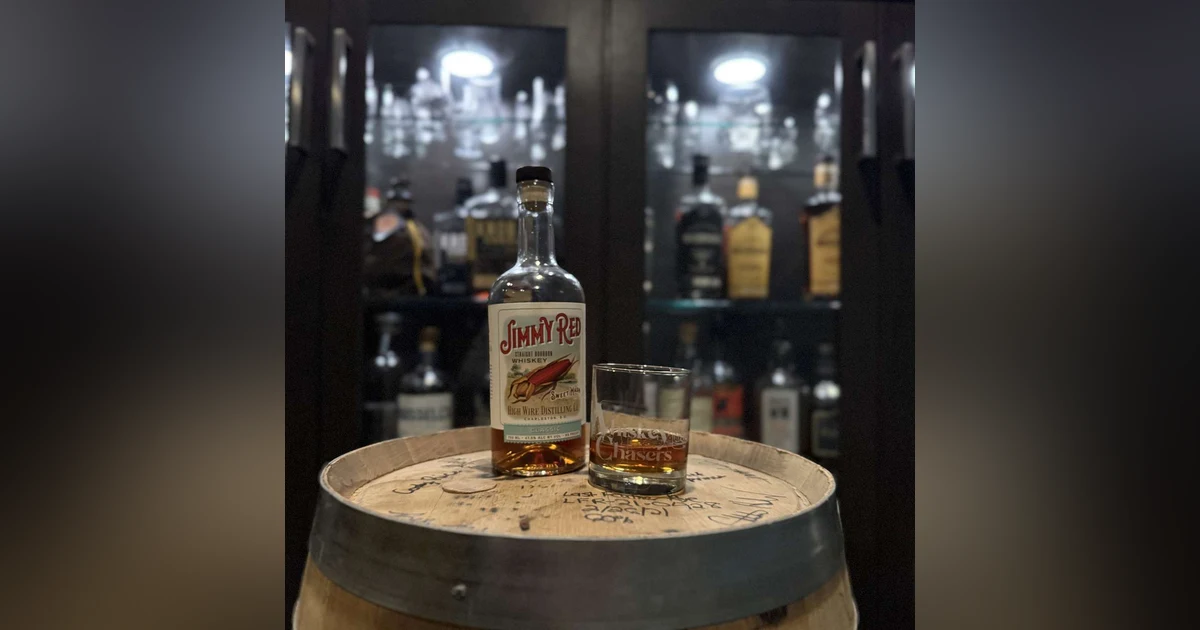
- Our Bottle: Jimmy Red Straight Bourbon Whiskey
- 100% Jimmy Red Corn
- Sweet Mash
- Pipe Pairings: Cornell and diehl blockade runner
- Cocktails:
- Research Sources
Website:www.whiskeychaserspod.com
Facebook:https://www.facebook.com/whiskeychaserspodcast
Insta:https://www.instagram.com/whiskeychaserspodcast/
TikTok:https://www.tiktok.com/@whiskeychaserspodcast
Thanks For Listening! Tell a Friend!
Welcome to the Whiskey Chasers, where we talk about our passion for whiskey and its history, either amongst ourselves or while interviewing distilleries. All while enjoying a glass. I'm Steve. I'm Nick, and I'm Chris. Please enjoy responsibly while enjoying this week's episode of The Whiskey Chasers.
SPEAKER_02Those tasting notes, we'll see. At any rate. I feel like the tasting notes are just a generic. I then don't put them on. Right. Don't do it.
SPEAKER_03I don't want to I don't want to see another one of these. We'll see another one of these. It's don't wield to me. Damn it. Oh, sorry.
SPEAKER_01I hope I like this because I really just poured a whopper. Like I really poured a whopper.
SPEAKER_02Dude, you're like me for that blackberry whiskey that we did. I I didn't I don't think I meant to do that. That's a whopper, dude. Let me see your glass.
SPEAKER_03Uh well, I mean it's not that far.
SPEAKER_02Don't judge me. From a distance, it looked like more. What anybody's uh wondering, it's probably a good three ounce, at least three ounce pour. Two two fingers, maybe three kid fingers. Oh well, we're gonna drink it. It's it's the weekend. It's the weekend. Oh, that's right. Yeah, days all have changed. I am going to crack a tin of the blockade runner, block Cornell and Dio.
SPEAKER_05Okay, again, I can't get over the bottom of those the tinsible. Yeah, I mean, it's bulging.
SPEAKER_02This was the beginning of 2017. Okay, so we're it's got some age on it. So we're at we're at eight years because it's and it's almost nine, almost nine years. So they say this is a navy Cavendish crumble cake. Never had that. It sounds pretty amazing. Navy Cavendish? Hand stove Red Virginia, golden Virginia soaked in premium rum for seven days. Watch out, taste buds. Because that sounds quite amazing. That sounds real good. I've had navy like flakes. I've never had a navy Cavendish crumple cake. Like, okay, and just look at some coffee with that. Boy, let's see what it sounds like.
SPEAKER_01Oh, it's like a can of soda, dude. That had some oh, it's aromatic. That is awfully aromatic.
SPEAKER_05You know, there are very few cases where you can say, look at the bulge on that guy, right? And have it turn out well. But we're also rubbing things out.
SPEAKER_04We're doing we got we got some.
SPEAKER_02Sometimes we fold it and stuff it just is what it is.
SPEAKER_04Okay, and we can have uh Jimmy Red. Jimmy Red together with uh high water distillery, uh North Carolina. Is it North South Carolina? South Carolina.
SPEAKER_02Was it high wire? Is that what's called? High wire distilling.
SPEAKER_05Now I have seen a lot of reviews or people buying up Johnny Red. Yeah, and uh Jimmy Red. Jimmy Red, yeah, yeah. Jimmy, so uh I saw a lot of people buying up Jimmy Red, and I was like, Oh, I would love to try this because it's red corn, but not Bloody Butcher, but not Bloody Butcher, and different kind of red. Yep, this is Jimmy Red. And after trying Bloody Butcher from Jeff the Creed, I was like, oh, I really want to try this, and especially out of an East Coast like state, I really want to see what they can do with a red corn. In my mind, I went with the only red corn I know is gonna be a little bit more earthy. And I was like, oh, earth earthy with a little salty like salt water action. That that might be pretty good. Yeah, this is not that it's well, it's good, it's good. I'm not disappointed, but it's not bloody butcher corn, you know what I mean? It's not that earthy that you you would expect from the only red corn that you know, yeah.
SPEAKER_04So uh Jimmy Redcorn was almost extinct, like it's a type of grain, and that grain was was pretty much gone.
SPEAKER_05What did we use it for? Or or is that why it went extinct?
SPEAKER_04We we switched to yellow dent or whatever else, and just it went away. So it was down to two probably more painstaking than yes, yeah. And it is, and it has a much lower yields than other ones, and so it went down to two cobs. We we had two cobs, sorry, two cobs of Jimmy Red.
SPEAKER_01Did they have any of that in the biodome just in case? Like we're getting low on the Jimmy Red. The president gets a call. What? How could we let this happen? What the heck? Who was on this? How is he gonna crack corn? And I do care. Sorry, Steve. So they got with uh they got with Clemson and they decided we're bringing this back.
SPEAKER_04Oh, with Clemson, okay. So they did get the big boys involved. Yeah, yeah, they did. So they planted two and a half acres of it.
SPEAKER_02It smells good, doesn't it? Yeah, it does. What's this? Very plummy.
SPEAKER_05Oh, very plumbing, very plummy, but it's also like red tobacco. It's the tobacco, it's very like red grape almost, like whiny. Yeah, it's very grapey, plummy.
SPEAKER_02You said it was, uh, rubs out into like like a thin ribbon, which is amazing. It just takes a little bit. Look how small that is. I didn't even like just kind of comes right out. Anyway, what were we what were we saying before?
SPEAKER_04So Jimmy Rand, they got this this company, Highwire Distilling, reached out to Clemson and said, Hey, we want to use this. You got it, we want it. So they planted two and a half acres and got two batches of this out of that. Uh, now, today, after this, the other people have started growing it again. Now there's about 1.3 million pounds of it per year. So it has really come back. What are we what else are we using it for? I mean, probably just for this for this. I'm sure there's other uses, but mainly for this. Certain flowers, artisanal flower, sourdough.
SPEAKER_05But you said it's one point what 1.1 million? 1.3. And if this is the only company using it, that's a lot. They're they're stocked up for a while. They're good now.
SPEAKER_02It's like what they do with the buffalo.
SPEAKER_04We're running low. So procreate, this company does has grown a lot because now they're putting back about 30 barrels a week. So this is a pretty good-sized little operation. Originally, when on their very first still, they had had about eight barrels a week. So they've really they've really grown up how long have they been around? Since they started in 2013, so not that long.
SPEAKER_05But I'm I'm kind of shocked that I haven't heard about them until now, like recently. They had to wait for the yields to come in. Maybe, maybe that's what it was.
SPEAKER_04And they are agricultural based. So, like a lot of times we talk about like people that used to be engineers or whatever. These guys are farmers, so that's that's their background. Their agriculture is their background and where they kind of came from. So, agri drinking, they they consider drinking to be an agricultural act. We are farmers, disagree with with their thought process. So, they are very much forward uh thinking on on agriculture, grain, that kind of thing is really what they're aiming for.
SPEAKER_05Again, I'm struggling to uh to find an argument against that. No, that makes perfect sense.
SPEAKER_04Yeah, so all they make are bourbons, so they don't make anything else. Scott Blackwell and Ann Marshall are the owners, are the people that started all this. Both farmers or one distiller will farm? From from farming families and stuff in Charleston, but they're based out of Charleston, yeah. Is Charleston more of uh agriculture than I know of? I think pretty much anywhere over there is really more agriculture based, yeah.
SPEAKER_05I think of Charleston, I think of like water. I think back in the back in the day.
SPEAKER_04All the edges, sure.
SPEAKER_02But right in the middle, there's field fair. There was a lot of plantations back then, like at that, like and they're still standing to this day, you know, like big massive farm setup, like kind of kind of things. Same thing with I mean Louisiana, which is is not far from that whole area, you know what I mean? It's it was all farm, farming and farmland and stuff.
SPEAKER_05Years ago, Mary and I went to we took like a day and visited Charleston. We were in Hilton Head, and uh we went to they have a uh uh tea leaf plantation out there, like a pretty popular tea leaf. Okay, and it's amazing what they like, fascinating how they get their tea leaves and the crop and what they cut. But then they also do flavored tea, right? Flavored tea leaves, which got me thinking like matcha, like jasmine and stuff. Uh they do peach, so they do like mint, they do peach, they do like fruit, but what they do is they pretty much take the extract of the fruit and the oils and just let it sit on the tea leaves, and that's how they flavor them, which I don't know what you would do to partner with both these companies, but that sounds like a lot of fun. A peach bourbon or a tea bourbon? Yeah, like could you imagine like a cocktail, pre-made cocktail with their like peach tea?
SPEAKER_02I've mentioned that before, though. We've talked about this. Uh because we talked about gunpowder gin before and things. And I said, I don't think anybody's really done this with bourbon. And I'm not saying a straight-up mix, more like a finished type of deal. So it's still still a fool-proof spirit uh with some tea aspects, tea-ish aspects. I think is a great idea. I think it would do really well.
SPEAKER_05Yeah, I mean, you've got like cocktails that use tea on sweet tea all the time, or sweet tea. So, like, why not?
SPEAKER_02I've put some bourbon in my Earl Grey before and had a good time. Nothing wrong with that. Hot toddy. Yeah. So are so these guys are doing things without the red corn, or are they only doing things with the red corn? 100% Jimmy Red sweet corn.
SPEAKER_04But are they making other things or are they only uh I believe they are they have some other things, but they pretty much use for corn, they use this is their flagship bottle.
SPEAKER_02That makes sense, okay. High wire.
SPEAKER_04We talk about why they're called high wire yet. Uh we do not know why they're why they call themselves high wire to stilling. Like where the family are just kind of balancing. I think it's a kind of a balancing act. What are they called? Circus people?
SPEAKER_02No, what's it called? A line man. Oh, a linemen.
SPEAKER_04Oh, yeah, yeah. Like the song. Yeah, Wichita. They're in Kansas.
SPEAKER_05I now I know that they do a bottle and bond. I love that song. I do too. I love that song.
SPEAKER_04Uh they do make a bottle and bond.
SPEAKER_05They also do a model bottle and a bond.
SPEAKER_04Yep.
SPEAKER_05Yes.
unknownWow.
SPEAKER_05That would be cool. Which is which is 100% as well.
SPEAKER_02Yep.
SPEAKER_05Yep. They do a single barrel, a double oat, um, and then they do their Jimmy Red straight bourbon and their bottle and bond, and they do a sherry cask finish and a peach brandy finish. So they, I mean, they they've been around the block for a while.
SPEAKER_04So 2013 is their start. So we're talking about eight years now, or uh sorry, 12 years now.
SPEAKER_02I'm pretty pumped about this. I mean, that they're that they're doing other like I want to try it. This is really good. Do we know what the age is on this one? Uh we do not.
SPEAKER_04I think at least four years. This is badge number 40, and it's 95 proof.
SPEAKER_02So it's pretty dang close to being a bottled and bond at this point. Yeah, it's already kind of there. I have a hard time. There's already a single distillery. I have a hard time to think that they're pulling from other seasons. So, I mean, it's pretty pretty dang close.
SPEAKER_05Well, and if it's 100% corn, they either have to malt some of that or use like an uh an enzyme of some kind when doing the well, it's no different than uh than the 100% uh mellow corn.
SPEAKER_02I mean, mellow corn's 100% like like there's a lot of people that do it, so I don't know how they're doing that, but you're right, they have to either malt some of it because there's got to be some malt in there.
SPEAKER_05Yeah, they've got to have some kind of enzymes to help break down something to to to do something, yeah.
SPEAKER_04Yeah, and with that also they're doing sweet mash. So because of that, that means they're not start, they're not pre-starting with anything. They fresh every time, yeah. It's fresh every time, yeah. So it's even more complicated on that. Yeah, yield-wise on this Jimmy Red, it's about 25% less than regular yellow dent corn. So, so yield-wise per per acre, you get about 25% less than you do on a regular corn. So it is absolutely a labor of love sort of thing. Like you're you're getting maybe a better product, but lower amounts of it.
SPEAKER_05Is it like a cousin or related to like bloody butcher red corn? Do we know? I mean, they're the same family, they're both corn because up like bloody butcher corn, I know gets up to like 10 feet, 10, 12 feet tall, like their stalks, but there's only like six to eight cobs per stalk.
SPEAKER_02I think it is a similar sort of thing, what the between the taste, though, that's a lot more offensive in a good way. Like, not that this is bad or anything, like less offensive, but this is friendly, that is as the name implies, right? It's like that's a butcher. This is Jimmy Red, you know what I mean? Like, and I love both of them. I'm really liking them, but but you can't almost compare the two because one is like relaxing on a porch, like hanging out on a dirt, like a on a on a it's like easy rider, right? And then this one's like, yeah, hanging out. Like he's a good guy that can work on motors if you need Uncle Jimmy. Oh, your carburetor's not working, call Uncle Jimmy. He's a shade tree mechanic.
SPEAKER_05We've had three different strands of red corn. We've had Bloody Butcher, Wopsy, Wopsy.
SPEAKER_02What about the Wopsie?
SPEAKER_05Which is fascinating because I feel like each one almost plays to the state that they come from. Like the Bloody Butcher was like very like country, very hardy, very like I'm in a cornfield kind of feel. I'm in a dusty barn corn. That that's that's what that came across. The Wopsey was like hardy, but not offensively hardy, if that makes sense. It was it was like eating mashed potatoes, very hardy, uh unique, yes. Um it brought about a lot of memories without being like taste-wise offensive, right? So it was a reminiscence, yes. Whereas this one is like, I feel like I could I could probably sit on the shore and and drink this.
SPEAKER_04I think I think Buddy Butcher is your farm worker, Wopsey is your retired farm worker, and this is your plantation owner.
SPEAKER_02Yeah, yeah, yeah. You're right. This guy hasn't doesn't really exactly get his hands dirty, but he is a farmer still in all in the sense of the word, like a farmer. He owns a farm, he just doesn't want to farm. But he owns it, but he has people a gentleman farmer.
SPEAKER_01Pays people to do it for him, right?
SPEAKER_02But that being said, this is a like more of an all day between the three, and I think that's what you're getting at, Nick. With like this could be like barefoot in the sand in your straw hat, you know, kind of a bourbon. This could be like being on a fishing boat, you know, or a shrimping boat, even for that matter, like somewhere down in the south, like like catching fish or whatever. Get but getting in the water and those bayous a little bit, like that one show. What's it called? I can't I can't remember the name of it, but where they're always on the water and stuff, you know what I mean? And they got the it's very dramatic, those kids. But city slickers? No, it's some show. I have to think about what it's called. It's a TV show? It was a TV show, it was on Netflix for a minute, but they it's like so it's like South Carolina, um, and they're right on the water. I can picture it. Uh you probably know exactly what I'm talking about.
SPEAKER_04Is it like a comedy, a drama? It's like a drama, it's a drama. Ozarks? Uh no, outer banks. Outer banks.
SPEAKER_02That's never watched. My there was a guy at work that's like, you should watch this. I watched it. I was like, this is so juvenile, but it's good. And then after like the second season, I was like, eh, this is totally juvenile. I don't want to continue this. Yes. I watched the OC like back in the day and Party of Five and all that. Like, I don't need to watch this now, you know, but very much. But but those guys are always jumping in a boat and using a lagoon or or using a waterway to get here and there. And I just when I picture that kind of a lifestyle, like trucks and and and boats and water and beach, but also mixed with a country and farm and everything. That's what I picture this, you know what I mean? I that's in that's very South Carolina, which makes sense because that's kind of where this is, this is what's where this is from, right?
SPEAKER_05Yeah, Charleston. Yep. It also, so if you've ever been to Charleston, especially during the wet season, you you don't go downtown unless you have a a high, uh high-up vehicle, or else you're gonna get locked in down there and flooded in, right? And so it's very wet. I'm not saying this is watery, but that's what this reminds me of. It's a very wet bourbon. I mean, this would go really like a shrimp boil.
SPEAKER_02Yes. Sausage and potatoes and corn and and shrimp and crawdads, you know, and it's light, but it still packs flavor that goes well with other things. It's like got a bit of the it's got rye aspects with without having any rye in it at all. I think, and that's all this red corn, this jimmy red corn. It's got its own spice to it, and it's not at all overpowering, but it's got a little bit more spice to it. Just some pepperiness to it. Pepperiness, yeah. Which is interesting. Some cage, come some Cajunol, like like Creole spices, just a little bit. Just a little hint.
SPEAKER_05So I don't know if you guys remember this. We actually had another bottle on here from South Carolina, around Charleston area, that you guys both hated. It was a weeded, it was uh it was a weeded bourbon. Uh 6 and 20.
SPEAKER_04Yeah. Uh the wheat pen, the wheat penny. Not wheat penny.
SPEAKER_05Uh 6 and 20.
SPEAKER_02I think I remember it making fun of that.
SPEAKER_05Yeah, it was a black label, 6 and 20. He made it, uh, the the distiller made it for his wife as a friendly whiskey for women to enjoy. And we hated it. I'm surprised.
SPEAKER_02Uh this is a I mean, this is just a fantastic pipe tobacco.
SPEAKER_04It really is.
SPEAKER_02Like, this is good, good.
SPEAKER_04This is a really good pipe tobacco, and I think it works well with this bottle, too. I didn't do that on purpose, but I think it's got to be. But it has some like sweet-ish notes to it, sweet-ish notes to it. Like you said, and the smell and everything, it's very plummy, very like stone fruity, whatever, but yeah, it's really easy smoking. I've got nothing but white ash on top here.
SPEAKER_02Oh, it's very easy to smoke. Yeah, yeah. I talked for like 15 minutes and my pipe was still there. I didn't even have to do anything. It was still going, but it's almost it's on the very like it's almost aromatic. Yeah, it's on the edge there. And it's actually like the aromatic aspects it has comes through completely on the taste. You don't get that very often.
SPEAKER_04No, yeah, you don't normally taste a sweetness or a pluminess. But I tasted it from it, but I do too.
SPEAKER_05It was uh old money, old money, old money. That's what it's like. Old money wheat whiskey is what it was. But the idea that the reason I got that and the idea behind it was trying to find uh distilleries, whiskey or bourbon distilleries out on the east coast that could do it well. So I feel like East Coast is rum, east and south is kind of rum country, west coast is wine country. So the on the coast side, I feel like you don't have very many distilleries that are trying to do bourbon or trying to do whiskey, or at least whiskey well. I put I put that as nicely as possible. It's like they want to try to hit that sweet, they want to hit that rum feel, they want to hit that uh that boat drinking, you know what I mean?
SPEAKER_02I don't know if it's because this tobacco was soaked in rum for seven days, but I almost kind of want there to be a rum finished version of it. I think I would really enjoy that. I think that would go really well.
SPEAKER_04I think it would bring out those like that that peppery note and everything that we have in here that's kind of rye-esque, and then adding some sweetness to it, I think would be really good.
SPEAKER_05But I feel like this company did it well. And this when I say did it well, they decided to take a corn that red corn is I feel like I can say red corn is very can be dusty and unique and different. But somehow they've done it in such a way on that east coast side where it's still friendly, it's still sweet, not overpowered, like overbearing sweet, but just enough that it balances out kind of that farming feel, that that country kind of culture feel, but still coast, like coastal region. Which I think is why a lot of people, there's a lot of guys that go after this online. A lot of guys will hunt after this.
SPEAKER_04Uh it's not like you know, a lot of times when we talk about unique things, we're talking about things that are offensive in a good way, which we really need to put that in a shirt or something. They're offensive in a good way. Offensive with your quotes, yeah, offensive in a good way. In a good way, but uh this one is is not offensive, but it is unique, and it almost is a little bit scotch-esque, like space-eyed scotch-esque. I I get what you're saying, yeah. Like it's kind of a little bit, like you said, almost fruity. Uh the but there's that riot, that like peppery spice to it, too. Like it's just it's it's a flavor that I'm not really used to, but it's really good.
SPEAKER_02I really, I really enjoy it. But I think what's interesting is what you're talking. We're talking about a single grain. Yeah, and that's and that's the other thing. It's also a single grain. And the way you're pulling flavors out, this is what I was talking about last episode with like the Virginia flakes. When you get to that point where you can start pulling all this stuff out of something that's a single grain, or like that is a single, I mean, there might be a couple of different grades, but they're Virginia flakes of Virginia, you know, tobacco, straight, like normal tobacco, like Virginia tobacco. You pull out these things, you can appreciate it for what it is. I think there are some people that would try this and not do what we're doing. But I think we're, you know, we're to that point, and the people that are making this are obvious to that, obviously to that point as well, where you can really do a lot with a single grain, which is amazing. We're talking about we're we're likening this to Scotches. Like that's quite quite a compliment.
SPEAKER_05Well, can you think of another single true single grain whiskey out out there that's popular or sought after or that we've really had?
SPEAKER_02Not much. Um, we've had rise, we've had a single grain rise. You know, we've had some corn, um, but there's not a whole that did it well.
SPEAKER_05That did it well, sorry, maybe single grain corn. Because we I mean we've had like wheat whiskey. Yeah, I mean but like a single grain.
SPEAKER_04The only episode we've never released is 100% sweet corn.
SPEAKER_05And that was terrible.
SPEAKER_04That was really bad. Uh and yeah, we don't get a lot of single, especially corn. Rise, you can get 100% rise, and some of those can be good. But 100% corn is pretty difficult.
SPEAKER_02I mean, there's not a whole lot you can as a distiller, there's not a whole lot you can do with it if it's essentially aged moonshine.
SPEAKER_05Like it's hard to do. Do you think that's why they don't do it? Is the connotation of like, oh, this is just aged moonshine at this point.
SPEAKER_04No, I just think that's what it is. So it's just like like use it. There's not a lot you can do with it. Like, there's nothing like that.
SPEAKER_02There's a lot of people that won't appreciate that. They just won't appreciate that. And I think that there's people that are starting to learn that there's appreciation to be had in those things.
SPEAKER_04These guys are doing pretty much just this, but they're finishing it in different barrels. They're um they're playing with it, they're they're playing with the proving a little bit, so they're just kind of playing around a little on those fronts. But but but when you don't have the grain to play with, you better have good grain. So for these guys doing a specialty grain, it makes sense that they can do that and keep it going.
SPEAKER_05And a specialty grain that almost went extinct.
SPEAKER_04Yeah, like that's another thing. To be able to be like, like, I don't think people truly understand how how like seeds and stuff work, and and how that like the hair heirloom idea has has showed up, and like you can get into some crazy stuff with like Monsanto and how and how they treat some of this. Monsanto, Monsanto, it's a company that makes pretty much everything that's corn. They're they're a big monstrosity company that's in charge of everything agriculture. If you're a commodity agriculture person, you your your stuff is from Monsanto, but their regulations around that and and how they work everything has really made heirloom stuff like this really, really difficult. And they've killed off a lot of strains of seeds in that. So having this come back and be able to like bring it back as a really cool agricultural achievement on top of that, right? Also, and and to be as now as large as it is, so you know, growing a few acres of this is one thing, having over a million pounds of it, like that's something else.
SPEAKER_05So it can't be that hard, it can't be that temperamental for them to be able to do this, right? I mean, it has to be somewhat easy to grow if they went through that much.
SPEAKER_01It's corn, right?
SPEAKER_04I mean, corn is not that it's easy to grow, like you say, you don't get as much per per acre, right? And so, which keeps a lot of the commodity people out of it. So if you're commodity grain people, which uh by that I just mean like when you're driving down the road and see a field, that's commodity grain, it's mostly feed corn or or soybeans or whatever else that's being sold just as the plant, and then it's going to whoever to make into oils or whatever it is. This type of thing is never going to be made by those people because they're selling by the bushel. Like that's then they're it's all regulated and they're they have no capability to do something like this. So it just keeps it out of that market, which is good for the people that will take the time to do it because it makes it special, it makes it unique.
SPEAKER_02So in that those million acres or whatever it is, or whatever it was is probably like one percent compared to like the rate the regular corn. You know what I mean? Like there's there's so much more regular corn out there that it's like that's still nothing. Like, like because I mean that's a they use corn for everything. I mean, we are we weren't even talking about like the ethanol stuff that they like. Like exactly like like there's corn used for everything, yeah.
SPEAKER_05And this makes me this with like the purple corn and like we had blue corn from uh Texas. Like we've had different, we've had a here and there a few different types of corn, and it makes me think, how but how much corn is out there? Like what kind of corn is out there?
SPEAKER_02All I know is yellow tint, like yeah, there's blue, yeah, blue blue corn. And I don't know if that's the same corn that they use for like the balloon blue corn to tortilla chips and stuff, but because I said one time that you know corn was corn, and then I got laughed at laughed at, obviously. So I'm I'm not gonna make any assumptions when it comes to corn anymore, but there is blue corn, and I know that um what is it, balcones or whatever? Balcones does it, yeah. They do uh blue corn you got blue corn, white corn, red corn, what you got purple, uh white, red, white, red, and blue for uh uh Jepta. Red red and blue, yeah. So I mean there's at least those mini, but how many more are out there that we just don't know about? Is there a green corn of some kind?
SPEAKER_05That would be interesting.
SPEAKER_02Ricorn.
SPEAKER_05Yeah, racorn.
SPEAKER_04One where the green corn it matches in with the rest of the plant.
SPEAKER_01Just all the same. Yeah.
SPEAKER_05The um rainbow corn or like the uh the corn you'd find at like the Duran Thanksgiving kind of thing. Yeah, I know like the stuff you put on the table, the different color. Could you use that too?
SPEAKER_01I don't know. Probably, yeah. What about popcorn? What do you mean? Can we make a succotash? Succotash. Succotash. That's kind of corn-esque. Yeah, you know, I like I like a good succotash.
SPEAKER_05Still 630 did sorghum. Yep, sorghum, yeah. Yeah, sorghum whiskey, yeah. But then a bottled bottom of it, too. Yeah, I mean, it's bottles like these that make me go, huh. How much do I actually know?
SPEAKER_04It brings it way back to the basics, like all the way down to the grain. Like, where where are you sourcing your grain? What kind of grain are you using? Like I said, it's a very agricultural sort of thing, and trying to figure out like where it comes from, the different strains and types that are out there. And you know, if this is this is Jimmy Red, but where's Jimmy Red number two? Right. You know, we got is there Jimmy Blue number two, and then yeah, is there a Jimmy Blue?
SPEAKER_02Jimmy Blue, and he doesn't care. But yeah, I mean it, I mean, even where you put the corn in the ground makes a difference, you know. So it's normally better in soil. And then you have you have people like aquaponics are pretty good. You have people that do different things with the uh whatchamacallit, where they're where they're genetically modifying this stuff, you know what I mean? Like, I mean, those are things to I don't know if people are using that stuff yet, but I mean that would be interesting, you know.
SPEAKER_04I mean yellow dent number two is genetically modified.
SPEAKER_05Yeah, that's all that is is like your your your word traditional, what everyone sees as traditional is yellow dent.
SPEAKER_02I have a feeling that the corn that we used to eat and the corn that they used to make whiskey with was the same thing. Oh well, a thousand percent back in the day, oh you can't eat the corn that you know it's like well you probably could at one point.
SPEAKER_04I'm not crazy, like no, yeah, but it's all gets cross-contaminated in the field and everything, too. So, like if you went traditional, it wouldn't be labeled anything because it would be a combination of a whole bunch of different ones.
SPEAKER_02Is corn just be corn?
SPEAKER_05Yeah, I was gonna say, is corn really easy to uh cross-pollinate?
SPEAKER_04Like is it is it so kind of temperamental with that when you think about an ear corn, like if you buy it, go to the store and buy an air corn that still has the shuck and everything on it, those tassels at the top, each of those tassels that blow every single one of those goes to one kernel on that ear of corn. What? No, no, yeah. I didn't know so. That tassel the really annoying thing you have to try that really that's the reason it's all ingrained in the middle and everything. That's how corn pollinates. So each of those tassels blown in the wind and stuff gets caught catches a piece of pollen and goes down and gets that kernel. So if you open an ear of corn and it's missing kernels, that means that tassel never got pollinated. Fascinating. So that's I didn't realize that that's kind of how corn works.
SPEAKER_05That's very unique from any other vegetable. It's a start.
SPEAKER_02It's kind of like how fish it's kind of it's kind of like how fish reproduce. They they put the eggs out there, then the the the the male fish kind of comes and just kind of like leaks out, and you're like, hopefully this touches the egg, because if it doesn't, it's not gonna exist. It just don't work, it just doesn't work out.
SPEAKER_05Speaking of which, there was uh uh some other YouTube channel or podcast that did like TV shows, right? They like talked about old TV shows, just random TV shows. Yeah, uh you guys remember the uh the magic school bus? Yeah, yeah. Well, we watch you all the time. Yeah. Did you did you know there's an episode that they talk about fish and reproduction of fish? Yep. They take uh they take she takes the kids down to the thing. Uh all the kids get into each egg. They kind of go into each egg, and then you get to see all the malefish kind of put in their thing just on top of or on top of all the kids.
SPEAKER_02I mean, as far as like as far as like reproduction goes, that's the least sexual version I can think of. But it's all over a kid. They literally just like they're leakage. It's it's like you you could tell they just like kind of swim over and it's it's all mean it'd be no different than peeing for them. It's not like they, you know, there wasn't a whole lot going on. Like the fish just kind of swims over and it leaks out, you know what I mean? I mean, out of all the animals and plants and everything else, like I've even seen wasps get it on, like like for real. You know what I mean? I'm like, those fish really don't get it well. Like the like they got the short end of the stick. Like the only thing worse than that, actually, I wouldn't even say that because the self-pot, like the self-reproducing things, maybe they even have more fun than those fish because those things just kind of like on command, they just swim over and like bleak out, like like it's like they're taking a piss, you know what I mean?
SPEAKER_01And like then they it's like was that fun for you at all? Like you might as well just get eaten, get caught and get eaten because your life has no meaning.
SPEAKER_04From what I understand, humans and dolphins are the only ones that that uh uh have sex for fun.
SPEAKER_02Well, what about those like orangutanes and stuff? Those things kind of orangutan? Yeah, like monkeys and stuff. Like they kind of get that.
SPEAKER_04Versions of monkeys might have sex for fun. Hold on.
SPEAKER_05So I I really have one question. Who and how did we find out that dolphins have it for fun? Because dolphins are crazy smart. Dolphins have raped, dude, dolphins have raped people. But who was like in the middle of the video? You've seen those videos? I talked to this dolphin and they said they had it for fun. Different sites.
SPEAKER_02Dude, they have they have like videos of people like in the dolphin uh tank and getting like getting like legit like sexually assaulted. But how do we know that's for fun? Well, they think the dolphin was laughing, like you know what I mean?
SPEAKER_01Like you know what I mean? They're like, get off me, get off me. And the dolphin's like Taunting them. Yeah, like like I think he's doing that on purpose. Like, you know.
SPEAKER_04I think we know because it's not during breeding season.
SPEAKER_01Oh, yeah, yeah. So they're not doing it for reproduction purposes.
SPEAKER_04It's not for reproductive purposes.
SPEAKER_01I just love Chris. Oh, yeah, that makes more sense. That makes that's more scientific.
SPEAKER_02Like, uh they also giggled, but I mean, come on. I just think that you gotta think like like I mean, maybe not, but I mean you you think like monkeys and stuff, like there's there's definitely and then like dogs are always humping each other and stuff, you know.
SPEAKER_04No, nope, no, it's only when they're heat. It's only yeah, it's only for reproductive purposes.
SPEAKER_02How come dogs hump people's legs then?
SPEAKER_04Because they're in heat. Heat or dominance?
SPEAKER_05Well, dominance isn't for fun.
SPEAKER_04No.
SPEAKER_01No, it was kind of weird. Like halfway through saying it, it was like, well, well, it was a whole lot of things. Maybe not for you.
SPEAKER_05It's all about pollination for corn. So so corn pollinates via tassel.
SPEAKER_02Anyway, yeah, going back to the corn. The corn's not being dominated by the pollen, it doesn't get a kernel.
SPEAKER_05So does yellow dent corn also is that also the same thing?
SPEAKER_04Well, it's the same pollination. The problem is uh wind, right? If wind blows, then pieces of that go someplace else. So if you have yellow dent next to Jimmy Red, then yellow dent will get into your Jimmy Red.
unknownRight.
SPEAKER_04And so you have to keep them separated. And if they get mixed, then you have GMOs. I was gonna say, uh, this makes more sense.
SPEAKER_05For uh the popcorn bourbon, it makes a little bit more sense why it's a might be a little bit pricier. Yeah, because you're dealing with a crop that you're can you're trying to keep from cross-contamination until it gives you so much 25, you know.
SPEAKER_01No, we don't want to we don't want to blend. It doesn't sound very good. 1825. Let the corn decide.
SPEAKER_04Like what is the corn want? If we let the corn decide, then we have GMOs. So those are also anti-2025. So what are we gonna do? So that's how you get GMOs, yeah. That's all it is. Genetically modified just means a combination of two different genetics. So GMOs are bad for you. No, they're not. No, no, they're not. No, no, no. Uh, I mean, I said, but you can have lab grown versions or whatever, but like everything we eat is a GMO, even if it's not able to talk about it. Uh because people like to argue and and be sad about things, and so that's all this is global warming and GMOs, yeah. So it's like GMOs are not like they're not a problem, yeah.
SPEAKER_02Like they are a thing, but they're not a problem. Like being a corn purist, like not allowing anything to it's a mix in there, it was a more of a problem than GMOs. I might be pro-GMO.
SPEAKER_04The problem with like the thing with GMOs is like yellow dent corn, yellow dent number two, is a product of GMO because we are aiming for the most yield out of an acre. We're not concerned with flavor, we're concerned about yield. So that's what we're trying to modify. That's what we're trying to get. Whereas if you were like a few food purist, you're aiming for flavor. We've said we don't care about flavor, I need this thing. We'll add flavor later on, we'll add more sugar or whatever else to it to make it make it a thing. So it just depends on your goals. Like if your goal is to sell more of the product, then GMOs are really very much your friend. If the goal is flavor, then it probably isn't because the the agricultural market hasn't been made for you. So it just depends on what your goal is. So there's your agricultural lesson. I like now.
SPEAKER_05What would you guys be willing to pay for this guy?
SPEAKER_04Knowing it's uh talking about pollination and harder, it's a smaller company, but it's not necessarily small, like it's it's kind of your what I would put at the same level as like watershed or or or or maybe even Middle West. So like it's small, but not boutique, like it's it's on the smaller side, but it's still not like Jim Beam, it's not a well drink, and not so I I think I'd put it in the same boat, like 50-60, but I think it should be like around the $60 mark.
SPEAKER_02See, I I think me personally, and I like this, don't get me wrong. I like it. I but after hearing everything and seeing everything and and all that, I I think that this is a $40 bottle. I think they are selling it for $60. Yeah, I think that's again that's fine. That's fine, but I do think that this is a $40 bottle, period. The end. Yeah, I think that's fair.
SPEAKER_05I see that's I I I want to agree with you initially, and then I have a hard time with it. I I want to agree that yes, it's a $40 bottle, it should be because it's corn, it's corn or corn is everywhere.
SPEAKER_02That's what I'm getting, I'm getting at like they they have their own market on this corn, it's not expensive for them at this point. It's 100% corn. They're not doing anything too special to this one. I could see, like, okay, Jimmy Red finished now, bumps it up to 50 bucks. Okay, Jimmy Red double oaked. Maybe that's like a $60 bottle, but I think it's a $40 bottle, period. The end, but they're gonna add some more. There's the $20 tax in there. It's probably being sold for $60. It might be a lot more than I but if they're selling it for more than $60, I don't think it's worth it. Yeah, I don't. Good, but I don't think it's worth it. If we're selling it for $40, who is it for? The people we talked about. The people that are having uh a huge shrimp boil in their backyard, and they're literally throwing the pot on the table and people are eating it. The people that are in their fishing boat.
SPEAKER_05But do you think they're gonna go after red corn bourbon?
SPEAKER_02I don't see why not. I think they like they want flavor. Those people, you don't make a shrimp boil and not want flavor. I mean, if you're drinking whiskey, you're gonna still want flavor, and I think this is a great $40 bottle. This is flavored, $40. This is uh good at $60. You know what I mean? Right. You're not gonna see some fat cat in a white suit sitting down drinking this knee. That's just not what this is. Yeah, I would I would want to. I could see like more like what what Steve was saying. Plantation, like like a like a like a farmer, like a generational farmer who those guys are still like wearing overalls and stuff, but they're probably not spending more than 20-30 bucks. They're not the ones putting their hands on the equipment, but they're still like farmers, they might be drinking this, you know.
SPEAKER_04I think 40 bucks is your like that's your every person price. And I think that I I think I would put it closer to 50, and then 60 is I think they're selling it for six.
SPEAKER_02Yeah, but I'm I'm talking like, I mean, back when like all the Jim Beam stuff was like on the low side of 20, like uh maybe you could get it on sale for 17. Like if Jim Beam, we lived in a world again where Jim Beam white label was like $17 on sale, $20 regular. Now it's like what up to $25, closer to $30. You know, but if we were living back in the time where it was like a $20 bottle, this is a $40 bottle. I mean, you put this up next to uh a Russell's reserve that was also going for $40 at the time. I don't know how much that is now, but that was like $40. Yeah, that's a $40 bottle. Okay, and that in my world, that's the way it should be. Like everything's gone way too high, right?
SPEAKER_04Yeah, prices are definitely high.
SPEAKER_02They're ridiculous.
SPEAKER_04So what is it? 60. 60? Okay, it is 60. Okay, so I'm not gonna city right.
SPEAKER_05Yeah, I'm just so the struggle I have is okay. I I want to say 40 because it's corn. Corn is corn is corn, but then you start talking, well, corn, not all corn is corn. I mean, you got yellow dent, you got white corn, you got sweet corn, you got red corn, you got purple corn, you got it all these different strands of corn. And I I when I start thinking about that, I struggle. I think of the struggle is I think of steak at home, steak at Texas Roadhouse, steak at Mancy's.
SPEAKER_02All $40? Not exactly. No, because here's the difference. Here's here's what you're getting a little bit cockeyed is steak at home, you're never gonna get the quality of steak that you get at Mancy's. Mancy's steak is dry aged. Well, you could be the best of the best. It's the cut. I don't even think you can buy that steak.
SPEAKER_05Well, you can make it.
SPEAKER_02You can't you could dry age your own stuff. I don't think it's the same thing. I I don't I don't think it's the same thing. I I think that that's a tough thing to say. And also, I'm not a professional. Like, I think that is a really that would degrade the man that cooks at Mancy's. Those guys are freaking professionals, like they can do stuff with eggs and butter that I cannot do, right? It's the same ingredients, but like hold on to your hat. Like these are gonna be different, you know what I mean? So you can't really, I mean, equate that to that, in my opinion. I think that what you're paying for here is the idea. Like, what you're getting at is like this is Jimmy Red, this is red corn. Cool. But if you come down to the money of it, I bet it's even cheaper for them to use Jimmy Red than it is to use other stuff at this point.
SPEAKER_04At this point, maybe, yeah. Um, um, they're also sweet mash, that's the other thing.
SPEAKER_02Right. Are you so are you paying for the idea? Yeah, there's nothing wrong with that. That's like a $10 charge, I think. And then are you paying for the small bashness esque of it? Yeah, that's another $10 charge. 20 bucks. This is a $40 bottle, 100%. I don't think it's wrong. If I were making this, would I sell it for $60? Yeah, absolutely. But that tells people it's a $40 bottle. If they were trying to sell us for $80, you're out of your mind. Yeah, that's just stupid. But I don't think they're shortchanging themselves. I think that that extra money is because of what it is. But I really don't think I mean, I make decent steak at home, but I am willing to go to Texas Roadhouse and pay the $50 or whatever, which is not that much more when you really think about buying good steak at home. Mancy's, I mean, you're paying like $80, but like I'm paying for when I go to Mancy's or uh Hyde Park or the top, I'm paying for the steak that I can't buy at a store. I'm paying for the fact that I don't have to cook it. I'm paying for the ambiance of the area, right? This all goes into my palate. I'm paying for the way they're cooking it. So like I'm paying for so much more than just the steak. Because even if you were to take the if you were to go pick up a steak from the top and bring it home and I eat it on my kitchen counter, it's not going to be the same experience as eating it in the top, right? That's the reason I refuse to get food delivered to my house from a sit down restaurant.
SPEAKER_04Because you're you're It tastes different now because now I'm paying for an ambiance that I don't get.
SPEAKER_02How many times have you had a hot dog in your life not at a baseball park? They were okay. Hot dogs. They're fine. Yeah. You can have the crappiest, the most mediocre hot dog at a baseball stadium, and it is 10 times better. Yep. 100%. I mean that is plays a role. Ambiance plays a role. So you can't really compare the steak thing. And I and I get what you're going with it, but I really don't think the ingredients on this cost that much. It's the idea you're paying for.
SPEAKER_05It's the ambiance you're paying for.
SPEAKER_02Well, that I mean, this one, the ambiance to me for this one is your backyard. $40 bottle. You get what I'm saying? I want to go frog gigging. I want to go gig for frogs with this bottle. You know what I mean? Okay. I want to have some fried frog legs in my backyard with this bottle. Okay. You get what I'm saying? That's a $40 bottle. 60 is a bit harsh. Like, I think when you get a 60, the guys that this is meant for aren't going to buy it. I think 60 makes sense nowadays, especially. But you're not going to see some dude tuck this in his back pocket and run onto a shrimp boat for $60. You're not going to 40, you do. And that's a splurge. You know what I mean? But people there's people out there that drink bushlight, and then there was people out there back in the day that would drink um what Irish? It was a red Irish. Like, like not everybody's out there drinking Killians every day, but there's some people that like that stuff. You know what I mean? I was a guy, I was a fan of that stuff way back in the day. You're paying more of a premium for that. Still beer, you know what I mean? Like it's still beer. You know what I mean? But that's the difference, I think.
SPEAKER_0460 bucks is fair.
SPEAKER_02The 60s fair, 40 is what it really should cost.
SPEAKER_04Yeah. But we're paying for the smaller. So we're paying for the idea.
SPEAKER_02You guys are using a very specialty corn and it's all of it, and we're paying for the smallness of it. I'm cool with that. I'm totally cool with paying for somebody's idea. That's what, and that's what we're getting a little bit of this as. You know what I mean? Are they doing now? If you do something special to it, I'm gonna pay you more. I'm gonna pay for it.
SPEAKER_04You're basically saying the liquid is 40, the bottle is 60.
SPEAKER_02Absolutely. Yeah. On this one, absolutely, absolutely. Okay, that's fair. Yeah. And I think there's a lot of people out there that are not okay with paying for the non-liquid aspects of this, right? There's a lot of people that would be like, Oh, I would never pay more money for an idea or for a bottle or whatever. You get to a point where yeah, you will, you and it's fine. You know what I mean? Otherwise, you're not gonna drink a whole lot of stuff because that's there's marketing definitely plays a role.
SPEAKER_04We've talked about this, and this tobacco went really well with it.
SPEAKER_02Gosh, it did.
SPEAKER_04So, yeah, like that. Uh this is a uh a random pull, like in really pair. Have you had this tobacco before?
SPEAKER_02No, okay. Yeah, I bought it thinking, you know, that sounds good at the time, and then just put on the shelf and forgot about it. And um, honestly, uh, it the for me, like the tin art on that is not appealing. No, um, I don't think it's anything I ever thought, like, boy, I really gotta I mean it looks like a wall, like a like a stone wall. It's a blockade runner, so it's it's a so it's ship. It's just an old ship, it's an old ship on a ship.
SPEAKER_04No, it's water, no, it's just rough seas.
SPEAKER_02Okay, it's not very enticing on the on the look of it. But I tell you what, it's like it's for me, this is like Pennington Gap, where I had it and I thought, okay, and then I stored it away, and then we finally opened it, and I was like, this is something special, and I'm gonna buy this again and again. Like, this is gonna be in my rotation. I think this is gonna be in my rotation. I try so much pipe tobacco that like is good, it's really good, or it's this or it's that, uh, or it's just okay. And I end up buying it over and over again because it's just it's good or whatever. But every now and then I'll find something that's different, it's unique. And those are the things anymore that I'm I'm really kind of starting to build a collection up of because I appreciate those for what they are. I'm starting to like like king cake is one of them if you haven't had it. Uh, Penny Farthing is the one I was talking about the other day. The Pennington gas, like, and they're not the ones that people really talk about, they're ones that I'm starting to realize for myself. You know, I keep thinking about this blend, you know what I mean? I keep thinking about this blend, you know, I'm gonna start smoking that more. So I think that that's what I'm gonna start doing. I'm gonna start going after the ones that I like, and then obviously I'm gonna keep trying new things. But I'm branching out a lot from what I'm taking a departure from the English, and it's really kind of opening up all the because English is so similar to each other. You can get better versions, you can get worse versions, but at the end of the day, it's kind of the same. It's like drinking scotch all the time. It's really what in English is. It's like drinking scotch all the time. There's different versions, there's better versions, there's but at some point it's just the same. So taking a kind of a I've I I told the guys uh a few months ago, remember this? I was like, I'm not gonna have English for a while. Take a break.
SPEAKER_04You said you were pretty much done with English for a bit, yeah.
SPEAKER_02And doing that, I've it's really opened up a lot of different things. Like I'm starting to realize, like, okay, there's so much more variations out there. So yeah, this blockade runner has been, and I think that it's very unique. I've never seen anything like that before put together.
SPEAKER_04Well, good. Good tobacco, good bottle.
SPEAKER_02Yep. She's a winner.
SPEAKER_05On to the next, on to the next.
SPEAKER_04We'll see you later. Thank you for listening to the podcast. If you want more great content and other perks, be sure to support the show by clicking the link in the show notes. We can be reached on our website, whiskeychasterspot.com, with any ideas for the show. Thanks again.
