
Interview with Iron Vault Distillery in Galion, Ohio!

 Apple Podcasts
 Spotify
 Castro
 RSS Feed
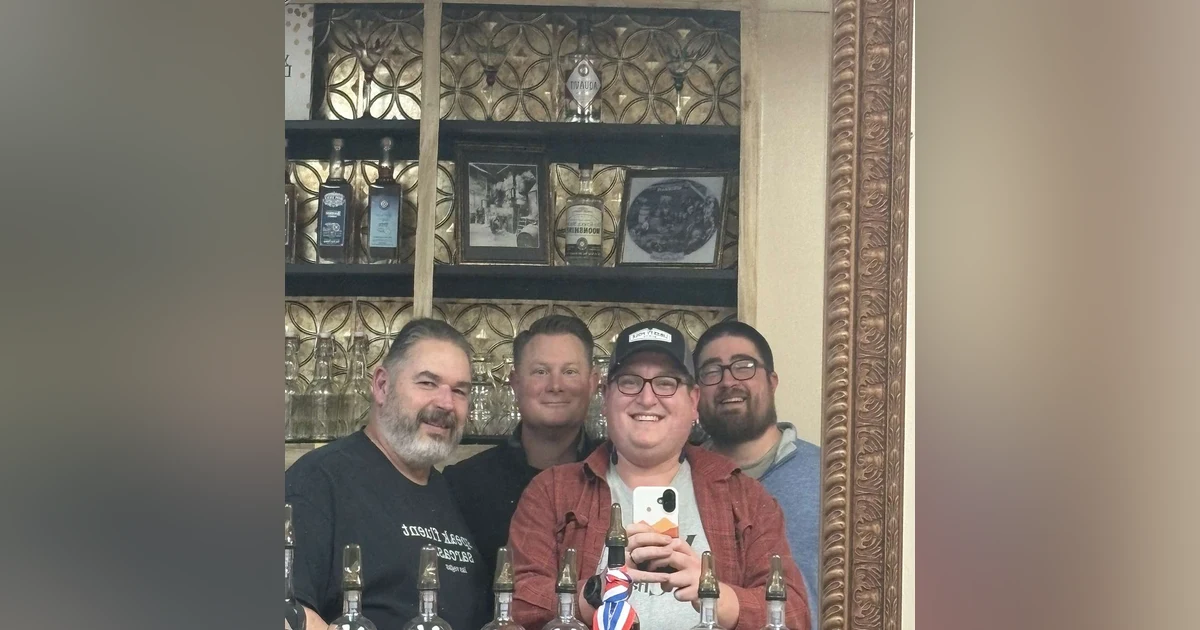
 Nick, Chris, and Steve sat down with Master Distiller Rob Hudson at Iron Vault Distillery. After an amazing tour, we sat down to try a lot of their lineup, and we were impressed! From their Bottled in Bond and their Frankenwhiskey, to their journey to making Aquavit, and an American Single Malt that even Chris liked!
Head up to Galion, Ohio, for some great local eats, stop in for a tour, and pick up a bottle or two!
Check them out on the socials!
https://0ecf2fa.netsolhost.com/ironvaultsite/
https://www.facebook.com/IronVaultDistillery/
https://www.instagram.com/ironvaultdistilleryllc/
https://www.youtube.com/watch?v=uQhZuKMG1fc
Website:www.whiskeychaserspod.com
Facebook:https://www.facebook.com/whiskeychaserspodcast
Insta:https://www.instagram.com/whiskeychaserspodcast/
TikTok:https://www.tiktok.com/@whiskeychaserspodcast
Thanks For Listening! Tell a Friend!
Welcome to the Whiskey Chasers, where we talk about our passion for whiskey and its history, either amongst ourselves or while interviewing distilleries. All while enjoying a glass. I'm Steve. I'm Nick, and I'm Chris. Please enjoy responsibly while enjoying this week's episode of The Whiskey Chasers. Welcome everyone. We're at Iron Vault Distillery in Galleon, Ohio. So up around Besires area, if that means anything to you.
SPEAKER_02We've referred to it as Bucky Russell.
SPEAKER_01Where the hell is Gallion, Ohio, right?
SPEAKER_00Like, where's Waldo?
SPEAKER_01Right, exactly. And uh who do we have with us? Rob Hudson. Rob Hudson, you are the master distiller? Is that what they call me? That's what they call you.
SPEAKER_00I said hillbilly in charge, but it's close enough.
SPEAKER_01So and how long has our involved been around? Since 2017. Okay, excellent.
SPEAKER_00And who who started the place? John and Sam are the original owners. Lori, John's wife, also involved. They kind of started it as a uh kind of like the rest of us. They started on the uh less than legal side, playing around in the apartment and making a little of this, making a little that. And then once they figured out exactly how uh how uh let's illegal it was. Yeah. Once you like the fires, it gets a little, it gets a little testy. Um, they talked about it and decided to open a distillery. And uh, if you know anything about opening a distillery, it's not the easiest thing in the world, you know. You have to have your equipment in a in a brick and mortar building before you can get your licenses and stuff like that. But they got a good deal on this building here, and they started buying equipment, signed up, and it's been here ever since. We make it really easy for distillers to start up, is what it sounds like, yes. Yeah, not a whole lot of uh hoops that you have. No, yeah. You just have to have all your stuff before you're allowed to become a whether whether we let you or not. Right.
SPEAKER_02We can't let you do it illegally, but we need you to have the equipment first. Yeah, yeah. Right. Yeah. So do you know how the name Iron Vault came about? I mean, it seems like a very unique name.
SPEAKER_00Uh yes. Um, a couple different things. For one, Gallion, Ohio was known for a couple different things back in the day. Gallion Ironworks originally they wanted to call the distillery Ironworks Distillery. There was a lot of metals and stuff done in this town, roofing, sheet tins, things like that. Galleon Ironworks was one of the big industries here in this town. But ironworks.com was already tied up from something else, blah, blah, blah. Another business that is synonymous with Gallion, there used to be five or six gray vault businesses in this town. Kind of odd, but and actually, this building here was owned by Longstreth Memorials. They made headstones here for years. Actually, some of the old pictures up there, you can see there's um headstones and things right there. So it's it's been synonymous in this business. They just decided to do the iron vault distillery, not really wanting to put a grave vault or anything on the logo. The designer or whatever came up with the uh bank vault. Just kind of a twist of things, but yeah, kind of the way it took place. See, I always pair the vault with the bank, and maybe that's because the logo. And they'd rather you did. Right. Yeah, I'm pretty sure they did.
SPEAKER_01Yeah, absolutely. It's a good logo. I like it. It is a good logo. It's a nice looking bottle, like the label itself with the curve tops and everything in the in it. It's it's a nice label.
SPEAKER_00I told you we used we fight like a bunch of old married women. That's one thing. I've got a video one time when we were bottling uh bourbon, and you can hear me in the background. All bourbon goes in square bottles. That's the way I grew up. I mean, you know, most bourbons nowadays, you know, they're in every shape and size, but back in the day, all bourbon was in square bottles.
SPEAKER_03It's easier to hold.
SPEAKER_00Yeah, I mean, it's just yeah. Plus, it tells you what it is. Our bourbon's in a square bottle. Everything else is in rounds.
SPEAKER_03Tips over, it just stays where it's at.
SPEAKER_02And we've got in front of us, though we're trying the original. What you guys kind of when you put out the bourbon. First bourbon.
SPEAKER_00Yeah, first bourbon that you guys put out. Probably our first thing other than clear. It's our quote unquote standard bourbon, like I said, standard mash bill, yellow corn, barley, rye. The originals, like I said, were all aged in small barrels, so they probably didn't make it much over about 18 months. Now everything that's coming out of the 53s is right around five years. If we can get them a little longer, if we can wait that long, they do. But yeah, we still have roll some small barrels through too.
SPEAKER_02Is that what's in this?
SPEAKER_00Is the 53s, the barrels? Actually, this might be one of our fill-in small barrels because it's got a different label on it. Okay. If not, they would say straight on it, but this has got an age statement on it.
SPEAKER_01It says at least 12 months on it.
SPEAKER_00So I figured it says at least 12 months, and it's priced out there for two, two and a half years. It's just the labels we have, it makes it above 12 or 18 or whatever. Burning up them labels.
SPEAKER_03I was gonna say it's got a little, it's got a lot of flavor for it. Yeah. And uh what's funny is we were talking before that this is kind of your everyday drinker. Yeah, but it's actually got even more flavor for me than uh what like I would consider an everyday drinker.
SPEAKER_00That's why I hate to call it a standard pour because it's it's not standard, very flavorful. No, it's it's good even for I would take it for a standard.
SPEAKER_02It is it's very good. There's a lot going on. And this doesn't have red corn in it. This is just the yellow.
SPEAKER_01This is just a standard yellow corn. Now, you started doing this just playing around in your garage kind of deal. Have you done master distilling or distilling for any other company? Is this your first gig?
SPEAKER_00No, this is the first time I've been quote unquote called a master distiller. Yeah, yeah. Okay. I tell people I don't have a degree in this, I've got a pedigree. Okay, it runs back into family a little bit. Um people ask me, I think when you asked me, if I was taught. I was taught a lot of lessons as a young man. Did I listen to any of them? I was a strong-willed young man. So every lesson that I was taught, I probably had to turn around and screw it up and learn it for myself, anyhow. So, no, there was a lot of life lessons that it probably kicked into my head now. That's like, yeah, now I understand what they were telling me about this and that and things like that. But I probably had to turn around and screw it all up in the back and at home a couple times before I actually believed them. But yeah, so yeah, there was a lot of learning, a lot I had to learn on my own, but combination of both. It's the best way to learn though. Yeah. It is for us strong-willed people.
SPEAKER_02Yeah, exactly. I got a feeling that that kind of knowledge and that kind of learning has definitely helped back here because we we talked about there's a few different ideas about barrels, right? Barrel will cure all, you know, age, time that makes a big difference in creating what we love and what we're drinking right now. But a lot of that comes down to learning.
SPEAKER_00Oh, yeah. Yeah. No, I mean, I go back and I think of things that I was told.
SPEAKER_04Yeah.
SPEAKER_00Um, good in, good out. It's only going to be as good coming out as what you put into it. So I'm not going to put something that's questionable in there. The better stuff you put into the barrel, the better stuff that's going to come out. So it just makes sense.
unknownYeah.
SPEAKER_00It's not one of those things you have to fight or even try. It just makes total sense. Why would you try to put, oh, well, maybe it'll be okay. I don't want to wait five years and be a, well, it's okay.
SPEAKER_01And when we were talking back there, you mentioned that, you know, you try to keep everything local as much as possible, but not, you're not going to sacrifice the flavor on that, on that fact. No.
SPEAKER_00And so yeah, we talked about some of the grains that are hard to get local. And I mean, and you can, but like you said, there's flavor profiles and stuff that if you're going for, you want the best in it. There's a few things you have to outsource, you're going to do it. We're going to support as many local people as we can, but when it comes down to a finished product, you're going to go for the best. Yeah.
SPEAKER_03You can't limit yourself.
SPEAKER_00No.
SPEAKER_01You guys definitely do try to support local. Or you got a coffee here that's a local roaster that you guys are combining with. You got uh Cooper's Mill that's over in Paris. And uh soap.
SPEAKER_00Our big mixers there are made out of Mansfield, Ohio.
SPEAKER_01So yeah, so keeping keeping things local as much as possible, which is always good to support around.
SPEAKER_03You get that feeling here too. It definitely feels like a local spot, very much hometown kind of community.
SPEAKER_00Yeah.
unknownYeah.
SPEAKER_00Gaium being a small town, it's it's very tight-knit.
SPEAKER_02With it being such a small town, I know people listening are privy to what we talked about earlier and the conversations we had, which were really good. I wish we were recording them. But one of the things you talked about was there at one point there was a there was a discussion or debate. Do we source, do we get some sourced barrels to try to expand, to try to grow? And you guys are uh I have a love-hate relationship with craft distilleries because they're normally really good, but they're normally really small and really hard to get your hands on. But what you guys put out that's yours is really, really good. Did the fact that it's such a small town here play a factor? And you wanted to say, hey, I want to, I there needs to be some pride aspect in this. Right.
SPEAKER_00Oh, and it most of it's a moral dilemma if you want to grow and be big and source and things like that. Um, like I said, it's a pride factor. It's nice to know that everything we make is made right here. It was made by us, nobody else. The galleon factor, I'd say not so much. Um, even though it's a small town. You'd be surprised that I talk to people every day and tell them what I do on the weekend, and they're like, There's a distillery in Gallion, Ohio. I know people that live in this town, they're like, There's a distillery in Gallion, Ohio. I said, You know where Wendy's is? You've been by it a thousand times and didn't even know it was here. So so yeah, I mean it's it's a small little treasure. There's you'd be surprised. Downtown's not what it used to be. I mean, in any little little town, that's the thing. There's bypasses everybody drives around anymore. Not everybody runs up and down through the middle of town like we used to. I mean, every even as kids, we used to hang out up in the middle of town and things like that, meet all your buddies, but yeah, it's just a little different day and age.
SPEAKER_02I was telling people that we're coming here for the the interview. And I said, We're going to, I think it's galleon, Ohio. And they said, You mean galena? I don't think galleon's a thing. I was like, no, I'm pretty sure that it's galleon. I'm pretty sure it's galleon, Ohio. They're like, I don't I don't think you're right on that.
SPEAKER_03Sure, but it is driving into it, it's bigger than I expected.
SPEAKER_00Yeah, I mean, it it's uh back in the day, it used to be even bigger. Of course, there was a lot more industry and stuff here. Of course, a lot of that's gone by the wayside, gone closer to the highways. And of course, we didn't have Route 30 out here seven, eight years ago, maybe ten, I don't know. It's been a minute, but uh yeah, it it was all two lanes and stuff around here for the longest time. Now the Route 30's out here, you're getting some industry back. Um, you're seeing more and more. So kind of nice bringing some stuff back to the area.
SPEAKER_02It's definitely fun to watch you guys be a part of that and bringing some stuff back here.
unknownRight.
SPEAKER_02Uh it's it's fun to watch. And I I okay, so we know some knowledge, some background, insider knowledge of what you guys do past this bottle. And the amount of experimenting, what people would call experimenting now. When bourbon first came out, it was always yellow den corn. That's what we use. And there's so many, we're learning there's so many different types of corn out there. Uh, we first got introduced to uh bloody butcher corn through uh Jeff the Creed, and they were like, it it turned a lot of people away. Like it was really polarizing, it was weird. You guys went from this, the your your your everyday bourbon, which is really, really good and has a lot of flavor, to then adding a bit more that is all locally sourced here too as far as the grain.
SPEAKER_00What why? The well, once again, they're heirloom corns, they are the corns that go back to what they would originally have used. We talked back, we talked about moonshine earlier, about anything that you could get to ferment. These heirloom corns are where they came from. The reds, the whites, the blues, the hickory kings, the the hoppy blues, the jimmy reds, the all this stuff is heirloom corn that grew hundreds of years ago. I even played at home with Indian corn just to see what it would do. I mean, seriously, this is the corn before all the hybrid yellow corns were there. This is what it was made out of years and years and years ago. You didn't source tons of yellow corn. So, I mean, to get back to the heirlooms, it was definitely some playing, but the flavor profiles that come out of these heirloom corns are phenomenal. They are. Jeff the Creed does a great job with their bloody butcher. And you're gonna have ours here in a second. And uh it's one of my favorites. I love the just the tit the flavor from the corn is awesome. Um, the blues are very earthy. Not really my cup of tea, but a lot of people love them. The whites are a little more mellow, but they really pick up on any of the background flavors. So you can sit there and use uh uh a toasted barley or something like that, and it's gonna bring some of that through. Even like I said, the ryes, if you pick your rye from somewhere different, other than the Ohio rice, we know are bitey. The Virginia rye is a little more mellow. If you can get that rye from somewhere else that gives you a flavor profile, it'll come through a little better. And then you asked while we were standing up there about the uh the star spangled, red, white, and blue.
SPEAKER_01Okay. That's where that's where it gets its name from.
SPEAKER_00It comes from the red, white, and the blue corn. We use all three. Use all three with the weeded, and uh, it's very complex. All those flavors are there, it comes through a little bit at a time. It takes it takes you a minute to pick them all out, but they're in there.
SPEAKER_02It's fun to watch you get excited about the different types of corn.
SPEAKER_03Well, you can have somebody drinks a ton of bourbon, and you know, I mean, you know, as soon as you give them something like Bloody Butcher, like they've had bourbon for years. They try something like that for the first time, their eyes get big. Like, whoa, so bourbon can really be very different depending on what's put in it. Absolutely. And the fact that you guys are willing to kind of play around with these different grains, heirloom grains, like a throwback.
SPEAKER_04Right.
SPEAKER_03That's that's awesome. Like a lot more variation and a such such a small craft distillery. That's awesome.
SPEAKER_01A lot of people are seen to be playing around with barrels and they're trying to do the finishings and all that stuff. But I think that's gonna be a big thing this year. That was my New Year's New Year's thing, was that it's gonna be grains going forward, is people messing around with the different grains to really try to pick out different flavors and play around with them. So um Bloody Butcher was kind of the first big one, I think, that people started playing around with, but there's still not a ton of people that do it, and especially not smaller distillers like this place.
SPEAKER_00So the heirloom grains are a little pricey, yeah. Um, and one of the ways we get around with, like I told you, it's all grown locally. We have we have farmers local here that grow it for us. One of our biggest problems is the amount that we have to get. So it's not like we can just get a thousand pounds of it and no, when they're out there growing four or five acres for you, you know, we're stuck with what comes off. So I mean, yeah, I've got bags of it sitting back there that's dried and waiting for us. So yeah, sometimes we have to take a little more than what we want, but it helps with the pricing, and plus we know where it comes from. The guys around here all grow for us.
SPEAKER_03So it's kind of the cost of doing business, right?
SPEAKER_00Yep, it is the cost of doing business.
SPEAKER_02And it's fun to hear that because again, we had the conversation prior. We mentioned you made a comment of we we may not be rich at this, we may not become rich off of this distillery, right? And it takes me back to the idea of of some of these greats, you know, beams getting started, the gym beam getting started, Elmer T. Lee, these these greats within the bourbon world that people now seek after like crazy. They had that same mentality of this was may not make it anywhere, but there's a reason that we're doing it is for people to enjoy.
SPEAKER_00We're gonna make it as best we can.
SPEAKER_02And I feel like that just talking about the heirloom grain that you guys use brings that that's what you guys do. Like it is very much we source locally, but we use this heirloom corn. It's expensive, but it does something different, and we're willing to do that because that's what we enjoy. We want people to enjoy it. We want people to experience something different when they have this, and that's fun to watch.
SPEAKER_00I think that's one of the reasons we got so many bottles up there on the counter is because we like to do something different. Yeah, and when we're playing and we find that difference, it you know, it's it's time to release it and get it out there and show everybody. When you were talking about the finishing and stuff too, you know, we've played around with a lot of finishing and stuff in the back. We've used port wine chips. We didn't use big barrels or anything like that, you know. We do it in smaller. You see a lot of our little one-gallon, two-gallon barrels. We experiment, we play. We want to see what the flavor profile is gonna be. So we've used port wine chips, we've used a little bit of everything. And if you know, we've had a lot of failures. Didn't like them. So I mean, we're not gonna play in that. I'm not gonna dip my toe in that water and if we're not gonna play right. So we're one thing we're good at is making it and putting it in a barrel and coming out the way it belongs.
SPEAKER_01Speaking of trying something different, let's have some bloody butcher. Next round.
SPEAKER_02And this is your bloody butcher.
SPEAKER_01This is the bloody butcher.
SPEAKER_02So this just swap out the yellow corn for bloody butcher corn.
SPEAKER_00This is well, the uh standard bourbon mash is um barley and rye.
unknownOkay.
SPEAKER_00This is one of our wheated. Like I said, I'm not usually a fan of wheated, but this is one of my favorite bourbons that we make.
SPEAKER_03But that bloody butcher is definitely adding such a depth of flavor that it's it's it's just playing right off of that kind of thing.
SPEAKER_00That corn adds such a note that that it kind of I mean, even though the wheat makes it a little more mellow, the corn's just strong enough to come through that it just they play nice together. That's all I can say. Yeah, I really like that.
SPEAKER_01Has a lot of the vanilla notes and stuff that you're expecting in sweetness, but there is something with a great kind of baritone kind of thing going on.
SPEAKER_03It's a great advertisement that kind of lingers on your palate.
SPEAKER_02Now we we hinted towards the fact that you guys have never sourced, but you're putting out some good product. And we've seen a few different distilleries kind of do it like you guys are doing it with smaller barrels. Now I'm curious, did this come out of a smaller barrel or did this come out of a 53?
SPEAKER_00Originally, these were coming out of smaller barrels. Okay. Actually, no, I know exactly where this one. This one came out of. We were talking about those 20-gallon barrels back there. This came out of a 20. It actually probably sat longer than what it sat. Uh a 20, I mean, surface to area ratio, blah, blah, blah, all the volume. Should be done in less than right around two years, 20 gallons, somewhere in there. This one said about three and a half. So we lost a lot, but the flavor profile came out really, really good. It's one of those we kind of misplaced barrels every once in a while or whatever, and thought, oh wow, this thing's sitting here for a minute, been here for a minute. So yeah, we rotate a few things and found it. And it's like, yeah, sometimes you get a little lucky. But yeah, this one sat a little longer than normal. That's how the color. I've never understood, even though the red corn, if you can look at that and see it, it seems redder than I don't know why. It distills out clear, it sits in a barrel just like everything else. But this one always picks up a red tint to it.
SPEAKER_02Yeah, because I think red corn, I think it has to be it comes out amber color like that too.
SPEAKER_00But yeah, I mean bringing off the stuff. It goes into a charred oak barrel. It should come out looking just like everything else. I always thought, well, maybe it's the label, but these things get a red tint to them even before we put the labels on them.
SPEAKER_03Yeah, it's uh what was that word? Uh molecular. Yeah. Molecular. That's the word that we used earlier. Yeah.
SPEAKER_02Fancy science. So with you guys not doing the same size barrels each time you've grown over the years, right? When you guys pull them off and bottle them, what are you looking for? Are you looking for everything to taste the same or looking for a similar palette along the way?
SPEAKER_00Like I said earlier, you know, they're all the same. Well, every every product has the same mash bill. So they're going to be similarities. Are we going to be like the giant distillery that pulls 80 barrels and mixes them together and says, this is our flavor profile? Never. They sit back there once they hit their quote unquote age, and we will test them until they are at the maturity level that we like. Once it gets to a flavor profile that we're proud of, that we think is good enough to put in a bottle, that's when it goes in a bottle. It will not be 100% like the last bottle we we bottled and probably won't be like the next bottle we'll bottle. But as long as that flavor profile is good enough and we're proud enough to put our name on it, that's when it's going in a bottle.
SPEAKER_02It does provide a lot of variety. Right? Yeah. But I do enjoy that.
SPEAKER_00And that's why I said when we when I say everything we do back there is a small batch in a single barrel, when we're dumping barrels, it's a single barrel. We just don't put the big giant name on the label. It's just a buzzword for the giant distilleries. Yeah, marketing for the giant distilleries, but it's everything we do. That's our that's our daily, our daily work back there.
SPEAKER_02Speaking of giant distilleries, they all use limestone water and it's all perfect, right? Of course. Yeah. We uh Chris and I actually got on this conversation uh probably around Christmas time about water and the significance or insignificance when it comes to distilling. Does it matter or not? And you brought up a point back there that uh when you are doing the mash, it is local water that you're using. But then you're proofing it down with something else.
unknownRight.
SPEAKER_00Why? Mash-wise, um, like we talked about, the reason they use the limestone water down south and things like that, because it has a lot of mineral content into it. Yeast loves that mineral. They love the magnesium, they love the calcium, they love the stuff. When we do our mash starters and stuff like that, when we do our yeast starter, we add multivitamins to it because it adds all that stuff back into the water. Our local water is hard. It's galleon city water, comes straight out of steel pipes. It's probably been down there for 80 years. Uh, it's probably got plenty of iron, got all kinds of calcium, magnesium, all this good stuff in it. The yeast love it. I mean, it starts out at a high pH. We ferment through it with no problems whatsoever. Now turn Around we go to the other aspect of it when we're proofing stuff down. You got a nice clear spirit. You go into that nice clear spirit or whatever with your proofing water that comes out of galleon city water, you have calcium and magnesium and all this stuff. Well, once it hits that alcohol, it separates. Not that it ruins anything, it just does not look very healthy. So what most of the big distilleries and stuff won't tell you is that they have an RO system somewhere. Reverse osmosis, it pulls all the magnesium, calcium, all those chemicals or all the chemicals, but the uh minerals and stuff out of the water. So you're using just basically a pure tasteless water. So you don't get the floaties. And being it's pure and as mostly as tasteless as it can be, it won't change your flavor profile. So when you're proofing stuff down, takes it a little while for it to all blend together, but your flavor profile doesn't change. Where if you're using a spring water or something like that, you're gonna add that flavor profile into whatever you're you're proofing down. So it does make a big difference. I could ruin it. Yes, it's a possibility. We actually done the uh experiment back there where my mom and dad live lived about seven miles from here. Best well around. I drink that water all day long. We tried spring water, distilled water, their well water, and our reverse osmosis water. Took uh clear spirit, proofed them all down the exact same proof. Reverse osmosis is the only one that really didn't make it hot. Or yeah, I thought my mom and dad's water is the best water I've ever had. I was always taught use the best spring water you could possibly get. That stuff had a flavor to it, like I don't know where it came from, but it wasn't good. I'm like, wow, well, I guess I was proved wrong. But yeah, I mean, the more tasteless your water can be, the better your spirit's gonna be. It just doesn't change the profile. And we we were talking about uh water and the impact it has, and I think that kind of answers our question. That's why I said we play a lot in the back. We've we come up with a question like that, we experiment. Yeah, that's the only way to learn. Right, and that's that's that's the best way to learn.
SPEAKER_01So after the bloody butcher and the Star Spangled, where you're really messing around with all the corns and everything, then you decided to maybe try a double oaked. Is that is that your next is that the next place you went?
SPEAKER_00You could go towards the whiskeys and things like that, but yeah, because you're playing some other plating some other whiskeys. Well, yeah, because our whiskeys came in long after the first bourbons because they turned around and aged into bourbon barrels. Okay, so like I said, we've been making the single malt whiskey and American single malt longer before, long before it was ever a classification.
SPEAKER_01So well, on the single malt side, side if we taught into it. Yeah, yeah. Well, so there's there's a bit of debate on the podcast about American single malts. Just a small debate. I'm a fan of them. I generally like American single malts. Most of them I like. There is a lot of variation in the American single malt world, so I don't like all of them, but overall, I like I like the category. Chris is the opposite of that. I hear there's none of them that he's really liked. There have been some that he's tolerated. Yeah. Tolerate's a good way to put it. Yeah. Yeah. I usually don't pull any punches with American single mall. And then Nick is somewhere in the middle. He's he's kind of sunk, had some he likes, but probably still not a favorite category. Steve's gone down the rabbit hole.
SPEAKER_02I'm at the the front of the hole. I'm at the beginning of it. Yeah. Chris is running in the opposite direction.
SPEAKER_03Steve's always like, Oh, I got something to try.
SPEAKER_01I'm like, let me guess. It's American single mall. Yep, everywhere if I can find one, I'll usually try it.
SPEAKER_00I mean, ours mimics a scotch. It's 100% malted barley. But we turn around and age it in a used bourbon barrel. So you're going to get some bourbon note to it. Still very mellow, like your malted barlies are going to be, but no peat, no smoke. So a little different on that end.
SPEAKER_02How do you guys decide? Do you do it in the bloody butcher barrel or do you do it? Does it matter to you guys?
SPEAKER_00We've gotten a little more picky over the years. Originally it was just the original bourbon. We have put them back into like the bloody butcher barrels. And because they'll come out and it's got, yeah, that 20-gallon barrel, it's got single malt in it. It's one of those we pulled out and was like, wow, that had some great flavor to it. We got to go back into this with single malt. So yeah, we kind of pick and choose our barrels a little better nowadays. Where before it was like we've got an empty bourbon barrel, we're going back into it. So, but yeah, so it would make a big difference on some of the future single malt coming out for sure. Yeah.
SPEAKER_03That that is exciting and an exciting idea. Ex Lady Butcher. It's fun playing around with that idea.
SPEAKER_02Yeah. Versus like, oh, we're gonna it it makes me think of the the companies they're trying to they source and they're trying to make a name. So let's let's finish our stuff in something, right? Let's get another barrel from some exotic place and we're gonna finish it in this. Whereas you guys are like, well, let's use what we have. And it it it's almost comes out as a finishing that people would probably like, oh, this is a finished American single malt. No, it's it technically is just an American single malt. And it it was aged in an X barrel that was a bloody butcher, you know?
SPEAKER_00Like I've talked about our yeast program. We we run a barrel program too. We try to use each barrel three times. Of course, first time you know it's bourbon or rye has to be in a brand new white oak barrel. Second time around, the whiskeys come in. So it's usually a single malt or anything something like that. We've used some second-use barrels now because we're getting too many of them for what we used to use third use for, which used to be like our rum, our age moonshine, and things like that. So some of them are getting uh upgrade and they go into a second use barrel because we're getting a few too many. But the flavor profile just comes in a little stronger, plus it comes in quicker. And a third use barrel used to take so long for a stage some of it out. Kind of nicer now that it actually runs through the process a little faster and we can get product on the shelf a little quicker.
SPEAKER_02So what made you guys decide to do three barrels, three uses?
SPEAKER_00Originally they were talking about three uses before I showed up, but being, I don't know, in the industry, we read a lot, we learn a lot, we like, we like to learn a lot. Um we've read some information and stuff about barrel programs where the old thought was, no, back in the day, you went in the barrel at 125 proof. 125 proof, get the bang for your buck, comes out, proof it down and go. Now there's a lot of smaller distilleries like us, even some bigger ones, that are going in at um lower proof, 106, 110 proof. Each time we go in, we go in a little hotter. Thought behind it is we're not using up the barrel near as harsh. You go in 125 proof, you're you're harsh. You're soaking into that barrel as hard as you can, you're pulling out as much of the wood tannins, all that sugar, all the everything out of it. You go in a little lighter, you're not digging in quite as hard. So we go in in 110 the first time. We go in a 115 the second time. So now we're digging in a little bit deeper. We're pulling a flavor profile from what was there before, plus getting into the wood a little deeper and pulling a few more wood sugars, a little more tannins, this and that. Last time you would go in hot and dirty, 120, 125, and try to dig it all out. But you're getting three full uses out of your barrel that way and not using it up right off the bat. That's the quote unquote idea. It's worked for our smaller barrels. We haven't gotten the proof out of a big barrel yet. Of course, that's going to take us 15, 20 years, and I don't even know if we'll be above ground by then, but we'll see. But uh yeah, for the smaller barrels, it's worked pretty good. The second time around, a lot of stuff's come out quicker, better, more flavorful. It's not as used. Um, we had some third-use barrels that had rum in them for two, three years. It didn't hardly change color. So that just tells you how how hard they've been used when you're going in a 125 proof. So yeah, it's made a big difference.
SPEAKER_02I think the barrel is one of the most underestimated, underrated parts of whiskey, right? Like you said, it throw it in at 125, call it a day, right? You know, throw it in hot, heavy, and be done with it, right? Get what you need, be done. It plays and interacts, we can move on. But the way you're describing it, you can almost use the barrel as a tool for second and third refills of now we went in at a good proof. It still came out really good. Now we can find something else to put it in the second time. Now that it's hot, but it still comes out good. And then we get a third use out of it. It's a really cool concept.
SPEAKER_00See, I'm wondering if they knew this back in the past because before the feds changed everything or they changed the rules to where you could go in at a 125 proof, the maximum barrel proof used to be 107. That's where your well or 107 comes from. 107 used to be the old school high proof. Yeah. And now if you went in after that at 107, going a little bit hotter. I just wonder if they didn't. This is something they knew about and didn't tell nobody about, and now it's coming back, or just something we're learning.
SPEAKER_01So you went from American single malt, and then you have something called the Franken. Real quick, I know the story about this. Okay. So I want to try the American single malt first. Okay. So now you know before I start.
SPEAKER_00Before we start down the other rabbit hole. And then we can talk about it. So they're associated together. Yeah. Okay.
SPEAKER_01Steve's like, hold on, hold the phone. American single malt's coming. The Franken thing is really cool.
SPEAKER_02So I saw an interesting story. Yeah, I was I was trying to figure out what we're dealing with up here. You didn't see the drool coming out of his mouth. I did. I was trying to get past that for you, Chris.
SPEAKER_03He's like, American single malt. So excited.
SPEAKER_02Boy, guys. That's the one thing he's been looking forward to all day. So your American single malt. What do you guys do for this? What it's it's 100% barley. 100% malted barley. Okay.
SPEAKER_00And that's it. That's it. Okay. It is 100% malted barley. We mash it in and we ferment it. And nothing to dry.
SPEAKER_02There's no smoke. There is no peat. There is nothing added. What are you looking to rely on? Because we've seen a few different people try to American single mall. And they rely on, okay, let's dry out the barley with some cherry wood or apple wood or this or that or the other, right? What are you what are you guys going for with this American single? What was the hope and the goal?
SPEAKER_00Like I said, we've been making it longer than it's been a been a category here in the US as the single malt. We've been making a single malt. 100% malt of bar, just like a scotch, basically, just without the peat and the smoke. We turn around and age it in a used bourbon barrel. It picks up those bourbon notes, gives it a little bit of a smoky, but the bourbon notes there. When I first thought of whiskey, every time I always heard whiskey, younger growing up, what is whiskey? It is usually harsh, rock gut, punch in the face. Whiskey is just whiskey. That is not what I think of when I drink this. It is very smooth, smoother than most whiskeys. Of course, I've I'm a bourbon drinker, so I kind of like the the bourbon note in the background too. I haven't seen that he said that he's hated it yet. So I don't know if I've changed him, but I haven't seen him say anything. But he but he's thinking about the worst one he's had.
SPEAKER_03No, yeah, usually like you'll know right away. Yeah.
SPEAKER_02He normally passes it off to someone else. Yeah.
SPEAKER_03I usually can't, yeah. It I'm is is it kind of nutty?
unknownYeah.
SPEAKER_00That's where you would. You're getting a lot of that nutty, the malted barley.
SPEAKER_03Typically, what I don't like when I had when I drink a single malt, American single malt, is uh it's in the aftertaste. Because usually I like the initial flavors, and then at some point around the middle of the of the palate and then towards a finish, I really don't like it. It's like this at this stale aftertaste, is what I always call that lingers forever. This doesn't do that.
SPEAKER_00Like I said, when we sit back here in age and we test and we try things, and there's a flavor profile. And I know what you're talking about because there are things when that barrel goes through a certain stage or a change that that aftertaste is there and we don't like it. We won't bottle it. Once it gets to a certain point where we're happy from beginning to end, that's when it gets bottled. And that could be part of it that they're just pulling it. And it's probably something to do with the barley. It's probably a normal aftertaste that comes back from the barrel or whatever. But yeah, that's one of our processes back there that we if it's not good from front to front to end, we're not gonna bottle it.
SPEAKER_02I like that. Age really doesn't matter, do you guys?
SPEAKER_00No, it's more the mature. Like I said, there's two different things. There's an age and a maturity, age is a number. Whether it's in a big barrel, small barrel, whatever, age is a number. It's more in the maturity of the spirit, how it interacts with the wood, how it comes out than the flavor profile. I mean, we've tasted stuff that was a couple years old that was really good that I probably bottled out of a 53, but it's just not ready yet because it hasn't had its quote unquote age statement. We've got a rye back there we've been testing for two and a half years, and it's been good the whole way. And we probably could have bottled it by now, but it's still waiting for its four-year birthday.
SPEAKER_02So it's fascinating going full circle, and you guys might catch on to this. We did a series on age and going through does age matter? Is is age the end all be all? Because when you start getting into bourbon, there's this, especially into whiskey. So you get into whiskey, you get into bourbon. Scotch is this big like age matters, it has to like older scotch, it's amazing, it's expensive, hard to get your hands on. You start understanding how they do it, the age, uh it does make a difference. But the guys that are bottling that are are probably not the ones that put it in the barrel. No. So they don't get to see it go for 30 years. Yeah, they don't come to a full maturity and be like, oh, I'm alive and now I get to see my product. But then you get into American whiskey and American bourbon. And it's like, ooh, yours is two years old. That can't be that good. Oh, 10 all of a sudden, like 10 years. Oh, now we're talking this is extremely good. But the way you guys talk about it, it's maturity, it's not age. The age is not the end all be all, it's the maturity of the the spirit. Less of a formula and more of a method.
SPEAKER_00There there is a sweet spot like on the big barrels and stuff that we found. I mean, you hit four years and you try it, and it's it's you can almost still taste a little newness. I'm a little young. Five to six, that kind of goes away. I mean, from there on out, I mean, it's up to where you want it. I'm gonna put it out there. I'm not a fan of the 10 plus. There's a lot of them out there. They get too oaky, they get too tannic, they get they just pick up too much barrel. Um, now when you go, when you're talking Scotch and Irish and stuff like that, totally different climate. Use barrels, they're not picking up the stuff that we get out of the new barrels over here. Hot, dry, new climates, different over here. It's gonna pick up a lot of that barrel.
SPEAKER_03And they're blending, blending all that stuff together, too, which changes.
SPEAKER_00Right, yeah. And when they blend over in Scotland and stuff like that, it's a totally different profile.
unknownRight.
SPEAKER_00Those things are a lot smoother. I mean, when you talk about go to Texas, go for a 10-year Texas whiskey and tell me what that's gonna taste like in a barrel after 10 years. If you even have half a barrel left. I mean, you get some pretty harsh temperatures down there, it's gonna be pretty rough. I mean, we're kind of the best of both worlds up here. I mean, just north of Kentucky, we get a little more cold, but we get a lot of their same climate, so we get a lot of their same aging. That's a plus being around here. I've done told you we lose more water than we do alcohol, we get lucky and our proof goes up. Which makes perfect sense, right? Molecular.
SPEAKER_03Molecular, yeah. Those fancy science terms. Yeah, I like it. I I like this. I like the uh you do get a lot more bourbon in it.
SPEAKER_01You do, and you get that nuttiness. It's not as there is some citrus notes, which you almost always get with with the American single malt, but it's not overly citrus. Like you said, nutty, I think, as a good as a good word for it. Yeah.
SPEAKER_03It's very much American single malt because it's malt, but uh it's got the bourbon aspect to it.
SPEAKER_00I think that's one of the reasons ours is a little more American because we go straight to the bourbon. Right. Bourbon is an American thing.
SPEAKER_02So which I I I actually really appreciate because we we've gotten into the the talk or the debate when American single malt was just coming out, right? It was starting to become a thing. And Steve for some reason wanted to dip his toes and then dive straight in. So we got into a lot of conversation about American single malt, what this could do for the industry, what that looked like. And you see so many distilleries trying to play around with it to make it theirs and make it unique and make it something different, special, and we're gonna smoke it with cherry wood, we're gonna do this, we're gonna do that. You guys really just keep it basic. And it literally is we just it's barley. We're gonna we're gonna do that, and then hey, you know what? We've got X bourbon barrel, so let's just uh use that to flavor it, let's use that to play around with it. And it's it creates this different profile. Like you said, Steve, there may be some citrus in there, but like this is unlike any other American single that I've had. Like it it it drinks like a bourbon, but not. It's it's full on American for me. Like that is it's it's America. I I really enjoy it.
SPEAKER_01So this Franken whiskey.
SPEAKER_02We're ready for the story, huh? I think I've only seen two distilleries name their product with Franken anything. Really? Yeah, what's the other wiggle? Yeah, as a Franken whiskey.
SPEAKER_00I did not know that. Okay. I wanted to call this Franken whiskey, but doing my research, Hatfields has a Franken whiskey, and I didn't want to step on his toes. I mean, I wasn't gonna I probably could have asked, but I mean I'm wasn't gonna go down that route. And I thought, okay, well, change this to a Frankenblend. This has been on the shelf for a little over a year because I just reposted on Facebook, and in that year you can see it's already took top of its class in the anything goes category at the uh the US Open Whiskey Championship.
SPEAKER_02Sorry, when I saw that originally up there, I was trying to figure out how this was related to golf, and I just assumed it was the green on the label because it's the first thing I think of for the U.S. Open. And I was like, how does this have to relate to golf?
SPEAKER_00You see the little barrels. We talked about our experiments and aging and some things like that, and not all of them turn out well. And that's kind of how this came around. We had a couple little one-gallon barrels we were doing experiments on. One was uh a bourbon, and one was a single malt. We were using the port wine chips, we were using some other chips, I think some uh sugar maple and this and that. And we created two shit whiskeys, is basically what we done in one gallon barrels. We were just gonna pour them down a drain, start over, or try something different or whatever. And once again, you know, I said we read a lot. And at the present time, you know, I was really starting to get into Scotch and the Irish and the blending and reading on all this stuff. It amazes me how they how they take a hundred barrels out of a warehouse and make a flavor profile and hit it every time. So, yeah, stuff like that amazed me. And I thought, well, why not? I'm gonna pour it down a drain anyhow. Let's just see how we blend this. So without measuring anything, I dumped both those barrels into that five-gallon stainless back there. And what I created was a very neutral, I mean, I had two shit whiskeys. They had some nasty flavors to them. And what they did is they neutralized each other when I poured them together. It was very pleasant. I mean, it wasn't anything to write home about, didn't have spectacular flavors to it, but it's very neutral, very drinkable. It's just, it was a whiskey. It's like, wow, I don't know where this came from. So I'm like, I called the guys back. You guys gotta try this. They're like, what is it? And I told them, I'm like, no way. So, no, really. So at that point in time, you know, we've been talking about Omburano. That wood's making its way into the whiskey scene, into the bourbon scene. Everybody's trying it here in the buzzword, Ombrano. So, what do we got to lose? I got two gallons of something back here. I'm getting ready to pour down the drain. So we ordered some chips off of one of our suppliers. Come to find out it don't take very much. I mean, it's like a gram per liter or something. You can overdo it very quickly, very quickly. So, in the first batch we did. We done the calculations, put it in there, and we left them for about two weeks. It was actually, it wasn't as strong as you think it was. We didn't have a label, we didn't have nothing. We didn't have, we couldn't do nothing with it. So we had a bunch of wine bottles, we put a bunch of them in wine bottles, gave it to people we knew. Here, try this, here, try this, here, try this. Same response. Everybody loved it. We'd overdone it a little bit. I mean, it was a little strong on the spice that you get from that Umberano. So the next part was recreating it, especially when you haven't measured anything and you took two shit whiskeys and just kind of poured them together. So I went back there with the beakers and everything. And I'll be damned if it wasn't like a 50-50 split of what I just poured in those barrels. Created me a neutral, nice little neutral whiskey because we have some blue corn bourbons, which is what we use in this. Kind of earthy, not our favorite, so we don't bottle a lot of it. So it works great for the Frankenblend and single malt. And then we turn around now when we age this, it only ages on the Umbrano chips for about four or five days. We found out real quick. Yeah. Um, that was one thing when we was down at the whiskey festival. There was a few other Umbranos down there. I don't know who brought them, but a lot of people said you can tell they're overdone. You learn that lesson real quick. It does not take long at all. But what we created, I wanted to call Franken whiskey because it is it's it's a mashup of just random we threw it together. It was a happy little accident. It turned out great. It's in our top four bestsellers in a year. In a year. This bottle almost out, well, it outsells two of our bourbons, which blows my mind. Because bourbon's a big buzzword. But yeah, this one right here, it just outsells some of the bourbons. So I tell people when you try, it is unlike anything you have ever tried whiskey-wise in your life. It is not what you're thinking of when you're thinking of whiskey. It really isn't. Sounds interesting. And and I'm not the guy that gives flavor notes and stuff like that. I mean, you know, they bring tasty notes and stuff out. Anytime I do pours and tastings and things like I want people to make up their own mind. I won't even tell them the tasty notes. It's like you taste it and you tell me. I can tell you what's in it all day long, but I'm just making up your mind. I don't want to do that. I want you guys to tell me what you think of it. And you said this does have the umbrella chips?
SPEAKER_04Yeah. Yeah.
SPEAKER_00It is based on the nose. Because both the single mall and the bourbon have been aged to their designation. And then we turn around and re-age it with the umbrano for for five days, four to five, depending on where the flavor hits.
SPEAKER_03Wow, that is a lot of different things going on. So you're telling me this is not an everyday drinker? I think the finish is and it does leave you with peach, I think, on the finish.
SPEAKER_01Well, uh Chris, for the smell, I smell peach, and I also think maybe sweet tea.
unknownYeah.
SPEAKER_03Like peach tea. Like a peach tea.
SPEAKER_00I will tell you this is well, I haven't tried it yet. I wanted to mix it with Dr. Pepper and call it the Dr. Frankenstein, but I haven't tried that one yet. Although I have I got a guy over Marion's got it stocked in the bar, and I had him made me a standard old-fashioned out of it. You don't have to use any flavored bitters, no nothing. The flavor through this carries through and it makes a hell of an old-fashioned.
SPEAKER_01It does.
SPEAKER_00I mean, that flavor comes through. It's like, oh, that's kind of cool.
SPEAKER_01Fruity notes like that. Yeah. Really add to it.
SPEAKER_00That way you don't have to put a flavored bitter or add fruit or anything like that. And it comes through really good.
SPEAKER_03Yeah, and you guys didn't overdo it with the chips either, I don't think.
SPEAKER_00That was the lesson we learned the first time around. Yeah. You learn that this stuff is very strong and it doesn't take long.
SPEAKER_03No, it doesn't. No. You just want you want it to kiss.
SPEAKER_00I mean, if you've tried any other Umbranos, you know. We've had a few that were overdone. You can smell it. Like all the English. We tend to smell it to put them right. And then but yeah, if they don't learn, they overdo them real quick.
SPEAKER_02And it's hard to come back from.
SPEAKER_03Oh, it's a good way to ruin a good amount of whiskey. Yeah, I really do like that. It is so different.
SPEAKER_02The longer it sits, the more peach it becomes. Yeah, I I love the aftertaste. It's it changes. Continues just to change.
SPEAKER_00There's a lot of flavors in that wood. If you read if you read the bag, the baking spice flavors and the nutmegs and all the stuff that it says on there, it's like yeah, it's crazy. Because it really comes through and it's a little bit at a time. Like it kind of pieces itself together.
SPEAKER_03Yeah. And a good amount of spice that comes back up at the throat kind of afterward. A lot of undulations, as I would say.
SPEAKER_02A lot of undulations. Peaks and valleys. Yeah. So you had a mistake that turned out really well. And you guys, this is the second bottling of it.
SPEAKER_00Oh no, we're okay. I've recreated it at least three, maybe four times now. So I've got it about down to a science.
SPEAKER_02Okay, I was gonna say, have you found it harder and harder than that?
SPEAKER_00Frankenstein's got it just about figured out. No, it actually is not too hard to recreate. It's pretty be pretty easy nowadays, now that I've got it figured out. Like I said, the first time I was I was worried because all I did was pour a bunch of stuff together and it turned out, and I'm like, oh, here we go.
SPEAKER_02Mad science this time. It's alive. I don't know if it's ever gonna be made again, but it's really good.
SPEAKER_03That's a good story. Yeah, yeah.
SPEAKER_02So you have the American single malt, you got the blend, you got the different types of corn that you guys go with. You've talked about rye and how Ohio rye is not uh ideal or the greatest for you guys. Very strong.
SPEAKER_00Yeah. Ohio rye, like I said, because of the hot, dry climate here, it gets very spicy. I mean, there's nothing wrong with it. A lot of guys like rye guys, some of them love it. Our rye, like I said, is a little more mellow. Um, still has the flavor, still has the peppery bite, still has all everything you're looking for. Just smoother, a little more mellow. Kind of hit the best of both worlds. That way you're not killing people with the punch in the face rye. And uh and the people who aren't giant fans of rye but think it has a place, right? Still like it.
SPEAKER_02Okay. So I was gonna I was gonna ask you, do you guys try to stray away from the rye? But it sounds like you guys still put out a rye.
SPEAKER_00Oh no, we have a rye whiskey up there, and we're actually I've got two barrels back there. The one I told you we was talking about, we've actually experimented and put a little bit of uh smoked barley in it. Oh that one is coming through. That's the one that we've tasted ever since we put it in the barrel and it's been good the whole way. That was good white dog straight off the dill, and it has been good in the barrel for the last two and a half years. We can't wait till it's done. And there's another one right behind it that is actually aging with some uh sugar maple chips. Ozark sugar maple that I toasted in my own kitchen. Yes, my wife loves that story. No, I actually have a little toaster oven on the counter, and I thought the one morning I was getting ready for work, bought these Ozark sugar maple chips off of Amazon, whatever, and I thought, well, we're gonna test this out. I gotta know what how many how many minutes I can put them in there. Not looking for char. I'm looking for a nice toast. Now I put them in there 10 minutes, whatever. I'm getting ready, shaving, brushing my teeth, all this stuff. Not done yet. The wife had left for work. Oh, let's try five more. Well, I come out of the bathroom and the kitchen was full of smoke. Oh, it's winter time. I've got the doors open, I've got the windows open. I'm trying to get rid of this smoke, and I'm like, 15 minutes was a little too much. That's all I gotta say. So I learned. Yeah, so I learned. Did I really know I done it again actually like a day or two later? I tried it again and done the exact same damn thing. So did I learn? I told you that that stubborn. Yeah, it takes a few times, right? It takes a few times before it sinks in, but yeah. I actually started doing it on the porch after that. I took the little toaster oven outside. I thought I could do it and do everything at once, but yeah, obviously not. But yeah, they toasted. We actually done a smaller barrel of it and uh got two and a half bottles out of it, and it was phenomenal. It was nice and dark, and it pulls it's a rye with that maple flavor in the background without using a lot of the guys are using maple syrup arrows. They take a barrel, maple, they age maple syrup in it, they bring it back and they redo it. This is the way to get that maple syrup flavor without introducing the maple syrup into it. Probably less than a little bit. Which it's not cheating. I mean, it's not. Everybody does it, a lot of guys do it. I was just looking for a different way to it's in the wood. The all that liquid and the flavor is in the wood. It's just like our white oak barrels. That flavors, those sugars are in the wood.
unknownRight.
SPEAKER_00So that's all I was doing. It's just we're using the chips, we've toasted them, we've introduced them to the barrel. So hopefully it comes out as good as the little barrel did. But it's got a couple years yet. So we'll find out.
SPEAKER_02Gotta wait on it. So it sounds like you've got some experiments going on with your rye. Is there anything? Are you guys? I don't want to say done. You guys have a lot of offerings. Doesn't look like you guys are ever gonna stop. But do you have like experiments uh kind of on the cusp of being ready to be bottled and looking at the ride?
SPEAKER_00Right now, because this won't hit before we release it. Um, like I said earlier, we're we've been using Jimmy Red. That's another red corn. Compared to the Bloody Butcher, Jimmy Red is a little sweeter, has a different profile to it. Our first barrel just got dumped. It is back there. Actually, I could go back there and bring the taster up if you would like. Oh, we're waiting on the labels for it. It was supposed to be our January release, but we haven't got the labels for it yet. But it's ready to sell. It's a sweeter. We went weeded with this one. We kind of used the same mash bill that we did on the bloody butcher. Totally different flavor. So I've got the thinking we're gonna use a standard mash bill with it and go to a barley. You'll see when I bring it out here. It's very smooth. The corn's kind of sweet and smooth anyhow, not like the butcher. So it kind of blends into the wheat more. Still decent flavor, but I almost like a little fight there. Yeah. Like I said, you know, I think there's a place for that rye in there. So I think that sweetness with the rye bite and a regular barley, I think it would, I think it's gonna shine through a little better. But uh yeah, let me go grab that. Hey, now this one was in a five-gallon barrel for almost two years. A little longer than it should have been. That's a long time. Oh, yeah, it's a long time for a five, but it just wasn't hitting the flavor that we really wanted. And I don't know if it's because of the wheat. Like I said, it was a little more mellow than what I was expecting. But we finally got to a point where I think we all liked it. It's kind of like a lot of flavor on the nose. Like more than I would expect.
SPEAKER_01Very chocolatey, yeah.
SPEAKER_00Yeah, the jimmy rig comes out very it's like I said, that that corn is a lot sweeter than it reminds me a lot of a yellow corn.
unknownOh, yeah.
SPEAKER_03I see what you're saying. Yeah, compared to the butcher, it's almost like it's not going uphill, it's going downhill. But not in a bad way. Like it's it's hiding into the wheat. It's very sweet, yeah.
SPEAKER_00It blends instead of like I said, the butcher stands alone on its with the wheat.
SPEAKER_03But I could see a lot of people liking this that maybe don't like anything too air quote aggressive.
SPEAKER_00Yeah.
SPEAKER_03No, that one's very mild. You know, or offensive.
SPEAKER_00Offensive.
SPEAKER_02Yeah. That's uh fascinating to me. Because we hinted or talked briefly about everyone using yellow dent corn. That's that's like the standard. You want bour things to taste like bourbon, yellow dent, yellow dent. But you start getting into these other heirloom corns, and it's it's like you created a whole new product that no one else has ever thought of. And you're like, that's it's still corn. Right, it's still corn.
SPEAKER_03And it's like he said, it's like a throwback to how they were doing it. Right. You're like, this is what's the hands, this is what we're gonna use, kind of a thing.
SPEAKER_02Well, and it's interesting. We we uh had talked about briefly, you mentioned before the podcast about moonshine, right? And some people kind of they get up in arms about well, you can't really call it moonshine, it's not that's not true moonshine. Moonshine was just whatever you had on hand and you created.
SPEAKER_00True moonshine's made illegally, blah, blah, blah. Ours is a specialty product or whatever you want to call it, but they allow us to call it moonshine. But true moonshine was made out of anything that you could get your hands on. If it it if you could trade for a 50-pound bag of corn, or you could get some molasses, or you could get a bag of sugar, or beets, or apples, or anything that you could get to make some sugar or make some liquor and ferment it and away it goes. It became moonshine.
SPEAKER_02What I love is the fact that bourbon came after that. And the just the rules were hey, it has to be at least 51% corn. Not yellow den corn, just just corn. Which allowed this mentality to continue of I have red corn on hand. I have Jimmy red corn on hand, extra. Let's make bourbon out of that. Someone else, oh, I've got blue corn on hand. Let's just make that. The history behind the the reason of why people started creating these things and why they stuck with it, it kind of gets lost when you're always looking at yellow dent corn. Everything has to be the same thing. Everything has to you start going after the stuff that they would have used back in the day that may have we just had extra on hand, or this is what I could trade for. But it changes that idea drastically, and I love it. It challenges the idea of what is bourbon, what is American bourbon.
SPEAKER_03And that's what we talked about, that too. That's that's what craft many, the good ones at least, the craft distilleries are capitalizing on that aspect of it, because you're not getting that from the big players. And I think anybody that's been in the bourbon game for a while, as long as we have, you get very, I don't want to say tired, but it's like, okay, we've seen this before. And wait, all these different variations and and iterations. That's why we're so big in a and craft too. Craft. Yeah, we love craft because these, you know, guys like you, they're putting their heart and soul into this stuff. And they're they're wanting to chase the flavor profile. They're not looking for just the formula and a cell and the numbers, they're putting a lot more into it. And they're using ingredients like this that have meaning and and different flavors. And that is what is so exciting for me. Uh in when you're talking about whiskey or bourbon, craft. That I think that's where it's going.
SPEAKER_02It tells a story and takes you back to what bourbon was, what it what it started out as. And what a what gets me excited, I kind of have to laugh inside is we talk about how much we love craft and that story that you guys are telling and recreate, not even recreating, you're just retelling the story that's been lost in your own way. The big thing that has started to become or come to market or that we talked about, we predictor talked about was this idea of uncut, unfiltered, or like barrel-proof or foolproof, and they want more strength. After a while, when you're just when you're drinking the same old bourbon, the same old yellow dencorn, the same flavor profile, the only thing you can play with is higher proof. And at that higher proof, we make it more flavor. You guys did an uncut barrel. It doesn't sound like it was on purpose.
SPEAKER_00None of us here are real fans of high proof.
unknownOkay.
SPEAKER_00I mean, there's a there's a point to it. I don't mind 110, 115 as long as it's a good pour, it drinks nice. I don't even mind 120 as long as it doesn't punch me in the face. You know, there's there's a lot of them out there that are 110, 115 that are just drinking turpentine. They just smack you upside the head, but that's not me. As long as it's a good pour, it's got great flavor, and it goes down decently smooth. I expect the proof to be a little warm and things like that. But yeah, that's we're not high-proof drinkers. We bottled and bonded 100-proof and down. That was us all day long.
SPEAKER_02Do you think it'll recreate that? Do you think that might be something that sneaks back in as an experimental from time to go?
SPEAKER_00It was a gift from the whiskey gods, is all I can tell you. It was literally going to be our next proof down, 90-proof bourbon. It was the next barrel in line to be proof down. And like I said, it was up on top back there in the corner. I crawled up on the six-foot stepladder with a turkey baster because it was down too far. We couldn't hit it with a little pipette, you know, had to have the turkey baster, didn't have the whiskey thief on me. So we reached down in there and pulled it out and passed it around. We tried it, and I'm like, it was phenomenal. The flavor was wonderful. And I figured it lost proof. It went in the Priero somewhere around 120 proof. I figured it was down to 115. Nice, smooth flavor was awesome. And we started talking. I'm like, we might not want to water this down. I mean, I can't bring myself to put water to it. It tastes too damn good. We might have to apply for a label and just go for something close. Well, when we run it through the digital back there, come out at 130.8 proof. And I said, There's no way in hell. I continued to pull samples off of it and run it through the hydrometer. And sure enough, it was 130.8 proof. It does not drink like 130.8. We had to wait an extra six months to get label approval because we've done a write-in label on it so we can do it again if we ever fall across another one of those barrels. It's just perfect. But yeah, it took us another six months to get the label approval and everything and bottle it before we done it. It's been that is by far the one of the best barrels that we've ever had. And we're praying we find another one.
SPEAKER_02Watching you get excited about it, right? Just light up about this idea that it wasn't on purpose and it wasn't what you guys normally go after, but it it met the requirements, right? Oh, yeah, it met what you guys were looking for. Do you find yourself wanting to hunt after that moving forward as like the experimental the one-off, like this means more, a little bit more to you than like the happy accident. Yeah, the happy accident means a little bit more than the other stuff.
SPEAKER_00I mean, I'm sure if you let them go long enough, it's like, you know, all the distilleries have their honey hole. You know, a lot of them, if you've read blands, you know where blantons come from out of the out of the distillery, you know, there's a honey hole. That's where those barrels come from. There's something about the aging there, there's something about the temperature, there's just something about everything. I don't know if it's the top where we got it from. I don't know if we just got lucky. We're gonna continue to look. When we get one, we'll bottle it again. When this one's gone, I mean, we're not just gonna pull one and bottle it just because it's proof. If it doesn't hit that flavor profile, it's not going in a bottle. And it won't be, I'm sure it probably won't be 130.8. It might be lighter. I doubt it's gonna be heavier. If it does, we'll get like I said, that was just the whiskey gods were smiling on us that day. And maybe we'll get lucky again. There's more back there waiting to be, waiting to be bottled. The one we thought was gonna be it. I don't, it's gonna be our eight year. That one's gonna take take a minute, but we got a couple more back there that's possibilities. But yeah, if we get one just right, it'll be our next dun cut. But we can't promise that one. And and I won't promise that one. I mean, I don't know if we got a honey hole. I don't know if we're gonna get lucky enough to hit that flavor profile like this one. This one's a flavor bomb all day long. So and I suppose you guys want to taste it. Oh, heck yeah. Absolutely. And now that I've talked it up, you guys are flavor flavor bomb sounds right in my alley. All for that. Yeah, I always call this one the dessert pour because it's the last one I pour. Is it because of the proof or the flavor? It's the proof more than anything. Flavor too, because really after this, you're not gonna really want to taste much anything else because you're just gonna want another one of these. But yeah, I mean, there is something to be said about the proof at 130. Yeah, it's not gonna burn your taste buds out, but it is gonna change your palate.
SPEAKER_02Well, that's that nose. Oh, I said straight like butterscotch. Oh, yeah. Like I'm I'm smelling a Withers right now.
SPEAKER_03Oh, this is good. This is what I think of when I think of buttery. Really? Yeah. Okay. And it is it is got a lot of butterscotch too, but it's like that sweet, buttery like like like movie. I can't believe that's 130 proof.
SPEAKER_00That's what I said.
SPEAKER_01Yeah.
unknownWow.
SPEAKER_03This is fantastic.
SPEAKER_00Now, uh, I was afraid for the longest time to put it on a rock or do anything with it. I'd drink it straight up. I kept getting told, put it on a rock, it'll hold up just fine. On a big rock, 10 minutes, flavor's still there. No problems whatsoever. Now I didn't let it go past 10 minutes, but because I drank it faster. Yeah, absolutely. But yeah, but no, it holds up well. The flavor stays in there. I was afraid it'd water down too much.
SPEAKER_02This is which which mash bill is this one? This is our standard, just like that standard bourbon mash bill that you had from the beginning. Yeah, it changes that much. It changes drastically. There, there's so much more going on in the background that's like, what you guys had to change something. That's that's the the thought process. Oh, yeah. And it's got so much.
SPEAKER_01And what's the edge on it? This is a 53 gallon.
SPEAKER_00This one was over five years.
SPEAKER_01Over five, okay.
SPEAKER_00Uh, I might have to look at between five and six.
SPEAKER_01Okay, yeah, yeah.
SPEAKER_00There is a sweet spot right around five, six years for these barrels to where they get really good.
SPEAKER_02If you proofed this down, do you think you would have gotten that same flavor that we have from the bottle that we had at the beginning? I didn't want to chance it. Do you would do you think you could have?
SPEAKER_00Do you think it would have been a few years? I think seven covers would have stayed there. Um, but I mean, at 130 proof, you're adding a lot of water. Yeah. I don't think it all would have stayed. That's why I said when we tasted it, I'm like, it it's I think if you mess with this at all, it's not gonna be no this all day long was perfect, and it's like, yeah, it didn't want to add nothing to it. So could it have it? Probably would have kept some of the flavors, all of it, I doubt it. Like I said, at 130, it would have that's a lot of wine.
SPEAKER_02You guys recognized it and you bottled it. Yeah, that's awesome. And that's one of the things I've I've come to respect the most about craft distilleries. Like the true craft, that they are doing it themselves. They're taking pride and joy. They're they may not be sourcing grain locally, but they are doing everything blood, sweat, and tears. They're they're putting all in there. Is when you get something like this, you guys don't see uh money. You don't see a money grab of ooh, this is so good. And people want higher proof now. Let's just continue to put this out. Hearing you talk about it, it was this was delicious. I don't know when this is gonna happen again or if it's gonna happen again. That doesn't matter. What matters is the fact that it was good now, and we want to continue trying that. It was like you you couldn't help but bottle it.
SPEAKER_00Oh no, you couldn't. There's okay. There's the guys out there that buy the $2,000 bottle of pappies and it sits on a shelf and never gets opened. Good whiskey is made to be shared. That's always more good whiskey. That is absolutely you can make more, you always share it. You don't set it on a shelf, you don't you don't resell it, you make good whiskey to share.
SPEAKER_03You're speaking our language. That's that's how we feel.
SPEAKER_02And that's that's the beauty about the spirit, is it's it's meant to be drank together. It's meant to be talked, it's meant to be storied, it's meant to be shared over time and talked about. And things like these are once-in-a-lifetime bottles that you and maybe a once-in-a-lifetime bell that you may never get anything. You may never get another one. And people are that we're gonna remember this one, right?
SPEAKER_03It's it's it's for the moment.
SPEAKER_02Yeah, there's some people that go down the hunt for the flavor, and then there's what I like to call the the true whiskey collectors and connoisseurs that chase after the moment, the memory, the conversation had from that bottle. This is fantastic. I'll remember the flavor, but I'll remember the conversation that we had along with it with that bottle, and that'll mean just as much as what we pulled out of the barrel. So I I love that. I respect, yeah, I respect what you guys are doing a lot. It's it's fun to watch. It is really fun to watch and get excited about.
SPEAKER_01And it looks like you guys are now expanding outside of the spirits realm and into wine, wine and ciders and all that kind of stuff. What is that world looking like now?
SPEAKER_00Um, I mean, we're just in the beginning stages of it. Um, like I said, we got one, the cranberry wine sitting up there. Wine's not my realm. You know, I'm the whiskey guy. I am definitely the bourbon guy here. Um, but yeah, we got the one, the cranberry wine sitting up there. Um, we've played with a little a few more. Um, we've really got our apple cider dialed in, um, starting to work on distribution on that in the keg realm. Looking at getting a canning line. Um I gotta uh neither here nor there. It's just kind of in the infant stage, you know? Yeah, it's uh a little different than the whiskey world. I'll stick to my bourbons, but I did help with the ciders and stuff. I mean, it's a simple fermentation, and I like playing with the flavors. So, I mean, I think that's kind of my realm too, when we sit there and we talk about the bourbons and things like that, the mash pills, and I guess that's what makes me the master distiller when we talk to Bloody Butcher and or the Jimmy Reddit, and I think I think I can make that better. I think it would blend better with this, with this grain or that, or something like that. I think that's where my palate comes into play more than more than most. Yeah. The apple cider, we we tended to go a different way. Everybody does their cider, like I said, dry like a wine, but ours is a little sweeter, it drinks a lot easier. It doesn't taste like a like the normal ciders that you get from the cider house or the regular bar or something like that. It just tastes like drinking apple cider. But it's five to six percent alcohol. So best of both worlds. That's for those people who don't like the craft beers and the normal ciders and things like that. We went for a different audience. Audience. So we did some pumpkin spice that was off the wall. Yeah. Didn't do too bad. We didn't have all the white girls lining up out front. We tried. We tried. It didn't work. We done a blueberry acai that was not easy to work with. We'll put it that way. Turned out a little thicker than what we planned. That one was a little rough. But it that flavor was good overall. We've played with a few flavors, but the apple is a standard. I think it's what everybody goes towards. It's the easiest one to make too.
SPEAKER_03And everybody likes it.
SPEAKER_00Oh, yeah.
SPEAKER_02And you guys also ventured not just into gin, but then into aqua vete, which is not normal. The Scandinavian Apricise. Yes. And from what I understand, that's something that you don't mind. You don't like gin?
SPEAKER_00No, I I do not care for gin. I do not like that strong juniper flavor. Uh, that is not me. I've never liked gin. Um, not even gin cocktails half the time. When I first started here, I didn't know I'd never really heard of AquaVeat either. But helping make it and finding the history and where it came from. And you know, it it's big holiday drink for like around Christmas time and stuff in Scandinavia. Yeah, yeah. Big around the holidays. Actually, that uh you'll see the bottle up there on the counter, the little shot glasses and stuff have the holly leaves and stuff. It's the holiday. It's one of their holiday drinks that's big drink for them around the holidays. Definitely great chilled. I mean, if you you know the flavors in in Aquavet, chilled, it kind of I don't even say it brings another level to them. It really does. Being cold, and you get that kind of a peppermint, licorice dill, caraway, all that in the background, the fennel. It's all in the background. Being cold, it it just kind of intensifies it a little bit. So throw it in the freezer. It's really good. Yeah, set it in the freezer, pull it out. It's not something that you're gonna sit down and drink bottles of, but it's something that they do a little shot here and there after dinner. Little shot. Things like that. Yeah. But yeah, like I said, we've got a decent sized following up out of Cleveland, down out of Dayton. We had we had about 30 people come in and do a tour from uh like a Scandinavian club. We had them all in here one time. It was it was probably ranging in the ages of 50 to 70. It was a great time that people were a hoot. They got to see every everything we do. I think we were actually running a still that day. Oh, that's cool. We were making bourbon or something, but yeah, they got the full tour. They were here for a couple hours. Yeah, they were they were great. And they they actually gave us a lot of history on Aqua Viet itself. I mean, they knew the traditions and things like that that we really didn't know. And I said, I think we're one of you said you know one in Pennsylvania. There's us, I think we're the only one in Ohio, and there's one up in Michigan. Yeah, there's not very there can't be two that's not very common. Yeah, no, and I think that kind of fits our niche too. I mean, we like to do different things, we don't want to be like everybody else. Everybody else makes clears and you make this and you make that. We all make it. But yeah, it's nice to have a few different things under your sleeve.
SPEAKER_02And it's also fun knowing the audience for it and finding those people that have that background, that heritage. Appreciation. Yeah, they they see that appreciation and they go, Well, you do that.
SPEAKER_00Oh, we had a guy a couple weeks ago. He comes up probably every three or four months up out of Dayton buys about four or five bottles every day. Because he knows he this is where he can get it. Yeah, he'd love for us to be in distribution, but we just don't make enough.
SPEAKER_02It is really fun to watch you guys start with the bourbon in mind, I'm assuming, and then really taking off from just that to then bloody butcher. Okay, now we can play with corn. Okay, now we got Jimmy Red coming out. Okay, now let's jump into something else. Let's try this, let's try that. It's fun to watch you guys not conform to the norm and want to experiment and want to see what we can put out there that others will enjoy, right? That others will find not just enjoyable, but will sit down, have a story to tell with someone and have a drink with someone. It's fun to watch that.
SPEAKER_00I've never been accused of being normal.
SPEAKER_02So neither have I.
SPEAKER_00My wife will attest to that. But yeah. No, I mean it's just one of those things that just not not following the crowd, you know. We just kind of do our thing. And and if you come up with something that works, it works. And that and that's kind of where we've been lucky along the ways where some things have worked out and we you stick with it.
SPEAKER_02And some things you go, this may be terrible. Let's just blend it together. See if I can make it good before I throw it away. But yeah.
SPEAKER_00Whereas most people are like, ah, it's it's bad, just throw it out. You're like, what I said was funny is when less than a year, because it just came up on Facebook where I shared it, where we could release it. We sent it away for competition. Didn't expect a whole lot out of it. It took top of its class. It's just like I I don't know. I don't even know how to explain it that other than a happy little accident. Yeah, that's all you can say.
SPEAKER_01Well, we're gonna put all your social links and all that kind of fun stuff in the in the show notes. But is there anything else coming out soon or anything, events or anything like that that you want to plug?
SPEAKER_00First off, the Jimmy Red will be released here in January. Anyone who knows us, we do have a white corn bourbon that will be released in February. The Stole Evergreen comes out about once every two, three years. Depends on how often we do it. And we just bottled one. So it'll be released in February. After that, I do have a barrel out there that we put in. I called Distiller Select. It was something that I come up with on my own. Using a little white corn out of eastern Kentucky, what I was I was born, bred, and raised here in Ohio, but my my roots run deep in eastern Kentucky. I got a lot of family left down there. And the white heirloom corn down there was Hickory King. Okay, and it was a big moonshine corn, and it's something I've used to create a bourbon with. A little different using white corn. I use some that's unique. I use some uh um kiln dried barley, okay, some good rye. So yeah. That sounds interesting. It ought to be it ought to be interesting, is all I gotta say. So have you tasted it? Have you have you tried it? It's it's just now coming to its age limit, and I haven't touched it yet. Okay. Has that been really hard for you to do? Yes, it has. It's sitting outside and it's cold outside right now. So it's out there in the quote unquote rick house. So it's been nasty here last couple weekends, so we haven't touched it.
SPEAKER_03So I've been thinking about it though, because I'm like, I can see like oh yeah, like I think it's coming soon inside, trust me. You're gonna have to let us know when that comes out.
SPEAKER_01Yeah, yeah. That sounds super interesting.
SPEAKER_00Like I said, I actually designed the label for it a year ago.
SPEAKER_01In terms of being able to get your stuff, where are you distributing? I know you can buy here.
SPEAKER_00Yeah, as of now, it's just here at the distillery.
SPEAKER_01Okay.
SPEAKER_00We're working on, and I'm pushing for trying to get a little more distribution. But I mean, being a small craft distillery, we just don't make enough to stay in distribution. Right. I can probably push it out there, but as it sells, if it sells out, I don't know when I'm gonna have enough to replenish. I'm not buying barrels to replenish, so we're making it good. So, but I think if we can get out in distribution, people can say see it and say, that was good. Where can I get it? I might have to drive to the distillery. Might get us a little more traffic. But can you do anything online or not? Not in the state of Ohio, unfortunately. Yeah, Ohio. We're really good at that. Now I've heard they are working some angles on that. I don't know how far along or how true it is. Right. But I know there's other states that have it approved and going. So maybe someday we'll be able to sell online. That would make our distribution a lot easier. Especially for any of the small craft guys like us, because I mean that's the hard part is I dump a barrel, it's 200 and some bottles, you know. I throw I throw a hundred and some to the state, I only got a hundred left. I run out in six months with my next barrel due. I don't know. Yeah, and then I'm out.
SPEAKER_04Yeah.
SPEAKER_00So yeah, it's it's a little tough. It's nice to keep it all here. It'd be nice. Of course, like I said, we're never gonna be rich. Not monetarily, we're rich in spirit.
SPEAKER_02Successful. If you come here, you've got several bottles lined up to taste. What what what's the tasting cost look like?
SPEAKER_00State of Ohio forces us to charge like three dollars for for four quarter ounce pours.
SPEAKER_02There you go. Yeah, okay. But yeah, so it's not a it's not a bad deal. No, it's not a bad deal.
SPEAKER_03You try the stuff, you're gonna want to buy it.
SPEAKER_00Right. A thousand percent. Say if it was up to us, we'd pour all day long. Yeah. I just enjoy the craft. I enjoy sharing what we do. I love telling the stories. Did you do uh tours on the weekends or okay? Most definitely. We're open Thursday, Friday, and Saturday. Saturday's the best day. We're here noon date. I'm here every Saturday, so you get the hillbilly tour if you come in on a Saturday. I always said there's two different tours. So you either get the nerdy tour, the scientific tour, from either of the other owners, or you get the the hillbilly tour for me.
SPEAKER_04So there you go.
SPEAKER_00It's worth it.
SPEAKER_04Yeah, yeah.
SPEAKER_00Then I bring them up and I tell them I said, now it's time for the second best part of the tour, is the tasting. Yeah, you got you got the best part. Now it's time for the tasting.
SPEAKER_03Now you get the rest. Yeah.
SPEAKER_01Well, thank you so much for having us.
SPEAKER_03Thank you for having us.
SPEAKER_00Thanks for coming, guys. I appreciate you.
SPEAKER_01It's been a blast, and we really appreciate you sharing it all. And hopefully our listeners can get a chance to get here for you.
SPEAKER_00We welcome them with open arms.
SPEAKER_01Yep. Cheers. Thank you for listening to the podcast. If you want more great content and other perks, be sure to support the show by clicking the link in the show notes. We can be reached on our website, whiskeychasterspod.com, with any ideas for the show. Thanks again.
